Review: Attack on Titan

Oh, come on, you’ve heard of this show, right? Even some friends who’ve never touched anime before at least knew about this show, if not even watched a few episodes themselves.

That being said… I was late to the party. I actually didn’t watch Attack on Titan in full until the January after the show came out (Jan. 2014). The biggest reason: I was actually going to watch it with a former college roommate, but… that ended up not happening. That’s part of a bigger story that’s too long to put here.

Second biggest reason: I’m lazy.

An Introduction

In an alternate-universe-type dealio, the history of humanity goes in a very different direction. Although at one point they lived around the entire world the same way we do here today, the human race in this universe found themselves being trapped by a bigger menace: the larger, humanoid-looking creatures called Titans. Titans have one purpose, and that only purpose alone, in life: to eat humans. And they’re pretty darn good at it.

Thus, all of humanity… well, what’s left of it, find themselves holed up within a giant, 150-foot-tall circular wall (with two more also-giant walls within it) to separate themselves from the monstrous Titans outside. It is in one of the cities on the outer edge of this wall where we meet our young main character, Eren… and, well, today’s not a good day for him.

After an argument with his parents, an even-more-giant Titan appears, looks over the wall, and then destroys it, letting Titans into the previously-protected city. Mass panic ensues! Caught up in the turmoil, Eren finds his mom under his now-collapsed house, but the small kid is too weak to lift the wreckage. Thus, he can do nothing but watch helplessly as a Titan comes by and eats his own mother.

On this day, humanity has learned a lesson. And on this day, Eren made a decision: all Titans must be killed!

The Plot and Characters

A decent amount of the first few episodes are focused on Eren and his two friends, Mikasa and Armin (I’ll describe them in a bit), joining the military and their training experiences. These episodes, although important for character development and introductions and such, feel a bit like a bore, and drag the show a little bit until we see them become late teenagers and begin to move beyond the training camp location at the end of episode 4. After this, the pace picks up and it becomes genuinely exciting… at least for a little while.

You see, Attack on Titan really is at its best when it’s doing its action sequences, or at least on the verge of action happening. You can almost feel the show relish in creating these large (and varying) battles between humans and Titans, and a lot of the plot twists and turns happen during these action-heavy episodes. Humans fly around with their super-cool omni-directional maneuver gear, and even though you see Titan after Titan be killed (or do the killing), every battle still does well to keep you enthralled.

On the few episodes that aren’t focused on that (such as episodes 1 through 4, and also episodes 14 through 16), that’s where Attack on Titan feels like it slogs down a bit. It’s not that these episodes are actually bad, and they’re still fairly important to the story. It just feels like the show itself is out of its element in these episodes though, and the pacing drags just a tad bit. (To be honest, though, once episode 14 rolls around, you’re already hooked.)

Speaking of plot twists, there’s some pretty big ones. For those of you going through Attack on Titan its first time, the twists and revelations that you’ll learn will really catch you off-guard throughout the whole show.

However, for those of you who are going through your second or so time around, I wouldn’t be surprised if you feel a little bit bored. You already know what the big twists are, and there’s little to no foreshadowing for them (although the show does foreshadow other things)… Not to say Attack on Titan isn’t worth multiple viewings, but it may not be quite as engrossing the second time around.

People like to say that Attack on Titan has a tendency to kill off characters, and so “you shouldn’t get attached to any of them”. To be honest, I don’t personally find that to be true. Most of the characters you meet by episode 4, you still see around on episode 25. That being said, you do see a lot of side characters dying (and sometimes the main characters, or the show, will get really caught up in them dying), but they’re more expendable, from a story-writing perspective.

When it comes to the show’s characters, I wouldn’t say they’re the most rounded. Although there are moments where they talk about things other than Titan killing, those scenes feel a bit more like an obligation to put in there, rather than the show actually trying to flesh out its cast. Like I said, Attack on Titan is best when it’s doing action, and with the cast we’re the most involved with, the Titans are definitely the biggest, if not only, thing on their minds. This doesn’t necessarily ruin the show for me, though, especially since I can’t say there isn’t any character development here, but more on their lives outside of being Titan-killing military soldiers would’ve been nice.

The cast members you’ll see the most include: headstrong Eren, who’s nothing if not a big bundle of passion; Mikasa, the “quiet but deadly” type who focuses almost all of her time on making sure Eren is okay; blonde-kid Armin, who actually grows a bit in his own right; and gruff Jean, who always looks angry and doesn’t hold back, but he is a man of respect.

All in all, Attack on Titan really is a fun show, and although I feel kind of bad for not jumping on the bandwagon and watching the show while it was airing, I am glad I was able to still experience it. Even if the other parts don’t shine quite as well, the amazing action makes this show worth the watch… but given its popularity, I feel it’s likely you’ve already seen it.

The Atmosphere

The look of the characters really stood out to me the first time I watched this series. With a second watch, I realized what it was that made them stick out: they used thick lines for the outlines. I really liked this move, actually; it’s a small change that makes this visual design distinct, and it just… feels right for this show. I don’t know why or how, but it does. Other than that, the character designs are really clean and nice, and relatively not-complex. I honestly really like how the characters are drawn and animated in this show.

Separate from the characters, there are also the Titans. The Titans look properly creepy, fleshy, and weird, but their appearance is most effective only when looking at them from a low camera (from about human eye level). Otherwise, they can sometimes come off as weirdly-shaped babies teetering around. That being said, I only find the design of the Colossal Titan okay; just a personal preference. The Titans with the weird face designs, like the oft-ridiculed “Moe Titan”, can really push you back out of the show, though; it’s funny, I guess, but I more think it feels out of place in this world.

The background designs are pretty good. The giant walls and the designs of the towns immediately give this anime a distinct look in its backgrounds as well. If we move away from those, though, the anime becomes a bit more standard in its look. This show is at its weakest when displaying large grass fields, as the fields just look so uninteresting. Obviously, the focus is on the Titans and characters moving around, but I feel that well-done backgrounds really helps with the visuals overall.

The music for this show, composed by Hiroyuki Sawano, is pretty darn awesome, I must say. There’s the standard orchestral instruments you’ll tend to hear, like the strings and the occasional brass, but the soundtrack also brings out the vocal choir quite a bit for those really dramatic moments. There’s also the more-than-occasional touch of electronic sounds too, which somehow just fits right for the scenes where they’re used. Although this was far from the first show Sawano composed for, I feel this show is what put him on the map for many Western fans.

You simply couldn’t not hear the first opening song for the show, even if you aren’t an action fan, while this show was airing; it was a pretty dang good song though. In comparison, the second opening sounded more like a national anthem, and while I was able to get used to it after a decent while, I still never liked it nearly as much as the first opening. Both ending songs, though, are fantastic in their own right, in my opinion.

I watched the show in Japanese, as there wasn’t even any news as to which company was doing the English dub at the time I watched the show. I would’ve half-expected Funimation to have picked up this show before it aired, but I suppose its popularity took them by surprise too. I feel the Japanese voice cast serviced the show pretty well, as well as Funimation’s English dub (or at least, what I’ve seen of it). You’ll be able to enjoy the show, regardless of the option you choose. However, one more note: in Funimation’s DVDs, the text during the cut-to-commercial frames weren’t translated, unfortunately, although Crunchyroll translated them for its streaming service. It’s disappointing, as there is some rather cool worldbuilding info in that text.

Final Remarks / TL;DR

Attack on Titan was the uber-popular action anime of 2013. There really was no escaping at least hearing about this show. Honestly, though, it’s pretty good; it has some rather interesting plot twists that you wouldn’t see coming (unless this isn’t your first time seeing it), and the action scenes really are super cool. It’s good that the action was as plentiful as it was in this series, too, because this show felt a tad out of its element in the episodes where that wasn’t the focus.

Watching this show is a no-brainer for anyone who like action, and frankly, if you’re an action anime fan, you’ve already seen this show. In fact, most everyone reading this review around the time its published probably already decided if this show was worth their time… I just wanna talk about it a bit though, okay? D: It’ll be interesting, though, to see the landscape 10 years from now, when new anime fans jump on and have never seen this show, and how they will perceive this show. (Honestly, it’ll probably be a similar situation to today’s anime fans’ relationship to Cowboy Bebop, the uber-popular sci-fi/action anime of 1998).

Rating: Great
Recommendation: Watch It
+++ action (this show lives and breathes it), distinct visuals in character designs and background art, soundtrack and ending themes
— show doesn’t perform as well on non-action episodes, characters are all focused on Titans and that’s it, may be a bit more boring during second viewing
Review: Love, Chunibyo, and Other Delusions

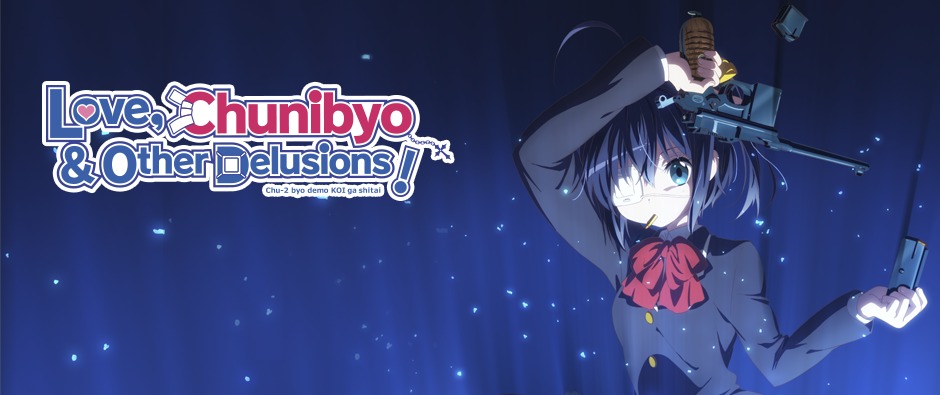
Known as “Chuunibyou demo Koi ga Shitai” in Japan, this show marks a turning point for Kyoto Animation. Prior to this, KyoAni was like most other anime studios, vying for contracts to animate a show from a publisher. This led them to creating shows like “The Melancholy of Haruhi Suzumiya” for Kadokawa, “K-On!” for TBS, and “Clannad” for Visual Arts. However, when it decided to publish its own light novel, and then turn it into this very anime adaptation, we knew something different was happening. Kyoto Animation was now going to start making its own shows, about the stories the company itself wanted to animate.

So Chu2koi (as this show is often abbreviated to) had a lot to live up to. If this show did well, it meant KyoAni could continue making its own light novels and anime, not having to deal with publishers and some of the other pains of anime production. If this show tanked, though, it would’ve been a big waste of Kyoto Animation’s time and money, and the company itself would have to pay for it.

All the better that this show did fairly well in Japan, then.

An Introduction

Do you remember when you were a little kid, and you thought you were the coolest kid out there? Maybe you thought you had superpowers, and you were destined to save the world. Maybe you were a magician, your abilities leaving everyone else around you in awe. No matter what you thought as a kid, you thought it was all real, and that you were involved in some pretty cool things.

Or at least, I had memories like these. And, if you were like me, you look back on these moments with embarrassment. Thinking I really had superpowers that could defeat the strongest of foes? Yeah, no. No way I really possessed such things. Or anyone did, for that matter. Having delusions of such grandeur is called “chuunibyou” in Japanese (“middle schooler disease”). These are some of the same experiences the main character of this show, Yuuta, has to deal with.

Yuuta moves into a new high school, wanting to get away from all the middle school kids he previously knew (and told that he was some gothic swordsmaster named Dark Flame Master). Ready to put his embarrassing past behind him, he wanted to start off a normal high school life, hanging out with normal high school friends, and having crushes on normal high school girls.

Of course, that doesn’t start to go well when he gets himself intertwined with a girl in his class named Rikka. Like Yuuta, Rikka has believed herself to be some gothic superpowered being who must wear an eyepatch at all time (lest the power of her Wicked Eye Shingan be fully unleashed, should the eyepatch be removed!). Unlike Yuuta though, she still is head-over-heels deep into this chuunibyou delusion of hers, and she decided to get Yuuta roped into her random activities.

From there, we follow the start of a cute but awkward friendship, leading into a romantic story, as Yuuta and Rikka explore more about each other, about high school, and about chuunibyou.

The Plot and Characters

One of the biggest things that sets this show apart from others in its genre is the whole dealing with “chuunibyou” and the weird words and explanations Rikka gives to what’s going on around her. The stuff she says can be a bit confusing (going on about her powerful eye, and looking for invisible boundary lines), but once you think about it a bit, you can tell she’s just seeing the world through an imaginative mind. It ranges from annoying to endearing, depending upon the context, but never to the point that it made me dislike her character; if anything, it made me feel for her.

We see Yuuta go from trying to push her away, as she reminds him of his embarrassing middle school experiences, to slowly beginning to accept her. A lot happens to get these characters to the end of the last episode though, and it’s a bit of a ride. Rikka and Yuuta, of course, are right in the middle of it, and there are twists and topics in the latter half that you wouldn’t have expected going in. I won’t say this anime has the most dramatic twists or reveals out there, though, but it does have some teeth to it.

The show’s supporting cast includes Shinka Nibutani, a girl who’s popular, pretty, and smart; Sanae Dekomori, Rikka’s faithful and energetic assistant; Kumin Tsuyuri, an airhead upperclassmen who loves to sleep; Makoto Isshiki, a guy trying to do all he can to get a date; and Toka Takanashi, Rikka’s older sister that just wants Rikka to be rational about what’s going on around her.

The characters in this show are relatively well developed, with Rikka being the most rounded. However, that being said, Yuuta seems mostly defined by just his embarrassing middle school days, and little else. He ended up being the character I liked the least in this series, and I do wish he got a bit more time to come into his own. It’s obvious the show wanted to put more attention on Rikka and her chuunibyou. Even saying that, though, I didn’t dislike Yuuta at all, and he had his fun times too; I just wish there was a bit more complexity to him.

The supporting cast doesn’t receive much development until near the end of the series, when we see them respond to all the drama going on. However, the supporting cast was what really made this show for me. The interactions with all of them, especially Dekomori, Shinka, and Makoto, are what really help to keep this show entertaining and fun, even when we’re waist-deep in emotional scenes in the latter half of the series. The various anime references that Dekomori and Rikka make are fun to pick up on too, when you can pick up on them.

In regards to the pacing, it starts off relatively slow, and continues at a rather relaxed pace for the majority of the series, only picking up speed during dramatic moments and scenes.

The Atmosphere

Chu2koi, being animated by Kyoto Animation, of course already meets a certain level of quality, so you can be sure you’ll be watching a good-looking show. I wouldn’t call this Kyoto Animation’s finest work in recent times, but it still looks great regardless.

The character designs are akin to the Kyoto Animation standard that’s been used since K-On! (if not earlier), and I like them. I particularly like the designs of Rikka, Toka, and Dekomori. Oppositely, Yuuta’s design comes off as a bit too bland to me, which probably helped make him the one I liked the least. The backgrounds in general look pretty great, but there’s certain scenes, including one in episode 8 with Rikka and Yuuta sitting near a river admiring the city lights, where the backgrounds are particularly gorgeous.

Watching the show as it aired, I of course could only see it in Japanese. I think there was a lot of great vocal performances in this show on the Japanese side. I’ve not seen it in English.

When it comes to the music, it stays relatively subtle, really only peaking up during the dramatic battle scenes (because, yes, there are dramatic chuunibyou battle scenes the characters take place in) and during the really emotional parts of the series. The music tends to be pretty good, but there’s not really any tracks that are that defining or memorable; even the themes during the battles aren’t all that noteworthy. The music is just… there, and that’s about it.

The opening theme, though, I think is really great. The first few seconds of the song gets stuck in my head a lot, and I think the whole song is powerful and just sounds good. It’s put alongside a simplistic but mesmerizing opening animation, with it flashing between each of the main characters doing various activities. It’s not something easily described, and when you see it, it’s somewhat entrancing. The ending theme is also pretty good, but I don’t enjoy it quite as much. The ending animation is also pretty awesome, though, and I especially enjoyed the scene featuring Rikka standing outside with the factory in the distance, for some odd reason.

Final Remarks / TL;DR

This show isn’t exceptionally emotional and deep, but it’s not all light-hearted and sunshine either. It’s somewhere in the middle, incorporating a fair amount of both, and I think it does a good job. On top of that, it develops a sweet romantic story, all while being told by a talented and quality animation studio. However, looking back on this show, the funny jokes and scenes stick out more to me than the plot.

I wouldn’t say this is a show for you to go out of your way to watch, but it’s certainly not a waste of time either. I suggest giving it a shot if you were even somewhat interested in it, because it isn’t a bad choice, but don’t feel too ashamed about skipping it either.

Rating: Good
Recommendation: Give It a Shot
+++ emotional latter half with Rikka and Yuuta, funny comedic moments, quality animation
— jokes more memorable than the plot, okay ending song, Yuuta needed more time to develop

Review: Nagi no Asukara (A Lull in the Sea)

I’m sure we’ve all had this happen: you experience something (i.e. a movie, a TV show, an anime, a video game) and whenever you think back to it after finishing it, you just think about how great it was or how much fun you had during it. When you decide to come back to it for the second time, especially when showing it to a friend, the thought comes into your mind “This isn’t as great as I remember it being”. Maybe the art wasn’t as amazing. Or the writing wasn’t as stellar. Or, worse, it wasn’t as fun this time around. You had it built up in your mind as something better, more awesome, or even just smarter than it really was.

Nagi no Asukara is a show I watched week by week, episode by episode, as it aired (hence, I know it better by its Japanese name, rather than the English name it ended up getting). I was hooked from the moment I saw the PV on Crunchyroll. It was pretty fun, being a part of the forums, the comments, seeing people react with you as you’re watching this show. It left a really positive impression in my mind. I rewatched it, in two bulk sessions, recently, and, well… I can’t really say the same again.

An Introduction

In this alternate-universe, we see two villages tucked away in some area of Japan. The first is Shioshishio (say that five times fast), a sizeable village of people who live underwater. Yes, like fish people; they look exactly like humans though, except they have a special layer over their skin called Ena (which allows them to breathe underwater and swim super-well). The other is Shioshishio’s sister town, Ooshioshi, which is above the land and is filled with people, many of whom have never seen the underside of the water surface.

The story centers around five (well, seven) kids. Manaka, Hikari, Chisaki, and Kaname are four best friends who have known each other since childhood, and together find themselves having to go above the water to attend middle school there (as Shioshishio’s middle school closed). At Ooshioshi’s middle school, they meet Tsumugu, a boy who lives on the land but loves the sea and everything below the surface. They also cross paths with two younger girls, Sayu and Miuna, who seem to hate anything related to the sea people.

A rift exists between the sea village and the land village. Each year, they together perform a festival called the Ofunehiki, where they offer sacrifices (usually just wood carvings nowadays) to the Sea God. However, this year, neither village wants to do it, blaming the other village as the reason why. While there’s yelling and name calling on either side, our protagonists get caught in the middle, for better and for worse. As well, though, there’s underlying emotions with these seven too, as they try to navigate through their own feelings, and figuring out how to confess their love…

The Plot and Characters

One of the first issues of mine with this show was something that popped up early on in the series. Hikari, the character that the show likes to follow the most, is, well, kind of a jerk. He’s angry, aggressive, sometimes arrogant, mercurial, and likes to be in charge; he’s closest to Manaka, who’s more of an airhead, and he likes to boss her around, yelling at her if she does the slightest thing wrong. His jerk-ish-ness put me off for the first few episodes of the show, although the plot picked up later on and kind of swept the issue under the rug.

And yeah, the show starts off a bit on the slow side. When showing it to friends, they seemed bored by the first few episodes, not really seeing what the point of any of it was, but slowly, but they got more interested by the time episode 9 finished. A lot of the show’s more dramatic points were in the latter half of the series, from episode 14 and onward. It’s not to say that the first 8 episodes aren’t dramatic, as there are some big moments, but even the show’s biggest moments won’t necessarily get people sucked in, as they sometimes do feel melodramatic.

The writing for this series, as much as I love it, is less than stellar. After the first episode, all conversations exist only in service to the main plot, or the ensuing love-hexagon (as triangle is not nearly enough to describe it). In episode 23, for example, we see Miuna and an angry Sayu, walking down the street having a discussion. After Hikari comes by to say something, Sayu suddenly goes “oh, I have homework to do, see you!” and leaves the other two to continue on the plot. It felt like Sayu artificially said that line simply because the writers didn’t want her present in the next scene. I wish the characters spent more time talking about anything not tying directly into these key things, as it would help to give them the depth and roundness that they really seem to lack at times. I do wish the story took even more of an advantage of the setting too, with the two different worlds (the sea village and the land village) coming together in this way.

Although the issues with the Ofunehiki drive the plot forward a lot of the time in the first half of the series, the second half sees more time focused on the love-hexagon, as people try to figure out their feelings and decide (or not decide) to confess their feelings to one another. All of the main cast, frankly, feel and sound immature at times, resorting to hiding from each other and talking around people rather than confronting issues directly. All of a sudden in the last two episodes, though, they all act like they’ve learned something important, when really all that’s happened is their issues finally came to light after so long.

The character that saw the most growth, though, is Chisaki (and in more ways than one). All she ever wanted was to see her group of friends stay together and be happy; she doesn’t want anything to change. She does come to realize that she has to allow change by the end of the series, but one would’ve thought she’d realize that earlier, given a key thing that happens to her in the middle of the series (although, really, a whole bunch of stuff happens to her). Tsumugu does seem to grow and become more mature when you’d expect him to, though, although he did feel really mature from the very start. Out of all the characters, Chisaki was my favorite.

So what do I love about this series? The premise is pretty cool. And it does pose some pretty interesting ideas, especially some stuff shown in the last three episodes of the series. And all in all, it still has some entertainment value. Once you get past the slow beginning, the show has a decent amount to throw at you. I can’t guarantee it’ll keep you hooked, but those who stay will witness some pretty enjoyable moments. Unfortunately, I just can’t guarantee super deep, quality writing.

The Atmosphere

If this were made by any animation studio other than PA Works, the results wouldn’t turn out nearly as well as it does here. The colors blue and white, unsurprisingly, dominate the art here, with a lot of the buildings and architecture using that blue accent. There’s also some brown wood colors too, which helps bring some well-needed warmth into the right scenes and places. All in all, the background art is astonishingly pretty, even on PA Works’ off days. One does wonder if maybe they were a bit too heavy with making everything seem old and worn, though.

For the character designs, they were generally pretty good, but not “oh my goodness look at this!” great. I really liked the uniform designs that Manaka and Chisaki wore; the white dresses just looked good (if not a bit short). In fact, I’d say those two characters, overall, looked the best. The designs of Hikari and Kaname were not bad either, although I kind of disliked Kaname’s hair color. I could care less about the uniform designs that we see most of the other characters wear, as the orange, brown, and white just felt weird. Having all the sea people have blue eyes seemed a bit odd to me, but it’s nothing something I really thought about until I noticed it later on. I liked the subtle change of drawing the characters with blue lines when they were underwater, though.

The character animation seems clean, standard, just fine. If more exaggeration or expressiveness was used in some spots, I think the show would be better for it. On top of that, it’s obvious that action scenes are not a strong suit of this show’s animators. A key example is a scene in the latter half where Hikari knocks Sayu over. It shows a flash of images, going too quickly for us to even think about, and then Hikari running off into the distance. We would’ve never known that he knocked her over if it weren’t for the sound effect used, and the fact that Sayu was shown knocked onto the sidewalk afterwards, yelling at him. This series doesn’t really have much in the way of action anyway, but the moments where it tries to do action and fails definitely leaves a bit of a stain on its otherwise quality appearance.

I liked the voice work for this show in Japanese, although, admittedly, I’m used to the Japanese side a bit more (having watched it as it was airing). Ai Kayano and Hana Kanazawa have some shining moments of their own as Chisaki and Manaka respectively, but I wish Tsumugu, voiced by Kaito Ishikawa, sounded less monotone to begin with. The English side isn’t bad either; I particularly like Michelle Ruff as Manaka, but dislike Max Mittelman as Hikari (and Chris Niosi as Uroko-sama). I wish they used a more boy-ish voice for Hikari. Honestly, though, I don’t think you’ll be disappointed with either language you go with. Luckily, this is one of those shows where Crunchyroll does have both the dubbed and subbed version (although the Dub uses the English name, and the Sub uses the Japanese name).

The background music sounded pretty good; it won’t be the most memorable music you’ve ever listened to in an anime, but I can recall a few songs as I sit here and write this. It was perhaps a bit generic when the dramatic strings showed up, during more tense music, but I loved the piano pieces when they were present. I also love both of the opening and ending songs a lot, and I wish NIS America brought the full versions of the songs over when they brought the soundtrack.

Final Remarks / TL;DR

Nagi no Asukara, also known as A Lull in the Sea, unfortunately suffers from some less-than-stellar writing, only showing its characters being caught up in the issues of the plot or their own crushes. While seeing this play out as a big love story between a bunch of characters was fine, I wish they took more advantage of the setting and premise they set up here. It’s a nice start though, and still provides some entertainment. The art looks wonderful, and the music was pretty nice as well. I can tell you that I don’t regret buying the premium edition box set of this anime.

At its core, this is a drama show. Those who like drama will feel right at home here; seriously, I don’t need to add another word to that thought. The drama and romance has a decent amount of twists and turns, and the sea people versus land people thing is an added bonus. Those wanting more of a show that handle more mature situations or with well-rounded characters will probably not find what you’re looking for here. Trying it out for a few episodes should tell you more than enough as to whether you want to continue it or not, but do keep in mind that it does pick up later on.

Rating: Good
Recommendation: Give It a Shot
+++ great art, interesting premise, Chisaki (and Manaka to a lesser extent)
— subpar writing is focused only on main plot and romances, doesn’t really take full advantage of setting, action scenes done pretty terribly

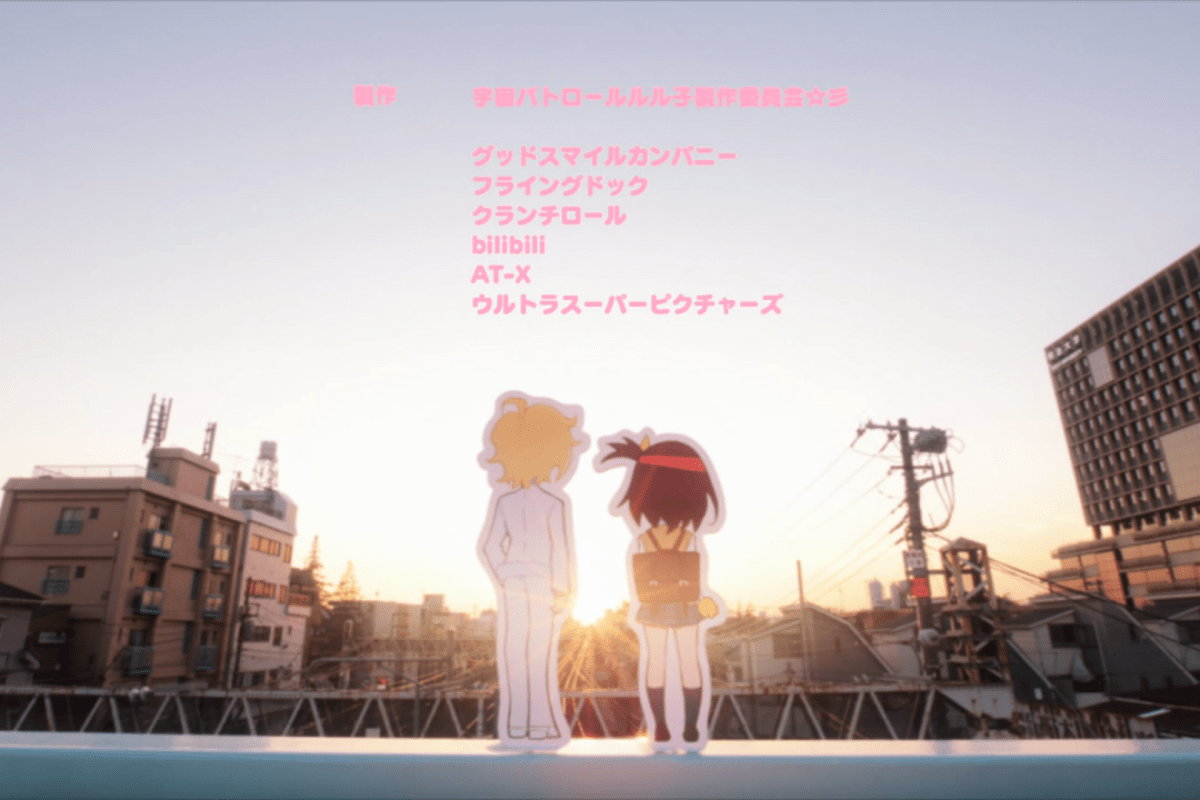
Additional Thoughts: Space Patrol Luluco’s Production Committee

I won’t always do this “Additional Thoughts” thing, but in this case, I felt there were a few things about this show that I wanted to talk about, that wouldn’t have fit too well in the review (without making it super-long). To that extent, allow me to dump some of these words here.

There is one big thing I want to mention. For those of you who paid close attention to my review, you’ll notice I used the animation studio’s name, Trigger, more than I usually do for a review. This is actually intentional. Trigger’s co-founder, Hiroyuki Imaishi, not only directed this series, but also wrote it too. As it’s an original series, he had more control over what direction this show could go than one would for an adaptation; thus, the presentation of this show fell more onto Trigger’s shoulders than it usually would for an animation studio. Thus, I felt justified in using its name more in my review. This is not a common occurrence for me.

Trigger, though, despite animating and writing the show, still does not have full control over the series; everything they do still has to get approved through the other members of the Production Committee.

What is a Production Committee, you ask? For every anime series out there, there is a Production Committee. A production committee is made up of various companies that come together to make a particular show: the essential members are a music production company (such as Lantis or Aniplex) to provide the music for a show, and a publishing company (such as Pony Canyon or Aniplex) to handle the intellectual rights of the show and generally work to bring the show to the public. Usually, for an adaptation, the book/video game/whatever publisher is on the committee, but not always. Each member company of a committee puts forth a certain amount of money to help produce the show, and in return, they get partial ownership of the show, and get to promote it in their own way.

A music company gets to make and promote the show’s music, a merchandising company gets to make and promote merchandise for the show, a DVD/BD authoring company gets to make and promote the show’s DVDs, and so on. However, in many cases, the production committee does not contain the animation studio. In this case, the animation studio is simply contracted to draw the anime, in the same way that you would contract someone to remodel your kitchen for you.

(Also, another thing to mention is that just as an animation studio is not a must-have for a production committee, a TV station isn’t either. If an animation studio is on the committee, we know that studio will be animating that show, and likewise, if a TV station is on the committee, we know that TV station will be airing that show. If a TV station is not on the production committee, this means the production committee has to shop around and find a TV station to air their anime on.)

So, let’s look at the Production Committee for Space Patrol Luluco:

Good Smile Company (merchandising, leader of committee)
Flying Dog (music production, branch of Victor Entertainment)
Crunchyroll (international rights/publishing)
Bilibili (Chinese online distribution)
AT-X (Japanese TV station)
Ultra Super Pictures (publishing company, joint company held by various animation studios (including Trigger))

The first thing I’m going to be bringing attention to is Ultra Super Pictures. This is the (joint) company behind the ULTRA SUPER ANIME TIME block, which Space Patrol Luluco aired as a part of. Trigger is one of the owners of Ultra Super Pictures, and thus, it was one of the various companies that helped bring Space Patrol Luluco to fruition. However, as Ultra Super Pictures is at the very bottom of the committee, this means that all the other shows contributed more money to producing this show, and also get a bit more of a say in the show’s direction.

Thus, despite being the animation studio behind this show, employing the head writer for it, and being one of the various companies that even helped produce this show, Trigger still doesn’t have absolute control.

However, there is another thing I want to bring attention to in this production committee list, that you probably noticed too: Crunchyroll is on this committee.

For those of you who have never heard of production committees for anime before, you may be like “So? What’s the big deal? Crunchyroll is streaming this show in the West, so doesn’t it kind of make sense their name get put somewhere?” However, that’s not actually true.

I’ll be talking more about the roles of Western anime distributors some point later, but the big thing to know is that, up until 2015, all these Western companies ever did is just license a bunch of Japanese anime shows, and bring them to the United States (or Europe, or Australia, or elsewhere). They don’t actually own the rights to anything in the show (including the dub), they just have the permission of the Production Committee to sell the show in their own region. When it came to making an anime, that was always just something that occurred in Japan, without the say of non-Japanese companies.

This is no longer the case, and Crunchyroll is one of the companies making this happen. By being in Space Patrol Luluco’s Production Committee, this means that Crunchyroll is actually one of the various companies that helped make this show. They didn’t just simply license the show to bring it to the rest of the world, they were with this show from the very start.

It’s actually pretty exciting to see Crunchyroll and Funimation (who is on the Production Committee for My Hero Academia) going to Japan and getting involved with creating anime. These two companies are no longer just licensors or anime streaming sites: they’re now anime producers, they help actually make the stuff. There has been a growing trend within the past year to get Western companies more involved in anime and manga production (as Crunchyroll and Kadokawa has also made an anime co-production deal earlier this year, and Kadokawa bought a 51% stake in Yen Press).

As a Western anime fan, I think it’s pretty cool.

Review: Space Patrol Luluco

As mentioned in my Please Tell Me, Galko-chan! review, I love short-episode anime. It allows me to get my anime enjoyment in a quick drop, and it’s a drop that’s undiluted. So, when I heard that Trigger, of Kill La Kill fame, was going to be making their own short-episode anime, I jumped onto that train so hard, they had to go on an interplanetary adventure through Trigger’s past works to get that train back on course.

What am I talking about? I don’t know, whatever, let’s get going! JUSTICE!

An Introduction

Luluco is a completely normal middle-school girl, living a completely normal life, and that’s all she wants: to be normal. However, she is surrounded by abnormality. She lives in the city of Ogikubo, which Japan sold in an auction (to help its national debt), and now it is the one place on Earth where aliens of all kinds get to live peacefully alongside humans. Her father works for Space Patrol (kind of like an intergalactic INTERPOL), and her mother… well, let’s not talk about her.

Her normal life suddenly comes to an end when her father accidentally swallows an experimental pill from work, and it causes him to literally become encased in ice. Luluco, panicking, brings her dad over to the Space Patrol office, where she becomes enrolled in the Space Patrol herself, to finance the costs of defrosting her dad. Now, whether she likes it or not, she’s a fighter for justice!

The Plot and Characters

Even if you just watch the first episode, you can tell that Space Patrol Luluco is fun, wacky, and will prove to be a journey unlike what we usually get. The first few episodes sets up the show as a silly adventure of Luluco and new-coworker Alpha Omega Nova fighting random space criminals in Ogikubo, and I would’ve been perfectly okay with this show continuing this way to the end. However, Trigger isn’t Trigger if they don’t one-up themselves every new episode. After the first three episodes focus on bringing down a criminal within the school itself, Midori (who later joins the Space Patrol herself in a hilarious dialogue exchange), we get locked into this grandiose plot as Ogikubo gets stolen by space pirates, and this newly-formed trio ends up on a space chase trying to find it and bring it back to Earth.

However, halfway through this arc, the anime puts everything off to the side to spend a few episodes revisiting the worlds of past Trigger-animated shows, such as Kill La Kill, Little Witch Academia, and more. On one hand, it was pretty cool to have these cameos appear and to see the other characters interact with Luluco and the group, and frankly, it was rather hilarious at times. I also can’t say they didn’t have at least some effort to tie these cameos back into the main plot. On the other hand, though, I do wonder if perhaps they spent a bit too much time doing these cameos. That being said, they did wrap it up and bring us back on track relatively quickly in the last cameo-planet-episode. In rewatching the series, though, I’ll probably skip over those episodes.

The last four episodes were made to feel big, cool, and exciting, and that is precisely how they felt too. Everything is on the line and the biggest plot twists are revealed, and it’s honestly kind of amazing. I’d talk in more detail about it, but… spoilers. What kind of surprises me is that the last episodes were able to continue Space Patrol Luluco’s wacky tone, while also having it be emotional too. However, despite how the emotional ending it had, it still felt like it was missing… something.

Whether I didn’t feel as closely connected to Luluco as I thought I did, or there wasn’t that big impact that would’ve really helped, I’m not entirely sure, but as cool as the ending was, I came away from this series thinking that something could’ve made it better. Perhaps it is just a consequence of having the episodes be so short in length.

About the short lengths, Trigger did a pretty good job, in my opinion, of being able to make a comprehensible and fun anime with such a short length. One can’t necessarily expect writers to always be able to squish and fit their ideas into such a short period, but this format worked really well for Space Patrol Luluco.

Overall, the show is a blast. Although it’s at its funniest in the first half as they’re setting up the whole story, Space Patrol Luluco is wacky and humorous throughout; their sense for comedic timing in the first few episodes is pretty great, and even some of the smaller things got me to just fall over laughing. For example, when Luluco, Nova, or Midori are about to capture or pursue a space criminal, their Patrol Suit transforms them (literally) into a gun, magical-girl-transformation-sequence style, and the phrase “Fight for Justice!” being exclaimed every time one of the guns are fired. I had a lot of fun watching the show, from start to finish, and with how short each episode is, I’m beyond eager to share it with my friends by pulling up the first episode. The pacing is a bit fast, but most people should be okay with it.

The anime features a colorful, fun cast of characters, and they do well at having their personalities shine through their words and actions, rather than simply having it be told to the audience (a relatively easy crutch for short-episode anime). Luluco is the innocent, nervous, “normal” girl who finds herself dragged into all these situations, whether she wants to or not. For Nova, everything about him just sparkles; there’s a choral piece that plays whenever he’s in the spotlight, and that song just describes him. Midori is snarky, and usually plays the straight-man in the comedy bits; I’m sure you’ll come to love her by the end of the series. Last to mention here is Chief Over-justice, the chief of the Space Patrol – Ogikubo Branch. He’s… passionate. I’ll give him that.

The Atmosphere

The art and animation for this show is particularly cartoonish; proper anatomy (and physics) goes out the window to create the distinct style of this show, and I think it looks pretty nice. For how wacky and weird this show can be, the cartoonish style works out pretty well, as well as allowing the gun transformations to not look as creepy as they may otherwise be.

This being said, the animation tends to take some shortcuts, having characters stay still except for moving particular parts, or using effects rather than hand-drawn animating to make animation take place. It’s not really a complaint though, as I feel in this case, it’s more of a stylistic choice. Short-episode anime (generally) don’t have the highest of production quality anyway, so it’s even more allowable here. Trigger most definitely upped the quality for episode 13, though, quite fitting for a series finale.

The background art of the earlier episodes tends to be images pasted together in Photoshop with a color washout applied over the whole thing, and although I tend to enjoy the photorealistic backgrounds as a style, I dunno how much of that I would’ve been able to really deal with if the entire series went on like this though. Luckily, as Trigger started the big get-Ogikubo-back arc, they moved away from that and used more hand-drawn backgrounds and such. The background art, like the animation, isn’t exactly the best, but it definitely works for this show’s style, and thus there’s nothing to really complain about at all.

The music of the show tends to be pretty good, if nothing else. There’s about a good five tracks that tend to play a lot throughout the entire series, although you wouldn’t really notice it unless you really paid attention, although episode 10 is in stark contrast to that statement. For me, though, the song I loved the most was the ending theme, Pipo Password. I’m definitely going to buy it on CD. I also really liked the ending animation, even though I usually like flashier things. I also really enjoyed the remixed version of Pipo Password that was played on episode 12. The opening song is also not bad, although I wouldn’t generally listen to it on its own. The opening animation is pretty cool though.

The art and music of Space Patrol Luluco also help with its comedic timing, cutting to a different frame and muting the music altogether to allow a comedic moment to take place. The first episode of the show is particularly good, in my mind, with the comedic timing, and the writing, visuals, and music were all in on the jokes.

Final Remarks / TL;DR

Space Patrol Luluco: it’s cool, it’s wacky, it’s everything you wanted out of a Trigger-animated show, and more, and with only eight minutes per episode, it’s also easy to consume. Fans of past anime that Trigger animated will also appreciate this show, with the various episodes dedicated to cameos, even if these cameos may have gone on just the tiniest bit too long. Overall, this show was a lot of fun, and was definitely one of my favorites for the Spring 2016 season.

With the short length of each episode, I really recommend each person at least watch the first episode, and see what you think. All that’s really at stake for you is just losing eight minutes of your life, it really isn’t much. To be honest, though, if you watch the first episode, I feel like you’ll probably end up watching more. Space Patrol Luluco isn’t a deep, emotional drama, but it’s a lot of fun, and at the end of the day, that’s all it needs to be.

Rating: Great
Recommendation: Watch It
+++ comedy is pretty good, Midori, art style works for this short-episode show
— cameo planet episodes may have gone on a bit long, ending lacked just a tiny bit of substance, opening theme was meh