Review: Is it Wrong to Try to Pick Up Girls in a Dungeon?

Short answer: maybe.

Long answer: well, depending upon who you are, who the girl is, where in the dungeon you are, what you’re doing in the dungeon, and what kind of equipment and party members you have. There’s a lot of variables in play here, you see.

Anyway, this show’s long and strange title captured the attention of a few of my friends; thus, they started watching it, and pulled me in as well. I frankly probably wouldn’t have bothered with this series if it weren’t for those friends.

(The show’s title is usually shortened down to “DanMachi”, based upon the Japanese title.)

An Introduction

This alternate universe is basically an RPG come to life. Concepts like “levels”, “status points”, “item drops”, and so on are real things that each person deals with in one way or another. The economy revolves around people called warriors entering into dungeons, defeating monsters at a level they can do well at, and use the monster’s drops in exchange for money and goods. Like I said, it’s like a real-life RPG.

So who’s our protagonist? Why, he’s this white-haired, young warrior with a lot to learn, named Bell Cranel. Bell is your well-meaning good guy, just wanting for himself and those he cares about to be happy. He goes out to the dungeon each day, sticking to the low-numbered levels (as he’s not that strong yet), and uses whatever items he gets for money so he can live in a cozy house, just himself and the goddess he’s sworn loyalty to, Hestia.

Our story begins with Hestia discovering a powerful ability that Bell possesses, but she keeps it a secret from him. Sure enough, thanks to this ability (along with some pure luck), he becomes an increasingly powerful warrior with almost unprecedented speed. However, his quick rise towards the top has not come without catching the attention of a few shady folks…

The Plot and Characters

The world these characters are in was one of the most fascinating things I find about this series, and I’m glad they spent a decent amount of time on world-building here. As much as I might (and shall) complain about everything else, the world and concept of this story keeps me fascinated and enticed.

DanMachi’s plot surprised me to some extent with a few of its unique plot points and characters. Liliruca, Bell’s “supporter” (someone who follows you around in a dungeon, carrying everything you could want or need) first appeared in episode 3 and I found her backstory surprisingly emotional (well, for this show, anyway), and she became my most favorite character in the series (her snarky comments in later episodes solidified it for me). The conflict between Hestia and the other gods also intrigued me too.

However, this all being said, the show has some generic-ness to it. Bell, for all intents and purposes, is your generic kind-hearted protagonist: he’s extremely powerful, attracts the attention of multiple girls, but yet is ridiculously kind and ridiculously dense. Hestia plays the generic jealous love interest in most aspects, although she sometimes has some interesting moments. Most notably, though, is the generic ending to the anime series. To not give away too many spoilers, the ending focuses upon a battle against a giant monster, with everyone “holding the monster back” until Bell could show up in the last two minutes and use this brand-new, super-powerful finishing move. The show’s ending really wasn’t that impactful, and I wish they went with something more clever.

Other supporting characters in the show are: Aiz Wallenstein, a revered warrior filling the “silent but deadly” trope, she caught Bell’s eye after she saved him from a minotaur (admittedly, seeing the two of them grow a bit closer later on in the series is a bit cute); Welf Crozzo is a blacksmith-turned-warrior who appears too late in the series to really leave much of an impact (despite him being shown prominently in both the opening and ending animations. You’d think that when he finally makes his appearance, he’d instantly become someone really memorable, but unfortunately, he’s not); Syr Flova and Eina Tulle are two girls that work at a pub and the guild building, respectively, and both have feelings for Bell, but are overall not too noteworthy.

I really liked DanMachi when it focused upon the world and the actual conflicts, and those were enough to keep me intrigued week after week while it aired. However, when it spent time on Bell’s interaction with all these girls that had crushes on him, that’s where it started to drag. If the characters were less generic or if there was less of the generic dense-male-lead-with-harem going on, I would have enjoyed the series a lot more. The generic ending really disappointed me too, keeping me from walking away from the show with a positive reaction.

In fact, there’s something called the Bechdel test, which basically states that for a show/movie/etc. to pass, it must have two women talk to each other about something other than a man. I don’t generally like to spend my time talking about such tests, as something like that never tells the whole story, but I would say that this show probably doesn’t pass this test. Where the show’s female characters do interact, it’s usually to continue with the whole harem thing the show is trying to push on us. DanMachi can do better without it being there. But of course, it’s what helps sell anime (or what the companies think help sell anime).

The show’s pacing was as you’d expect for an action series, with it generally sticking to a rather decent not-too-fast-but-not-that-slow pace, and with it sometimes picking up and slowing down depending upon the scene and action.

The Atmosphere

The show’s visuals are good. I really liked the color scheme used in the show, with a variety of colors used, and a number of them being bright and vibrant. The backgrounds are detailed and the character designs just work for the show. The animation was good, even during the action sequences. Simply put, the battles were really cool to watch.

(Actually, one other thing about character designs: that of Hestia. That small purple ribbon that’s purported to hold up her breasts ended up creating a bit of a meme in Japan as the show started up; halfway through the show’s airing though, the interest in it died down. Personally, I don’t really have much an opinion on the design, but if I were forced to say something, I’d have to say it looked a bit ridiculous.)

Audio-wise, it’s basically your standard orchestral stuff you hear in most anime nowadays. Frankly, unless a show does something special or uncommon with its background music, I won’t even remember it when I look back on the show. So that being said, there’s nothing really memorable about this one’s, but it does suit the show well enough. DanMachi’s opening theme isn’t particularly great, but it’ll get stuck in your head, whether you like it or not. I also took a liking to the opening animation, although it wasn’t really that extraordinary. The ending theme and animation are, in my opinion, great, though; I really like the bright colors and the upbeat song with the interjecting horns.

I almost wish they casted someone else for Bell other than Yoshitsugu Matsuoka. His voice isn’t annoying or anything, and there were spots where I think he was voiced rather well. I also know the voice actor is talented due to how he does Sora in No Game No Life. However, I feel someone else’s voice may have hit Bell’s character more on the mark than his. Other than that, in regards to the voice acting, there really isn’t anything to mention. I don’t know if Sentai will dub it, but if they do, I’ll be expecting a “decent-but-not-great” performance. (EDIT: Sentai announced at Anime Expo 2016 that they will be dubbing it. I stand by my remark.)

Final Remarks / TL;DR

The most interesting parts about Is It Wrong to Try to Pick Up Girls in a Dungeon?, besides its title, are its fascinating world and the points where it stayed away from all the girls and their crushes on Bell. The show’s visuals are deceptively good though. All in all, the show kept intrigued and coming back week after week; however, the generic elements and disappointing ending soured my experience of the whole thing.

Despite everything though, I can’t not recommend this show. The action is definitely present in this series, and it is a lot of fun to watch. The way that RPG elements are handled here, as if they were real life concepts, is an interesting concept that will add to people’s enjoyment. This is an obvious choice for action series lovers. For those wanting a show that stays away from some of the more common pitfalls of anime though, DanMachi probably won’t cut it for you.

Rating: Average

Recommendation: If You Like This Genre

+++ great visuals featuring bright colors and well-animated action, fascinating world, Liliruca is a fun character

— harem stuff detracts from enjoyment, ending is disappointing, Welf doesn’t show up until too late in the series

Review: Tanaka-kun is Always Listless

I feel this is one of those anime titles that just doesn’t sound right in English, mainly because they picked a relatively-obscure word that isn’t used as much in everyday conversation. Perhaps that’s my experience though; maybe elsewhere in the English-speaking world, “listless” is used all of the time. I can’t say I’ve never heard of this word, although it’s usually the adverbial form “listlessly”. Regardless, we’re here to actually talk about the show itself, not its title!

An Introduction

Our main character is a relatively skinny and unassuming high school guy named Tanaka-kun. He generally means well – he’s not really malicious or anything of the sort – but he tends to prioritize his own laziness and care-free nature over pretty much everything else. He sleeps in class, he slowly moves from place to place, he gets just the least amount of work done to get by, and just lazes around for everything else. Honestly, one could question how he’d ever be able to get through life.

The answer to such a hypothetical question: Ohta-kun. Big, tall, and blonde, he’s Tanaka-kun’s classmate and best friend, doing his best to make sure Tanaka-kun is doing alright (or at the very least, staying out of trouble). While you may think Ohta could be menacing and scary looking, he’s more of a big, soft, kind bear. He goes way out of his way to help everyone he can, even if it puts himself in danger. The sight of Ohta carrying Tanaka from class to class is a common thing in this high school.

Along with that, we have a few female friends thrown in the mix too. Miyano is a short, super-energetic classmate of Tanaka’s, and puts 110% effort into everything she does… something that doesn’t exactly work when she decides to become Tanaka’s apprentice to learn how to be lazy. Echizen is Miyano’s best friend (and Ohta’s neighbor) with a hard, delinquent-type outside, but a soft, chewy inside. Finally, there’s Shiraishi, the well-adored, popular class president, but with a big secret.

Altogether, we get to see these five friends as they go about their lives, and their laziness, in the slice-of-life adventure that is high school…

The Plot and Characters

I’m a relatively big fan of a show with a relaxed pace. I prefer going through a relaxed pace in my life itself, so it’s cool to see a show that doesn’t need to be throwing stuff at you every second to still be enjoyable. One of the more infamous slow-paced shows of late is Glasslip, which I really enjoyed… when the supernatural stuff wasn’t mucking up the plot.

Tanaka-kun has no supernatural abilities or anything though. This show is pretty squarely in the slice-of-life genre, mainly featuring Tanaka, Ohta, and one or two other characters dealing with one situation or another… usually these “situations” are pretty easily taken care of if you were a normal person, but Tanaka is lazy – very much so.

I really liked this show. Even when I wasn’t enjoying many other shows of the Spring 2016 season, this one was one I usually got happiness out of, if not a laugh or two per episode as well. I wasn’t rolling on the floor laughing, though, as this show is more about the light humor. Tanaka-kun didn’t really have a bad episode. It had episodes that I certainly enjoyed more than others, and that were funnier or had better story ideas, especially the first few episodes, but I still enjoyed nearly every moment of this show.

Tanaka-kun wasn’t afraid to have moments of downtime and to take pauses, to reinforce that feeling of relaxation and laziness throughout the entire series. It worked pretty well for the comedic timing of this series too. I especially appreciated the start of each episode, as they focused on a single small gag or joke, before the show’s title appeared and the theme music got going; some of those were really funny. For me, that opening gag set up how good that episode was going to be.

Tanaka’s thought process and the way he views the world differs so much from many of us simply due to his listless nature, and it generally tends to be a good source of comedy. That being said, I do feel perhaps there were some small “gimmicks” (in lack of a better term) that Tanaka did later on in the show – purportedly, to further his laziness – that I didn’t think were really necessary, but I guess you can only go so far without needing to throw in something fresh.

Ohta also tends to be a source of great amusement throughout the anime, mainly because of his personality, and the way that he interacts with Tanaka. Without a doubt, these two are my most favorite characters in the series (which is a good thing to say as they’re the ones we see the most).

However, the other characters, while still enjoyable, are not on the same level. Miyano is actually also pretty fun to see – almost on the same level as Ohta for me – but after the first few episodes, she begins to appear less and less. Shiraishi doesn’t get quite enough development for me to really get too much enjoyment out of her, although I still liked her. The blue-haired and red-haired guy friends of Ohta’s barely make an appearance in this series, which disappoints me, because I would’ve liked to see more of them. I don’t even remember their names!

The two characters I liked the least, though, were Echizen and Tanaka’s sister. In both their cases, they mainly remain archetypal, even though I feel Tanaka-kun would be a good show to play these types a bit more ironically. Echizen has a few interesting moments to her, and in the beginning, the series even shows Miyano confessing her feelings to Echizen. However, after this, Echizen goes on to mainly play a tsundere, towards both Ohta and Tanaka; it really disappoints me as I would’ve liked to see Echizen and Miyano actually continue together as a canon relationship. Tanaka’s sister is the jealous sibling, wanting Tanaka’s affections all for herself. I’m not really disgusted by her, but more bored; there’s nothing about her that I really find interesting, and I wish there was.

Despite all that though, I did have a lot of fun with this show, like I’ve said multiple times. Even if I didn’t enjoy Echizen or Tanaka’s sister all that much, I still enjoyed every single one of these characters here, and their personalities shone through their actions. The slow pacing and light humor of this show made it one of my more favorites in recent time.

The Atmosphere

The characters in this series are relatively simply-designed, compared to what I feel we generally see in anime of recent. It works pretty well for the series, and even with their designs, Tanaka-kun makes sure each of its characters’ designs are memorable. There’s a recurring character that first appears in episode 9, and when she returns in a later episode, I was able to recognize her with relative ease, despite her wearing a very different outfit.

The animation for the series is also surprisingly pretty good too. There’s not really much need for fast, fluid motion here, as this show primarily keeps a pretty slow pace, but the few moments where it’s a bit more action-y, I don’t feel disappointed. The standard of quality would definitely be higher if this were a combat-heavy, action show, but for a slice-of-life, it is definitely above the bar.

The thing I really want to talk about, though, is the background designs. The high school that these characters spend so much of their time in is freaking beautiful. I’d pause the episodes during wide shots, just so I could look at the designs of the high school’s interior. High-school-me would be so jealous if he had seen this high school back at that time. Throughout the entire series, the backgrounds tend to be these soft, light colors, which are not uncommon in a slice-of-life. Where I wouldn’t generally comment on the color and texture scheme used in a slice-of-life show, something done here makes it feel just a bit different, and fits well for this series, I think. None of the colors are super bright or in your face. There is a dip in quality after the first few episodes, but it really isn’t that noticeable unless you’re really looking for it, I think. Overall, the background designs of this show is one of my most favorite things about it.

The background music tends to rely on piano, woodwinds (particularly flute), and a few other instruments (like… accordion, I think it is?) to provide the friendly and cheerful nature to back the show. I can’t really say I’ve ever really encountered a slice-of-life with a soundtrack I’ve really wanted to own, and this show isn’t quite that different. The show’s music is nice (if not maybe a bit safe), but it’s not anything worth listening to its own. The show also tends to have its moments where there just isn’t any music at all, and I do appreciate a show that can have these silent moments so that the dialogue and visuals can shine on their own.

The opening theme has this mellow, relaxed feel to it, which of course fits the show very well. The opening animation, while not anything particularly special or all that noteworthy, is also rather nice. I definitely enjoyed the ending theme, Bon Bon, as well, though, but I do have a penchant for the more upbeat-sounding songs like that one. The ending animation was also rather cool, although it also featured a decent amount of still frames. Overall, though, I feel it isn’t that common for me to enjoy not only both opening and ending songs, but also the opening and ending animations for a series. However, Tanaka-kun is one of those exceptions.

The voices of Tanaka and Ohta are pretty much on point. Kensho Ono just sells the part of Tanaka, and Yoshimasa Hosoya’s portrayal of Ohta also works well for his intimidating size but kind nature. In fact, I don’t think I really have all that many complaints, if any, about the voices in this series. If I had to be pushed to say some critique, I’d point to the voices of the two guy-friends-of-Ohta, but we didn’t really get to see enough of them to really know what the characters are like.

Final Remarks / TL;DR

Tanaka-kun is Always Listless is a relaxing, sunny anime that’s fun to sit down and enjoy, when you want some time to relax, and get a couple smiles and laughs. The two main characters, and Miyano, are super fun to watch, even when some of the others may not be on that same level of enjoyment. The impressive background designs, and nice opening and ending themes all add up to a pretty nice viewing experience.

As tends to be the case of slice-of-life shows, there’s those that love them, and those that hate them. While this isn’t squarely just playing to the genre it’s in, I don’t feel Tanaka-kun is going to really grab those that generally avoid slice-of-life shows. If you’re okay with something relaxed and simple, without a big drama or plot, you’ll be in for a treat here though.

Rating: Great
Recommendation: Watch It
+++ amazing high school design, Tanaka and Ohta, opening and ending themes/animations
— Echizen and Tanaka’s sister, blue-haired/red-haired guys should’ve gotten more screen time, Miyano’s confession to Echizen didn’t go anywhere

Review: Space Patrol Luluco

As mentioned in my Please Tell Me, Galko-chan! review, I love short-episode anime. It allows me to get my anime enjoyment in a quick drop, and it’s a drop that’s undiluted. So, when I heard that Trigger, of Kill La Kill fame, was going to be making their own short-episode anime, I jumped onto that train so hard, they had to go on an interplanetary adventure through Trigger’s past works to get that train back on course.

What am I talking about? I don’t know, whatever, let’s get going! JUSTICE!

An Introduction

Luluco is a completely normal middle-school girl, living a completely normal life, and that’s all she wants: to be normal. However, she is surrounded by abnormality. She lives in the city of Ogikubo, which Japan sold in an auction (to help its national debt), and now it is the one place on Earth where aliens of all kinds get to live peacefully alongside humans. Her father works for Space Patrol (kind of like an intergalactic INTERPOL), and her mother… well, let’s not talk about her.

Her normal life suddenly comes to an end when her father accidentally swallows an experimental pill from work, and it causes him to literally become encased in ice. Luluco, panicking, brings her dad over to the Space Patrol office, where she becomes enrolled in the Space Patrol herself, to finance the costs of defrosting her dad. Now, whether she likes it or not, she’s a fighter for justice!

The Plot and Characters

Even if you just watch the first episode, you can tell that Space Patrol Luluco is fun, wacky, and will prove to be a journey unlike what we usually get. The first few episodes sets up the show as a silly adventure of Luluco and new-coworker Alpha Omega Nova fighting random space criminals in Ogikubo, and I would’ve been perfectly okay with this show continuing this way to the end. However, Trigger isn’t Trigger if they don’t one-up themselves every new episode. After the first three episodes focus on bringing down a criminal within the school itself, Midori (who later joins the Space Patrol herself in a hilarious dialogue exchange), we get locked into this grandiose plot as Ogikubo gets stolen by space pirates, and this newly-formed trio ends up on a space chase trying to find it and bring it back to Earth.

However, halfway through this arc, the anime puts everything off to the side to spend a few episodes revisiting the worlds of past Trigger-animated shows, such as Kill La Kill, Little Witch Academia, and more. On one hand, it was pretty cool to have these cameos appear and to see the other characters interact with Luluco and the group, and frankly, it was rather hilarious at times. I also can’t say they didn’t have at least some effort to tie these cameos back into the main plot. On the other hand, though, I do wonder if perhaps they spent a bit too much time doing these cameos. That being said, they did wrap it up and bring us back on track relatively quickly in the last cameo-planet-episode. In rewatching the series, though, I’ll probably skip over those episodes.

The last four episodes were made to feel big, cool, and exciting, and that is precisely how they felt too. Everything is on the line and the biggest plot twists are revealed, and it’s honestly kind of amazing. I’d talk in more detail about it, but… spoilers. What kind of surprises me is that the last episodes were able to continue Space Patrol Luluco’s wacky tone, while also having it be emotional too. However, despite how the emotional ending it had, it still felt like it was missing… something.

Whether I didn’t feel as closely connected to Luluco as I thought I did, or there wasn’t that big impact that would’ve really helped, I’m not entirely sure, but as cool as the ending was, I came away from this series thinking that something could’ve made it better. Perhaps it is just a consequence of having the episodes be so short in length.

About the short lengths, Trigger did a pretty good job, in my opinion, of being able to make a comprehensible and fun anime with such a short length. One can’t necessarily expect writers to always be able to squish and fit their ideas into such a short period, but this format worked really well for Space Patrol Luluco.

Overall, the show is a blast. Although it’s at its funniest in the first half as they’re setting up the whole story, Space Patrol Luluco is wacky and humorous throughout; their sense for comedic timing in the first few episodes is pretty great, and even some of the smaller things got me to just fall over laughing. For example, when Luluco, Nova, or Midori are about to capture or pursue a space criminal, their Patrol Suit transforms them (literally) into a gun, magical-girl-transformation-sequence style, and the phrase “Fight for Justice!” being exclaimed every time one of the guns are fired. I had a lot of fun watching the show, from start to finish, and with how short each episode is, I’m beyond eager to share it with my friends by pulling up the first episode. The pacing is a bit fast, but most people should be okay with it.

The anime features a colorful, fun cast of characters, and they do well at having their personalities shine through their words and actions, rather than simply having it be told to the audience (a relatively easy crutch for short-episode anime). Luluco is the innocent, nervous, “normal” girl who finds herself dragged into all these situations, whether she wants to or not. For Nova, everything about him just sparkles; there’s a choral piece that plays whenever he’s in the spotlight, and that song just describes him. Midori is snarky, and usually plays the straight-man in the comedy bits; I’m sure you’ll come to love her by the end of the series. Last to mention here is Chief Over-justice, the chief of the Space Patrol – Ogikubo Branch. He’s… passionate. I’ll give him that.

The Atmosphere

The art and animation for this show is particularly cartoonish; proper anatomy (and physics) goes out the window to create the distinct style of this show, and I think it looks pretty nice. For how wacky and weird this show can be, the cartoonish style works out pretty well, as well as allowing the gun transformations to not look as creepy as they may otherwise be.

This being said, the animation tends to take some shortcuts, having characters stay still except for moving particular parts, or using effects rather than hand-drawn animating to make animation take place. It’s not really a complaint though, as I feel in this case, it’s more of a stylistic choice. Short-episode anime (generally) don’t have the highest of production quality anyway, so it’s even more allowable here. Trigger most definitely upped the quality for episode 13, though, quite fitting for a series finale.

The background art of the earlier episodes tends to be images pasted together in Photoshop with a color washout applied over the whole thing, and although I tend to enjoy the photorealistic backgrounds as a style, I dunno how much of that I would’ve been able to really deal with if the entire series went on like this though. Luckily, as Trigger started the big get-Ogikubo-back arc, they moved away from that and used more hand-drawn backgrounds and such. The background art, like the animation, isn’t exactly the best, but it definitely works for this show’s style, and thus there’s nothing to really complain about at all.

The music of the show tends to be pretty good, if nothing else. There’s about a good five tracks that tend to play a lot throughout the entire series, although you wouldn’t really notice it unless you really paid attention, although episode 10 is in stark contrast to that statement. For me, though, the song I loved the most was the ending theme, Pipo Password. I’m definitely going to buy it on CD. I also really liked the ending animation, even though I usually like flashier things. I also really enjoyed the remixed version of Pipo Password that was played on episode 12. The opening song is also not bad, although I wouldn’t generally listen to it on its own. The opening animation is pretty cool though.

The art and music of Space Patrol Luluco also help with its comedic timing, cutting to a different frame and muting the music altogether to allow a comedic moment to take place. The first episode of the show is particularly good, in my mind, with the comedic timing, and the writing, visuals, and music were all in on the jokes.

Final Remarks / TL;DR

Space Patrol Luluco: it’s cool, it’s wacky, it’s everything you wanted out of a Trigger-animated show, and more, and with only eight minutes per episode, it’s also easy to consume. Fans of past anime that Trigger animated will also appreciate this show, with the various episodes dedicated to cameos, even if these cameos may have gone on just the tiniest bit too long. Overall, this show was a lot of fun, and was definitely one of my favorites for the Spring 2016 season.

With the short length of each episode, I really recommend each person at least watch the first episode, and see what you think. All that’s really at stake for you is just losing eight minutes of your life, it really isn’t much. To be honest, though, if you watch the first episode, I feel like you’ll probably end up watching more. Space Patrol Luluco isn’t a deep, emotional drama, but it’s a lot of fun, and at the end of the day, that’s all it needs to be.

Rating: Great
Recommendation: Watch It
+++ comedy is pretty good, Midori, art style works for this short-episode show
— cameo planet episodes may have gone on a bit long, ending lacked just a tiny bit of substance, opening theme was meh

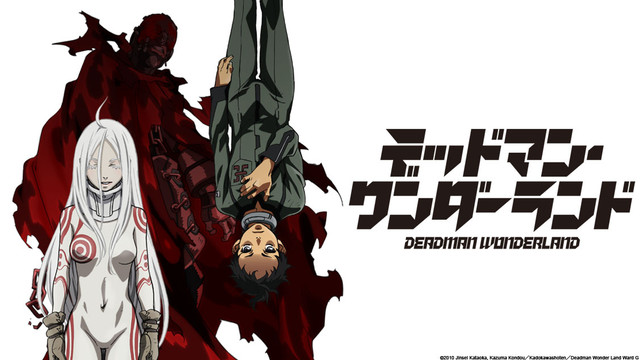
Review: Deadman Wonderland

There’s been a number of shows that I’ve heard generally positive things about, but yet, I’ve never taken the time to sit down and watch. This is certainly one of them, although there are others that are mentioned more around me than this one. Within the past few months, I finally got the chance to sit down and watch the series, and I wrote this review then. Today, though, I had a conversation with a new friend about this series that brought it back into my attention. So, why not post my review for it while it’s still on my mind?

An Introduction

Our main character is named Ganta. When we first meet him, he seems like your stereotypical high school boy: more of a pushover, generally nice to everyone, becomes the butt of a couple of jokes but somehow keeps himself happy. However, this doesn’t last long, as before the first episode is halfway over, a mysterious (floating?) person appears outside his classroom’s window, and murderizes them all! (with impressive efficiency and destruction) Ganta, somehow the only one in his entire classroom to not have died, finds himself the prime suspect for this mass killing.

After being declared guilty, Ganta is shipped off to Japan’s only privately-owned prison, Deadman Wonderland. Angry and confused about being in this position for a crime he didn’t commit, Ganta tries to acclimate himself to the unusual way this prison works, with only moderate success. Here, he also makes two “new friends”, Yo and Shiro. Yo isn’t so much a friend as someone who’s paid to keep an eye on him and go along for the ride. Shiro, who always wears an outfit consisting of white head-to-toe cloth with random red circles, proclaims herself as Ganta’s closest childhood friend, and while she has an extremely innocent way of thinking, she is unbelievably strong and powerful.

This prison is efficient in killing its inmates, scarily so; there’s really no winning formula to survive. It subjects them to perform in spectacle events for the entertainment of crowds, such as theatrical performances, endurance challenges, obstacle courses, and so on and so forth. But each of these events are modified to allow a systematic murdering of the inmates that participate in them. The obstacle course, for example, has archers shooting at the runners, deadly acid pools, and falling platforms that lead to a spiky demise.

However, this prison has something even more insidious: an underground (literally) fighting ring. The fighters consist of inmates that have a special blood-based power called “Branch of Sin”. These fighters are constantly pit in battle after battle, with the loser being subjected to a “penalty event”, where they lose a randomly selected body part (arm, foot, eye, kidney, voice box, etc.), and are never given the chance to see the light of the sun. Ganta finds himself thrown into this ring, only quickly after learning that he himself has a Branch of Sin power, and meets up with other fighters who are beyond disgruntled with the position they are all in.

The Plot and Characters

It is the fourth episode when Ganta begins to get himself involved with this underground fighting ring. The anime doesn’t necessarily feel like it’s dragging before it gets to this point (as some animes do before they reveal the real meat of their plots), but all the same, I failed to get hooked by this plot. This anime seems to just keep continuing with no sense of purpose, no matter how far I got into the series.

In fact, one of the biggest questions I had about Deadman Wonderland was “What was it trying to show us here?” Was it trying to show us a prison more focused on deadly spectacles than correctional practices? Or was it trying to show us the struggles of being a fighter in this underground ring? Or was it trying to show us the Branch of Sin, what it is, and what it means for humanity? The show ended without developing enough of anything for me to feel like the story had any sort of focal point, or end goal in mind. It was similar to a bus tour: it was going in a set direction, but it felt like we just saw the pretty pictures and people just go by us as we drive on, rather than stopping at any point and letting us sink our teeth into what we saw there.

However, the smaller details kept me from dropping the show. While the overarching plot walked towards some unknown destination, the small scenes and interactions were where I got most of my enjoyment out of this show. Hummingbird quickly became my favorite supporting character, along with Seiji and Karako (all three being fellow Branch of Sin fighters), and Ganta’s interactions with other characters in general were just fun to watch. My most favorite character of the entire show, though, was of course Shiro, with her child-like temperament and weird outfit. There was not a moment when she was on-screen that I didn’t enjoy.

While I first saw Ganta’s reactions to him being suddenly thrust into this prison environment rather realistic, his personality and whiny-ness began to grate on me a little bit by the end of the entire series. He never crossed that threshold from being “just a character” to becoming like an actual person to me. The anime attempted, with little success, to show us some of Shiro’s backstory and give her more character, but in general, she’s basically just like a child in a teenager’s body, in mind and spirit, and she just happens to be at the right place at the right time for her super-powered abilities to come into play.

For pretty nearly all of the supporting cast that receive a decent amount of screentime, each one of these characters act or appear differently enough that none of them can really be confused for one another. Some of them have some interesting gimmicks to them, and any time spent on any of them is generally not any time wasted. The ones we spend more time with definitely get to be fleshed out, to my enjoyment. Archetypes are present in this show, but they’re not anything we see that often. Overall, I have no major complaints about the supporting characters, beyond simply not being able to see them more.

I’ve heard people complain about the ending because it left them with questions unanswered. I was fairly satisfied with the ending, as it was about as deep as the rest of the show: not very deep at all. It does, of course, feel like this anime really only scratched the surface of what the original material may or may not get into, but this show has not left me compelled to seek out and read the original material.

The Atmosphere

Frankly, I don’t have much to really talk about, visuals wise. When an action series doesn’t leave me with anything I wished it had improved upon, that’s pretty good. But as well, this show doesn’t really have anything that blows me away in terms of quality, nothing that makes me say “whoa, now that was cool looking”, which isn’t as positive a thing. The only exception may be the very final scenes of the anime, with Shiro and Ganta sitting together, which I was impressed by. The color scheme was generally a bit darker than I would’ve appreciated, but at the same time, it’s not out of place.

Of course, there is the gore and such in this show. Things can sometimes get a bit violent, and the show is selective about its censoring. Even with the amount of blood and gore you get shown though, you’ve become adjusted to it by the time you reach the ending, and it doesn’t really affect you that much anymore. There’s not really anything past episode 5 that really stands out as worth mentioning, blood and gore wise (and things in episode 5 that I would mention may count as spoilers).

For the voices, I watched the show in English, with Funimation’s dubbing continuing to be of decent-to-great quality here. Monica Rial’s performance as Shiro deserves special attention, with her voice really making the character sound great. The performances of Aaron Dismuke as Yo and David Trosko as Rokuro also warrant a mention here too. Any issues I have with the dub is not so much the sound of the voices, as much as it is the script itself. Whether it’s something I didn’t notice as much starting off, or they changed the style of the script partway through, I don’t know, but in the second half of the show, the words/phrases being said just seemed quite cheesy to me, and it was just the slightest bit off-putting.

I really enjoyed the opening song and animation, although I probably wouldn’t listen to the song much on its own. The ending animation, I appreciated a lot more than the song; I really liked the choice of showing pictures of Ganta with his high school friends, all smiling, while there is a giant ferris wheel in the background. It reminds us of a simpler time.

The background music of the show, though, was impressive to say the least. They did more than just fit the scenes they were placed in; they sounded awesome and got me pumped. The music tracks sound like they came from an instrumental music album (rather than that of a TV show soundtrack), and I would be the first in line to buy this album.

Final Remarks / TL;DR

I can’t really consider this show exceptionally good or exceptionally bad; like most shows, this one has its positive qualities, and its negative ones. However, the always-moving but purposeless plot and good-but-unremarkable visual quality kept me from really seeing the greatness of this show, despite its good characters and great music. Overall, this show doesn’t get much above a “meh” from me.

This show has its fans, that is for sure. Me not being a fan makes this whole “who would I recommend this to” part a bit harder though. Lovers of action series will probably get quite a bit of enjoyment out of tthis, especially if you like a bit of blood mixed in there. Its plot issues continue to irk me though, so for those looking to get a great story out of a show, I would suggest you look elsewhere.

Rating: Average
Recommendation: If You Like This Genre
+++ great background music, fun character interactions, Shiro
— plot has no real purpose, somewhat cheesy script, Ganta is a bit annoying at times

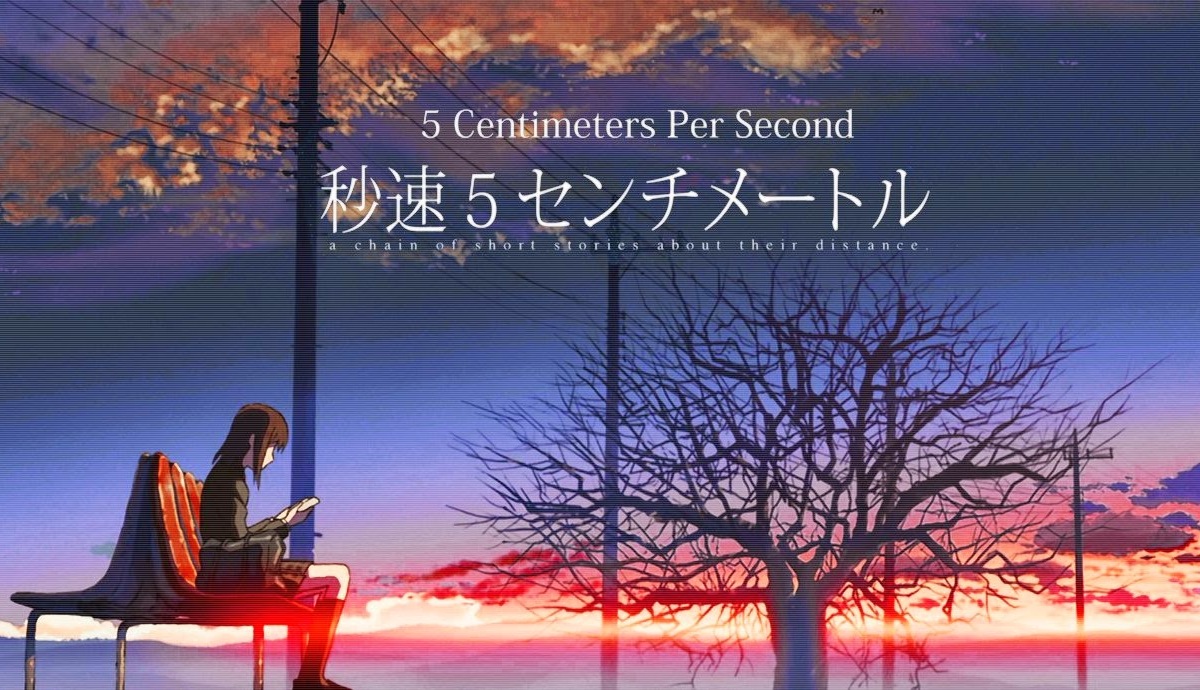
Review: 5 Centimeters Per Second

I watched Kamigami no Asobi while it was airing. I didn’t enjoy it. (That’d be a thing to review at some point.) Anyway, Crunchyroll likes to give you suggestions of shows it thinks fits into the same genre as the show you’re currently watching. So, in that “Other Romance Shows You May Like” section for Kamigami no Asobi, they put this movie there (although Kamigami no Asobi was about as romantic as diarrhea).

See, before then, I heard about this movie every now and then. I knew it was something I had to get around to watching at some point. So on that night, I decided “what the heck”, and went and watched it. But my goodness, I wasn’t expecting the feels train (heh heh, get it? Train?) that I ended up getting. And how glorious it was.

An Introduction

Not meaning to repeat the actual promotional summary, this story gives you three rather small windows into the life of one Takaki Touno. Takaki moved into Tokyo when he was still in elementary school, but moved back out into the country while he was in middle school. (His constant moving is thanks to his parents’ work.)

The first part of the story takes place when Takaki is in middle school, and traveling on the train to visit, finally, after all this time, his elementary school friend Akari. She’s someone that he hasn’t seen for nearly an entire year, and despite how many letters they send back and forth, he still misses her an incredible amount. All he needs to do now is ride the train over to the station that Akari and him agreed to meet at.

The second part takes place while Takaki is a senior in high school. In this part, another girl from his high school, named Kanae, is the narrator, as she struggles with trying to figure out what she wants to do with her life, and with her feelings for Takaki.

Finally, the third part takes place a good few years later, when Takaki is a grown man, back in Tokyo, with a programming job. He’s been having a hard time, though, with his years-old feelings for Akari still present within him. Everywhere he goes, he lives on that small chance of hopefully, somewhere, some day, seeing her again.

The Plot and Characters

You won’t be watching this for its fast pace or thrilling action. There’s none of that here. Instead, what you get is a nicely-paced story where the scene unfolds around you as you continue further and further into the movie. I find this movie kind of entrancing. I don’t know if it’s the dialogue or the way the story is laid out or what, but once I start watching, I just get sucked right in and you lose me until those 63 minutes are up.

The story of each of the three parts are mostly self-contained, but they do piece together to form more of a larger image. Takaki is present in all three parts, as he is indeed the protagonist, and as he grows, we get to learn quite a bit about him. All in all, he becomes a very fleshed out character. Kanae, as the narrator of the second part, gets her own time to shine too, and she gets developed quite a bit. This is a movie about romance, but it’s not quite as much about two people getting together as it is simply about romance itself being a thing that exists in human life. Probably a bit more specifically, this movie shows a lot more of the wanting, the longing to be with a person, and the dealing with the inability to do so.

The part that got to me the most, honestly, was the first one, with Takaki on that train ride. I found the entire part very moving, with the story switching between his ongoing ride to the station where he planned to meet Akari again, and between his times in elementary school and middle school where he was with Akari, and also when she wrote him letters after she moved away. Everything that happened in this first part just really left this huge impression on me, and as we got closer and closer to the ending, I got drawn in more and more, taken by the tension as to when he’d finally reach that station. I would say this first part was strongest one out of the three.

The second part was also quite the story though, with Kanae as the protagonist. Seeing Kanae follow him around and her trying to get closer to him, was really quite heartwarming to see, only to lead up to the climactic (but a bit underwhelming) ending. I really like Kanae here; of all the characters we see, she is my favorite. As much as I like this second part though, it has the unfortunate luck of being after the strong first part, and doesn’t seem as good in comparison.

The final part again switches back to Takaki, but rather than there being a consistently-paced start-to-finish storyline here, it shows bits and pieces of Takaki’s life (and that of Akari) after he graduated high school, and what kinds of things he’s done and not done. It didn’t capture my heart in the same way the previous two stories were able to. It felt like it jumped around a lot more than the first two parts, and it made it hard to really get myself into. I’d also say this part has the least dialogue. The final minutes of it, there’s no characters talking and a song plays, while Takaki does his thing, more or less. I frankly wish this final part was more dramatic and had a more emotion-grabbing ending.

Overall, the story starts off a really high note, with a really captivating and strong first part, but the movie ends with a whimper more than a bang.

The Atmosphere

Probably one of the best things about this entire movie is its artwork. Especially during the first part involving the train ride, so many things look and act so realistically, I feel you could almost nearly mistake these objects for the real thing. While the artwork and animation is pretty amazing throughout the entire movie (the scene with the rocket blasting off in the 2nd part comes to mind), nothing really speaks out to me as much as the things we see during that train ride. Either way you look at it though, the art for this was definitely very carefully crafted and formed, and the hard work definitely pays off.

In stark comparison though, the character designs seemed a bit simple. Part of me wished there was a bit more to these characters’ faces or bodies, especially when the camera zoomed in on them more. I wouldn’t go as far as to say the character designs here seem out of place, but I’d say that other designs may have been a bit better suited, given the amount of detail used everywhere else.

This is one of the few shows I’ve seen both in Japanese and English. When it comes to recommending one over the other, I would say either is pretty good. However, I’ll add this: there is the aforementioned song in the 3rd part (and on-screen text in the 1st), and if you watch it dubbed on Crunchyroll’s website, the dub version doesn’t have any of that subtitled. The dubbed version on the DVD does. If you’re watching the show on Crunchyroll, I would almost recommend watching it subbed simply because we see a translation of the song and on-screen text. If you’re watching it on the DVD, either will do (just be sure to turn on the “Signs/Song Subtitles” option if you’re watching it dubbed).

Music-wise, there’s that song that I actually really, really like on its own. Of course, this is me and my own personal life talking here, so it may not resonate as much with everyone else. Other than that, the soundtrack is pretty good, if not a bit too subtle, relying on piano and soft sounds to back the impressive visuals on screen. It’s fitting for the series, which is about as much as you can ask for. Beyond that one song though, I don’t see this movie’s soundtrack as something I want to listen to on its own.

Final Remarks / TL;DR

Like I said, despite it being called a romance show, we don’t see two characters end up together and start having a relationship; instead, we see more about other concepts of romance, like the longing. I feel this isn’t something we see that much in anime nowadays, and while I know this movie is a tad old, I still think it stands very well today. The visuals are drop-dead gorgeous, and that alone would make up for just nearly any shortcoming in my mind.

This movie is for those who like romance shows, most obviously, even without the solid relationship. I feel this isn’t exclusively for lovers of that genre though, and I would say that anyone who doesn’t require a show to contain action, give this movie a shot. I think that, even if you didn’t get as emotionally tied into everything going on as I did, you’ll still find yourself enjoying or appreciating this. Worst come to worst, you’ve only wasted an hour of your time.

Rating: Great
Recommendation: Watch It
+++ great romance-related story, artwork is simply amazing, song at end is great
— first part is the best, third part is rather confusing and jumbled, character designs were a bit odd

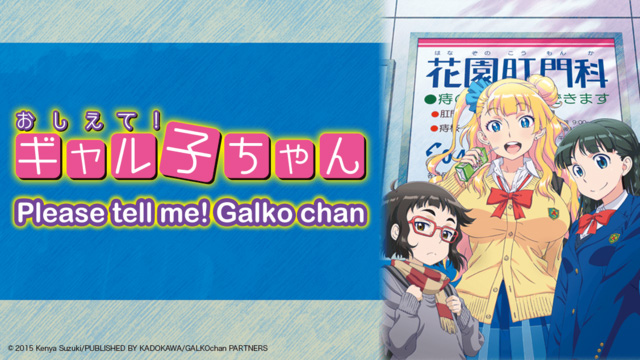
Review: Please Tell Me, Galko-Chan!

Y-B-M-A, JOSHI JOSHIIIIIIIIIIIIIIIIIIIII!

This opening song will be stuck in my head for a while. As I will certainly get around to discussing at some point soon, I’m a huge fan of shorter-episode-length anime shows (I generally just call them short-episode anime). This is one that piqued my interest in the Winter 2016 season, and so upon completing it, as I’ll usually do with all shows I watch, I wrote a review for it. This show isn’t special enough for me to really stand out as being the first one for me to review, but it was a recent show that I felt like not too many would be talking about.

An Introduction

The show centers around a small group of characters in a high school class. Most of the time, three girls receive the attention – these girls being Galko, Otako, and Ojou. Based upon appearances alone, I believe you can tell what’s so special about Galko: those assets of hers on her chest. Stepping beside that point though, the anime likes to ask some pretty important questions about life.

Some of the questions asked include “Is it true that girls with big boobs have big areolas too?” and “Is it true that virgins use pads, and non-virgins use tampons?” As you can tell, it’s mainly rumors and urban legends related to sex and other more taboo topics. This quintessential knowledge is wrapped up in a slice-of-life-esque show, showing these characters have fun with each other and have their friendships blossom.

As a result, this show a good go-to guide for dispelling a variety of misconceptions, or at least giving another interesting trivia fact for you to talk about at parties.

The Plot and Characters

Those that like to talk about these topics will probably get more of a kick out of this show, but that doesn’t mean that those who shy away from it won’t get anything out of this series.

The three main girls of this show each bring something rather different to the table, personality-wise. While the anime takes about a minute to name and describe each of these girls in every episode, I feel its descriptions aren’t really spot-on with what I got out of these characters.

Galko seems to be more of the airhead, talking about whatever comes to mind always two levels of volume louder than appropriate; Otako is smart – at least street smart – and kind of a bit more bratty; she usually picks on Galko in that lovable way friends do, but it seems more a shell to hide her own insecurities. Ojou is… just kind of there? Confused, maybe? Confusing, I guess. If it weren’t for the fact that the anime tends to use her in jokes where she is mishears stuff, I’d almost classify her as the smartest of the bunch. Honestly, the final episode of the show nails down pretty well who these girls are and what they mean to one another (along with giving that always welcome backstory as to how they all met). That episode shows their relationship to a T.

Part of me feels bad in saying that the show “uses” Ojou to make jokes, but unfortunately, that’s kind of all she’s there for. If she’s not in a scene to be the punchline or otherwise involved in a joke, she’s usually just not there at all. It honestly just seems like Ojou was there to round up the “me and my two best friends” cliché that we see in media. In general, it almost feels like the characters are all just used so the writers can make jokes; while all of the characters do have at least some semblance of a coherent personality, I kind of feel it wouldn’t be wrong to say it seems the punchlines were written before the rest of the scene.

Beyond just Galko, Otako, and Ojou, sometimes we get to see three other characters (or Galko and two other characters) receive a lot of the focus for an episode. There’s the boys Charao, Otao, and Supoo, who are honestly just stereotypical anime boys (always talking about girls, their breasts, and oogling over them), although Supoo is interesting at times. There’s also the girls Okako and Nikuko, who seem a bit cardboard-cutout-like at first, but the show has them subvert tropes where it feels like it to make a joke; for example, Nikuko, despite being one of the most overweight girls in the classroom, is super-fast and thus dubbed “Sonic Meat” by the boys. It’s interesting to see more of the members of Galko’s class get attention, but I wish these characters were slightly more interesting.

This show isn’t not entertaining, but it’s not… not not? entertaining either. It honestly is a bit more of a mixed bag, depending upon the episode, but it honestly only made me actually laugh maybe once or twice throughout all 12 episodes. Perhaps it’s my sense of humor not really gelling with this show’s too well; it did take me a few episodes to “warm up” to this show, if you will, before I even really saw any entertainment out of it at all. I wouldn’t say I regret this experience, – it really is not all that bad – but I do feel like I could’ve found a funnier short-length anime to watch this season.

The Atmosphere

Throughout the entire series, there was one thing that always… bugged me about how the characters looked. About how everything looked, really. It took me some time to figure it out: all the line art is done in blue. I don’t really get why they decided to make it this way; I don’t really see any reason why so… I tend to enjoy line art being in different colors, but even so… it didn’t always strike me as good. However, it really isn’t bad-looking either; honestly, it does make this show stand out. Generally, all the colors in this, while feeling a bit weird and jarring, don’t feel out of place.

Overall, moving away from the line art and color work, this show honestly is pretty alright in terms of quality of art and animation. I won’t say I’m the biggest fan of the character designs, blue color notwithstanding, and the animation quality isn’t going to blow anyone away either, but it is pretty serviceable to what this show is: a comedy focused upon its words more than its actions. While we could’ve gotten something that looked a few notches better than this, we definitely could’ve also seen something a heck of a lot worse.

The show’s background music tends to rely upon the comedy/slice-of-life staple of inoffensive piano music interspersed throughout the episode, and, well, it honestly is inoffensive. It doesn’t particularly stand out in any way, good or bad. It kind of just feels like it’s there to put music there. It’s serviceable, I guess. The show’s opening theme, “YBMA Girls”, is super energetic and cheerful though, and it’s bound to get stuck in your head by the time you finish the series. The opening animation usually feature snippets from the previous episode, while a narrator gives us brief details about the main characters; the animation/song will last anywhere between 20 seconds to a minute.

When it comes to the voice work, I feel that Otako’s voice is done perfectly, so here’s a special shoutout to Miyu Tomita. The other voices used here feel alright, as none of them don’t feel out of place, but they don’t feel like they’ve really improved the character by themselves either; they fit the show fine.

Final Remarks / TL;DR

Please Tell Me! Galko-chan is hard to put down in a single sentence. It’s a comedy anime about high schoolers sharing “rumors” and tales that they’ve picked up, or otherwise just fitting the mold for what they need to be. This show had some amusing and nice moments, although it’s likely its humor was just wasted on me, as it tended to talk about more mature topics than I usually care to think heavily about. I can’t say I regretted my time watching it, but I probably won’t return to it again for a long while, if ever at all.

For recommending this show, it’s something that you’d have to try for an episode or two to see what you think. It’s humor may work a bit better with other people, and so some may really get some enjoyment out of this, while it may also cause some other comedy anime fans to turn away from this show. I’d say to give it a try if it sounds interesting to you, but if you decide to skip it, I won’t blame you.

Rating: Average
Recommendation: Give it a Shot
+++ Otako is entertaining, opening song is energetic and addictive, Galko also has her fun moments
— everything Ojou, humor just didn’t gel with me too much, supporting characters could’ve been more interesting

Review: The Tatami Galaxy

Honestly, if it were not for a friend I had who has an utmost love for this series, I would’ve never even come across it on my own. No one talks about it. It’s not even mentioned on lists of anime that are rarely mentioned. This show hasn’t even gotten a DVD release here in the US (there is an Australian release, and there was one planned for Europe too), despite airing in 2010. I don’t really know what future this series has in the West, but it probably doesn’t seem the brightest. This is disappointing, because it is an amazing show, and I’m glad my friend showed it to me.

So, in honor of this friend, and in honor of how great but yet unknown this series is, I’ve decided to make this my first review on this website.

An Introduction

Enter into the mind and eyes of the main character, whose name we’re never given, as he goes through his first few years of college. He wants to be able to enjoy a “rose-colored” college life, where he reaches all these big goals, gets to have fun all of the time, and even gets some romance on the side too.

But such a life isn’t just laid out right in front of you: you gotta look for it yourself! Through all the friends you meet, the clubs you join, and – most importantly – the decisions you make, you’ll end up somewhere on your way to such a life; who knows what it takes to actually get the “rose-colored” ending though.

And so, each episode, we – through the main character’s eyes, ears, and mind – get to see him go try out various clubs, and see which, if any, of them bring us to that sought-after goal. Along the way, we get to interact with and slowly get to learn about a couple of people along the way: there’s Master Higuchi, this older guy (god?) who seems wise beyond our comprehension; there’s Akashi, a headstrong no-nonsense girl who had this thing against moths; there’s Jougasaki, the charismatic leader of the film club who’s biggest interests are best kept secret; finally, we have Ozu, our “best friend”, although he makes it pretty easy to get us into situations we’d rather not be in.

The Plot and Characters

I’m going to say this upfront: this show deserves to be watched in full at least twice. You can pick up what this show is putting down in your first watch-through, but when you watch it a second time, things become a lot clearer to you because you know where things will end up. As well, this show can go by super-fast at some points, especially in the very first episode. On your second watch-through, you can focus a bit less on all the subtitles and words flying by, and more focus on the story and the show as a whole.

So yes, it’s pacing can be extremely quick at points, like it’s going a mile-a-minute. Even when it isn’t that fast, though, it’s still pretty fast, but it does know when to slow down at the right times (especially towards the end of the series). Once you get used to the quicker parts of the show, you’ll have no issues with it overall.

What you may have an issue with is how this show presents its story. A lot of the actions you see take place in this story are explained and said, rather than just simply “done”. Usually it’s the main character describing his reasoning for the action or the background behind why the action is taking place, as it’s occurring. For some, that can turn them off from really enjoying this show, and there are shows that this would not work as well in. However, for me… it just fits here.

Tatami Galaxy reminds me a lot of the Endless Eight arc of Haruhi Suzumiya (but done better). Each episode, you get to see the main character start from the first day of college again and select a new activity or club that he hasn’t done before, all in search of that “rose-colored” college life. There’s really a bit more to all of this than that, but really, I can’t say much more without spoiling things.

Throughout the different clubs and paths of life that we see the main character take, we also get to learn about the secondary characters as well: each episode, and path, can show a new aspect to these characters, or expand on an aspect only previously hinted at before. A prime example is Jougasaki, who you first meet in episode 2. After that, he becomes a very heavily recurring character, simply because he’s involved in so much of the other things the main character gets involved with too. It’s honestly a cool way to flesh out these characters, in a way that can’t usually be pulled off. Tatami Galaxy, of course, waits until towards the very end to show us more about the most interesting characters in this bunch though.

Throughout these episodes, you can really get a feel for who these characters are and what their motivations are. However, because we always only see these characters during the exact same two years of time, we don’t really see them grow or develop as people; they more remain as caricatures, at their flashiest, or quirky, at their least. I can’t really say it’s a bad thing, but it’s a bit disappointing to not be able to see where some of these other characters end up. Of course, all of this being said, there is, of course, character development in this series, but towards the very end. The character that gets the least shown about her, sadly, is Hanuki, whom we mainly just see as connected with Higuchi.

All in all, the last two episodes of the series, in my mind, are the coolest things about this whole show. I obviously can’t talk about what happens, but the resolution that they bring the series to, and the way it does it, is amazing. I won’t necessarily call this show ground-breaking on the message that it ends up telling you, but it is ground-breaking in the journey it takes to get to that ending. Without a doubt, I believe Tatami Galaxy has a great story.

The Atmosphere

The art of this show is another thing that’s rather interesting and uncommon. Rather than going with the usual styles we generally see in anime, Tatami Galaxy’s character designs, and artwork in general, are a lot less detailed, and uses more simple colors and little-to-no gradients. I can really only compare it to older 90’s (and earlier) anime, such as Big O, or the American cartoon Samurai Jack; it’s really a style we don’t see all that often, if at all, in the past decade.

The show tends to use darker colors throughout everything, and has a big tendency to color things in these weird, unrealistic colors (except for key objects and other such things). The skin of the characters are pure white, and the hair is pure black. Tatami Galaxy also tends to use a lot of artistic effects and visual metaphors, and really incorporates a lot of photorealism in the latter episodes of the series. The simplistic style that this show uses, I think is great, as something more detailed or similar to other shows of its time would not work well with the fast pacing; even setting aside the pacing though, it’s unique, and it’s stylistic in a way that, when blended with the pacing and its large amount of talking, really gives this show its own identity, and really makes it stand apart from anything else of recent.

With how much talking he does, you’d hope the show has a good voice actor for the main character, and, of course, it does. How he can handle the sometimes-super-fast stuff is beyond me. I’d say this show does pretty well with selecting a voice cast for all of the characters we meet; special mention goes out to Shintaro Asanuma as the main character and Hiroyuki Yoshino as Ozu. If there’s one that I feel may be at least a tiny bit off, it’s Akashi’s, although Maaya Sakamoto is certainly a talented voice actress.

When it comes to the background music, there’s a lot of scenes where there just isn’t any present. The constant dialogue being spoken, along with any other sound effects, are usually enough to not make the soundscape feel like it’s missing something. When there is background music, Tatami Galaxy tends to rely upon string instruments and woodwinds (such as the oboe); the music tends to be used in scenes where it’s meant to feel uncomfortable or off-putting, which translated a bit to my emotions during the scenes they were used in, so I guess they’re successful in that regard. I may have enjoyed some more exotic instruments for this series, but it isn’t like the instrumentation used here doesn’t work decently well.

The opening theme is done by the Asian Kung-Fu Generation, who are consistently pretty great, and this song really isn’t an exception. It isn’t energy-filled or bombastic, and it’s nice-sounding for this series; I probably wouldn’t listen to it on my own, as I tend to like the more bombastic energy, but it’s still good. The opening animation is also not quite as flashy or extravagant, but, again, it is unique, featuring a camera moving through an apartment building, while the credits fly past. I love the ending theme, on the other hand, and the ending animation consisting of eerily sentient floor-plan rooms is just fascinating to watch. The show also has 2 (if I remember correctly) insert songs, which just oddly feel cool and are simply nice to listen to.

Final Remarks / TL;DR

The Tatami Galaxy, undoubtedly, is a show that’s very unique and highly identifiable. From the way it presents its story and characters, to the way its art and colors are done, it’s unlike anything of its time and I think it should be appreciated for that. The message that it has to give, while not groundbreaking, is presented in a groundbreaking way, and in a way that’s so uniquely and stylistically this show.

Unfortunately, these way-out-there shows are guaranteed to either be super-successful or super-not, and given by its treatment here in the U.S., it’s fallen on the latter side, at least here. It is disappointing, though, because I feel this show is something that should get a lot more attention, as it has a lot going for it, and a lot of people just never even learn of its existence. I’d easily recommend everyone go out and watch the show through, if and when you get the chance.

Rating: Near-Perfect
Recommendation: Put This On Immediately
+++ unique in so many ways from start to finish, last two episodes are just awesome along with the message they give, ending song/animation is great
— constant fast talking and explaining can put off some people, Hanuki gets short end of stick with fleshing out characters, background music could’ve benefited from more exotic instrumentation