Review: Monthly Girls’ Nozaki-kun

Geez, I’m bad at staying current with the times, huh? I’ve heard people talk about this show throughout the entire time it aired, and, even though I could, I didn’t sit down to give it a chance. It seemed like a romance anime to me with weirdly oversaturated colors (which isn’t necessarily bad, but I have to prioritize what I watch). After months and months of a friend recommending I give it a try, I finally did.

An Introduction

Allow me to shatter some minds here: despite this show quickly coming off as a romance show, you’ll realize soon enough that it is really a comedy show instead.

Our main character is a girl named Chiyo, who has this crush on this quiet, tall, and kind-looking guy named Nozaki. She finally works up the courage to confess her feelings to him one afternoon, but all she manages to squeeze out is “I’ve always been a fan of yours!” and in response, he gives her his autograph.

She quickly learns afterwards that Nozaki is not just some tall, quiet guy… he’s actually a somewhat-famous manga author, working on a romance manga for a monthly magazine. On the premise of bringing Chiyo to his apartment, he enlists her to help with his manga. Now, Chiyo has entered into Nozaki’s world, and all the wacky trappings that come with it…

The Plot and Characters

It’s hard to describe this show as anything beyond “new, wacky hijinks every episode”; although there’s a semblance of a running plot (usually due to there being running jokes), each episode basically is about putting characters in new situations and seeing the comedy that comes out of it. It’s a system that worked for the more romance-oriented Nisekoi (for the most part), and it doesn’t really fail here either.

However, just like Nisekoi, the comedy revolves around each character staying to their shtick, and not developing much further. Nozaki is inhumanely focused on his work as a manga author, using literally every chance given to him as a way to do research for his story. As much as I would’ve liked to learn more about Nozaki and his other interests and hobbies, it simply doesn’t happen, for the sake of relying on his shtick.

The only characters that seemed to develop further was Seo (Chiyo’s abrasive, talented friend) and Ken (Nozaki’s editor); for Seo’s case, it was because extra nuances and gimmicks were added on to her original shtick every time she was reintroduced (which kept her fresh); for Ken, he was kept loosely defined as a character (relatively speaking) and so didn’t develop a core gimmick. A few of the other characters, I simply didn’t understand or enjoy their gimmick. Mikoshiba is Nozaki’s first assistant, and his shtick is appearing to be tough and charismatic on the outside, but secretly is self-conscious and unsure – not that bad of a shtick, but I didn’t really get much out of it. Two other characters are Kashima and Hori, a girl and guy who are friends of Mikoshiba’s. Kashima is a ladies lady, and Hori’s shtick seems to be “always be mad at Kashima” for some reason. Hori probably annoyed me the most throughout the series due to this.

All in all, though, the comedic writing here is not bad. The situations usually are pretty funny, and although some jokes get old (due to the shticks they rely on getting old), there’s usually at least one or two things per episode that will give you a chuckle. As far as comedy series go, this was pretty entertaining, but probably won’t be at the very top of the list for me. (Now that I think about it, what even is at the top of my comedy anime list?)

However, don’t come to this series expecting an actual romance plot, or really much of a plot at all. Although I mentioned there’s a semblance of one, it mainly comes through running jokes, and characters stating a holiday is occurring for a particular episode. If it weren’t for the latter, the events of the entire series could’ve probably happened all within a few weeks. Again, the romance is pretty lacking here: after the first episode, it doesn’t really get focused on again until the last episode, and in neither case does anything really progress (again, due to Nozaki staying to his shtick).

Of course, all of that being said, one notable difference/change is this show, along with being a comedy show, is always focused around manga and being manga creators. Although it doesn’t get all that deep into the world of being a manga author, you’ll take away a few new tidbits of knowledge if you don’t know much about manga. However, the characters being manga authors (more specifically, assistants to the manga author, Nozaki) and specific things related to their roles is often more used as a source of comedy rather than actually being truly focused on.

The Atmosphere

In the lead, I said this show had oversaturated colors, and I don’t necessarily disagree with that… it’s simply that these oversaturated colors are on the character designs. Chiyo’s hair color is a bright orange, and she’s almost always seen wearing two big ribbons on either side of her head. It’s a bit weird-looking at first, but I ended up liking it quite a bit, actually. Each of the other characters also has their own hair color: Mikoshiba is bright red, Nozaki is jet black, Seo is yellow-gold, Kashima is dark blue, and Hori is just plain brown. The character designs, all things considered though, are not bad, if not a bit standard for today’s anime.

The backgrounds for the show are also pretty decent. The colors are saturated to just the right amount that they don’t fade away, but don’t overshadow anything. Not unsurprisingly, the colors are pretty calm and light, usually relying on light browns, yellows, whites, and such things. At times, though, the show does effectively pull off a sunset lighting for certain scenes.

As is usually the case, the background music of an anime only really stands out to me when it’s particularly distinct or unique, and the background music here is not. This is not to say it’s bad; the music is light and airy, to match the series’s overall tone, with synthesized string and woodwinds as the instrumentation. Again, it’s not bad, it’s in fact pretty alright… but I don’t think you’ll remember it much.

The opening and ending songs are both pretty good; the opening song will make you want to jam out, and the more-pop-sounding ending song is bound to get stuck in your head. The opening theme animation is also pretty interesting; it won’t be winning awards, but I like it. The ending animation, though, is only okay; ending animations tend to be less flashy and exciting anyway, but still, they could’ve done more.

I watched the show in English, and I must say, I’m pretty impressed with the dub. I don’t really associate Sentai Filmworks with great dubs, but this is one of the exceptions for me. Juliet Simmons hits it out of the park as Chiyo, with great inflection and emotion added to her role. I also enjoyed Joanne Bonasso as Seo, but all in all, I can’t really say any of the dub cast was really bad.

I’ve went and watched a bit of it in Japanese as well, and, although I’d probably suggest people go with the dub when available, you can get by with it in Japanese as well. Chiyo’s voice is a bit higher-pitched in comparison, which I didn’t enjoy quite as much as it sounded a bit more like just another standard “high school girl”, but it’s not bad.

Final Remarks / TL;DR

Monthly Girls’ Nozaki-kun, despite first appearances, is a comedy series rather than a romance one. The writing in it is still pretty good, even if the comedy very heavily relies upon shticks and gimmicks for each character. Since the comedy does so heavily rely on them, it makes the characters with the shticks I don’t enjoy (or understand) less enjoyable for me. All in all, though, this was a good time.

Honestly, it’s hard for me to go out and so vehemently tell everyone and their dog to watch this, over and over until they finally sit down with it (which is what my friend did). This is a fun show, and for those who really like comedy shows, this is worth your time if you can give it. If you’ve been on the fence to try this, I say you should dive in. However, for someone new to anime or new to comedy shows, I feel there’s better places to start than this. Again, it’s a good and fun show, but it isn’t the good-est or fun-est show.

Rating: Good
Recommendation: If You Like This Genre
+++ good comedy, Juliet Simmons as Chiyo is great, Chiyo’s design
— comedy relies fully on shticks, Mikoshiba, ending animation is only okay
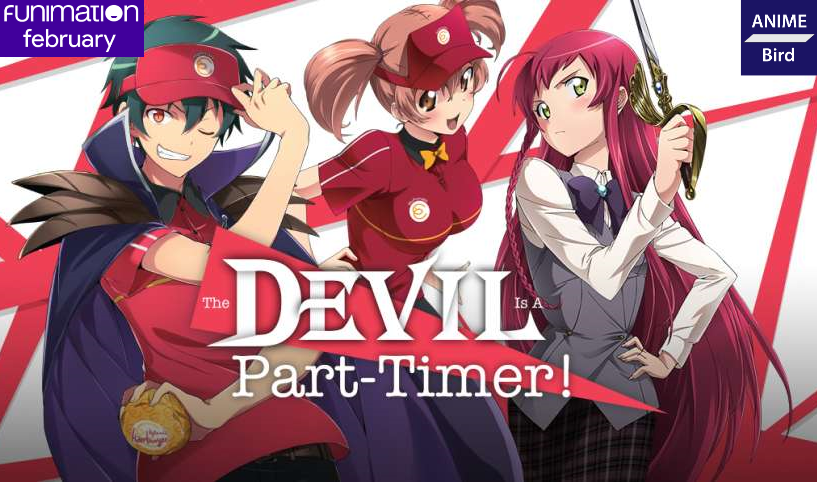
Review: The Devil is a Part-timer (Funimation February!)

I mostly heard of this series after it finished airing. There was a little bit of talk about it during its runtime and stuff, but it wasn’t until after it finished that I began to hear more and more about it. I heard pretty positive things, but I somehow got it into my mind that this show was not that good and not worth my time. One of my closest friends got me to see otherwise.

An Introduction

Aside from Earth, there exists another world (dimension?) filled with angels, demons, along with humans. Its name is Ente Isla. Throughout the history of Ente Isla, the demons have always wanted to conquer the entire world, and they were led by the Lord Satan himself. However, as of late, the demons and Lord Satan have found themselves overwhelmed and surrounded by the resisting angels and humans. Left with few other options, the Lord Satan made his decision: a tactical retreat into another world!

Thus, the Devil himself, along with one of his closest army generals, Alciel, wind up lost and confused in a dark alleyway in Tokyo, Japan. After a short run-in with the police, the two of them found themselves needing to adjust to life here in this strange country. After getting themselves a place to stay, they assume new identities: the Devil renames himself Mao, and Alciel gets the name Shiro. Next, Mao (the Devil) unfolds the next part of his new evil plan: to get a part-time job at a fast food restaurant!

The Devil and Alciel are not alone, though. A “hero” from Ente Isla has followed them through the portal, sworn to protect both Ente Isla and this other world from the Devil and his evil ways. The hero, Emilia, (going under the name Emi in this world) will stop at nothing to reach her goal… as long as it’s made clear that her and the Devil are not dating.

The Plot and Characters

I had this show sold to me as more of a pure, straight up comedy… Something maybe a bit closer to shows like GJ Club or D-Frag!, that take an original concept and just run with the antics. Instead, what we really got was a show with an actual plot, but didn’t take itself seriously with every turn that occurs. It’s up to personal preference how much plot you want in a comedic show (or how much comedy you want in your plot-centric show). I feel this show sits in the middle. There is a coherent (if not deep) plot here, and it’s basically the vehicle that the comedy rides on to keep itself from getting stale.

When it comes to the comedy, I think it’s fairly well done. I won’t say that every joke hits its mark, but I only really saw a rare few of them as “stupid”. There’s a decent share of jokes and moments that were down-right hilarious though. You can never be too sure as to when the show will or won’t throw a joke at you, and I think that part of what makes those jokes so funny: they come at the most unexpected of times. Overall, it felt fairly well-written. Most jokes, though, will just be pretty amusing, making you smile and give the occasional chuckle.

I’m happy the plot doesn’t feel half-hearted. No obvious plot holes present themselves to me, and while there may be an occasional deus-ex-machina-ish moment, it really isn’t that bad. Overall, we could’ve gotten something a whole lot worse, especially since the original idea of the Devil working part-time in a restaurant could lead to something stale really quick (although slice-of-life shows do just fine doing something similar though).

My biggest issues tend to revolve around how the show treats some of its characters, actually. The character Suzuno has a big (but not long) arc near the end of the series, leading up to a big heel-turn (that frankly isn’t that surprising), but she appears too late in the show and things develop with her too fast for it to really feel effective. I wish the show was able to make her development seem more natural. Secondly, there are some villains that are introduced early on, and they get dealt with halfway into the series with a big dramatic battle; after that, the main characters all return to their normal lives until another dramatic battle happens towards the end of the series. For this second battle, one of the villains from the first battle re-appears again, but I had honestly forgotten about him by that point. Honestly, the show could’ve gotten by just fine without him even making a re-appearance there; he didn’t even do much of anything. Lastly, the running joke of Mao and Emi always mistaken to be dating got old on me after a couple times of it happening. It felt clichéd to me and more forced in, or at least unnecessary, later on in the series.

All in all, though, I enjoyed it a lot. Even with these complaints, I walked away from this show with a really positive experience. I don’t think I’ll watch it again until years later on, mainly because it felt like an experience that doesn’t really feel like it warrants a re-watch this quickly, but I’ll definitely show it to friends who haven’t already seen it.

The Atmosphere

The art of this show is really not that bad. However, that being said, it’s not all too amazing either. It kind of sits around “average to good” territory, and personally, I think that’s fine; this show’s focus is on its writing. They don’t need to go 110% on making it look super ultra beautiful. That being said, episode 10 was not all too fun to me to sit through: the animals shown in the episode, along with the lack of establishing shots and an otherwise not-that-special looking attraction park, made this episode stand out to me as one of the least visually-pleasing episodes in this show. Beyond that, though, the show’s visuals shouldn’t scare anyone off.

The animations is also in that “average to good” territory. Again, I think that’s pretty fine. The fight scenes in this show are pretty alright actually; if they were actually bad, it would really detract from my enjoyment of the series.

When it came to the opening and ending songs, I have to say… I wish they were better. The opening sounded like an overly cheerful, peppy, pop song that I just felt didn’t fit with the show; if it were a slice-of-life or romance show, I’d be more okay with it; this show is neither though. The opening animation is alright, I guess; again, I would’ve wanted better. The only two parts I really liked during the opening animation was the scene where Mao changes from the Devil to looking out the window in his apartment, and then a cut to Chiho in her bed.

The ending song reminded me of something out of Non Non Biyori. Non Non Biyori is a wonderful show (just mentioning it here makes me want to rewatch it again), but it’s rather different from what this show is. The ending song isn’t offensive though, and fits more if you see it as something Chiho sings. The ending theme, which is just a pan up on an image of Chiho, is uninspiring though. This anime also had two other ending songs, but I frankly don’t remember them at all.

Funimation did really good on its dub for this show… 95% of the time. I really liked a lot of the voices that got picked: special shout-outs to Anthony Bowling and Alex Moore for voicing Shiro and Suzuno respectively. My biggest complaint is with those rare moments that Chiho had to say anything longer than a sentence; it just sounded bad with the high-pitched voice. There’s a specific scene I’d cite as an example, and I believe it’s in episode 8. Considering everything though, I do like the dub quite a bit.

Final Remarks / TL;DR

The Devil is a Part-Timer is more a show with a semi-serious plot, but with writing that doesn’t take itself seriously at all. The fact that the writing does this makes it really funny, especially in rather opportune moments, and makes this show a really fun experience. This is further helped by a pretty good dub from Funimation. I have complaints and issues with the show, especially with its forgettable opening and ending songs, but it doesn’t stop me from having really enjoyed myself watching it.

Lovers of comedy won’t want to skip over this show. Honestly, lovers of more straight drama or action shows won’t want to skip this over either: you’ll get your drama and action here, and the funny parts are just the icing on the cake. As well, those of you looking for an anime you want to share with your not-anime-obsessed friends have another contender right here.

Rating: Great
Recommendation: Watch It
+++ good dub, comedic writing really takes advantage of its situations for jokes, still has a semi-serious plot too
— opening and ending songs/animations could’ve been so much better, Suzuno’s arc too fast, Chiho doesn’t sound good when saying a long piece of dialogue

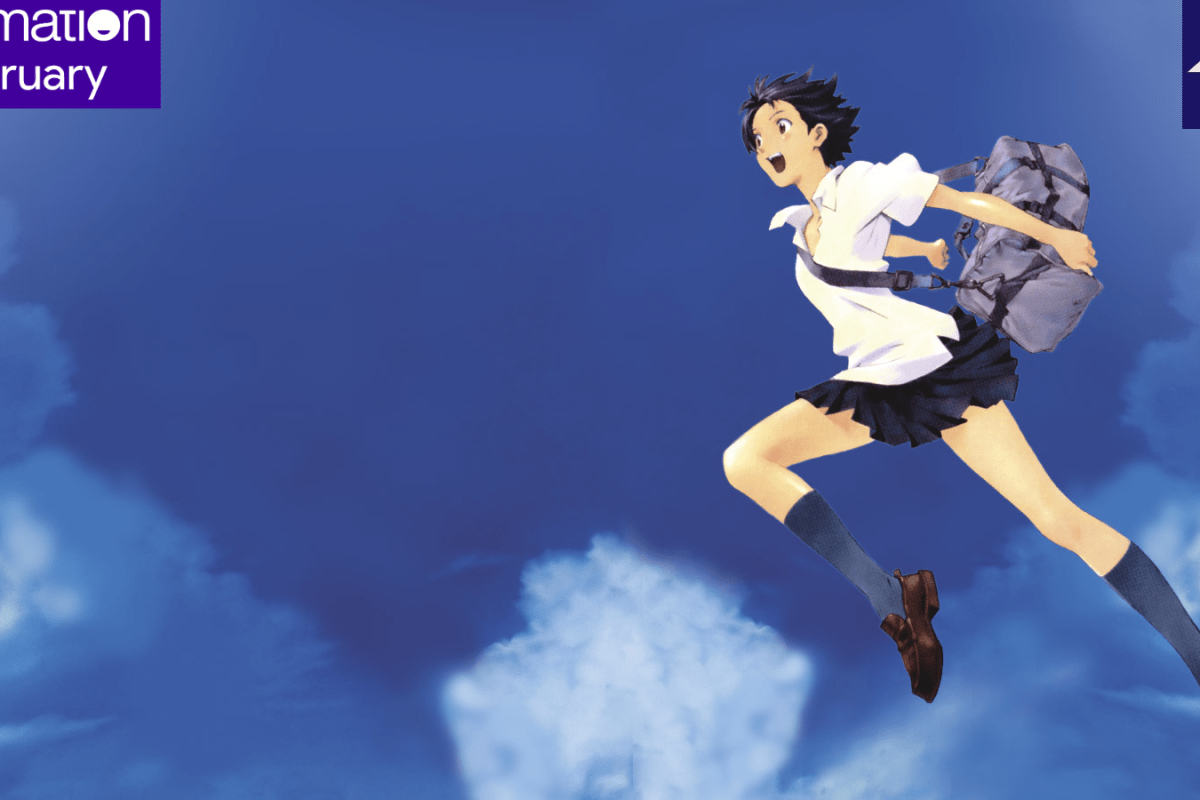
Review: The Girl Who Leapt Through Time (Funimation February!)

After my chance to watch The Boy and the Beast in a theater near the end of last year, I’ve since had more chances to enjoy more of Mamoru Hosoda’s works. That includes this, Wolf Children and Summer Wars (both of which, I’ll talk about at some point!). I’ve been wanting to watch this film ever since I’ve heard of it, and I’m so glad I finally had the chance.

An Introduction

Makoto Konna lives a pretty alright life. She sleeps in past her alarm, but wakes up and rushes out the door to make it to school just in time. She gets through the school day with (usually) little incident, and then spends the afternoon playing baseball with her best friends, Chiaki and Kousuke.

While biking to a nearby museum to meet up with a relative there, she realizes the brakes on her bike stop working. … Unfortunately, she realizes this while speeding downhill towards a railroad crossing where a train is about to pass by. Unable to stop herself, she (and her bike) flips over the boom gate and into the path of the train.

Any person would expect themselves to die in such a situation… but after Makoto opens her eyes, she finds herself sitting on that hill, next to her bike. She sees the train pass through the crossing uneventfully.

She just leapt back in time a few minutes.

After talking with this relative, she decides to test this ability, and begins to use it to prevent unfortunate things happening in her life. But when has messing with time travel ever not lead to complications?

The Plot and Characters

I am pleasantly surprised by the film’s treatment of Makoto. She wears baggy, boyish clothing, plays baseball with two boys and gets along great with them, and overall, lacks much femininity. If there was a character like this in any TV anime nowadays, I’m fairly certain they could not do this without once calling attention to it. This movie doesn’t though; it treats Makoto, her lifestyle, and her friendships as perfectly normal. I think this is really awesome.

This doesn’t mean Makoto is perfect, though; any good character is flawed, and Makoto’s flaw is the fact that she tends to run from her problems. And now that she has the time leaping ability, this “running” ends up her going back in time to make sure this problem never begins in the first place. While watching this, I was a bit annoyed by her doing this, but this may be because it’s a standard sight nowadays to see anime characters running from their problems. Taking a step back and thinking objectively, though, I can’t exactly fault her for this. It’s not like I haven’t run from my own problems in high school.

However, a good film will usually show a character learning to get over (or accept) their flaws. The Girl Who Leapt Through Time does ultimately show Makoto becoming a bit more confident, but I feel that gets a bit sidetracked in a romance subplot and explaining the time-leaping ability in the latter portion of the film. The romance subplot isn’t bad, and it’s not shoe-horned in, but I could get nit-picky about a few things if I wanted to. But I won’t.

Speaking of the time-leaping ability explanation: as far as time travel explanations go, it’s a pretty alright one. On the surface, it makes a decent amount of sense, and it leaves enough things ambiguous that the film doesn’t get bogged down in its explanations and open itself to more holes in its logic. That being said, there is one notable hole that bothered me, but it revolves around the climax of the film, so I won’t spoil things.

Makoto is the only character here who really gets any development, although one could maybe make an argument for Chiaki. You won’t be getting deep, intense views into the minds of these characters, but I’m not that miffed about that. Chiaki and Kousuke, overall, are kept at their surface level appearances, with a few scenes each expanding on who they are. However, this film does a really good job of portraying these characters as best friends; their interactions really come off as such.

Getting back into a more general look at the film, it’s an entertaining ride. There is a sharp turn between the light, super comedic first half of the film, and the more serious second half, but you know that something had to give at some point anyway. This film does pretty good at managing its pacing too; it really slows down at a number of stages to help you take in the scenes and the world around these characters, and it speeds up a number of times too to help move the plot along and keep the audience from getting bored.

Honestly, The Girl Who Leapt Through Time will hook itself into your emotions. It won’t be the saddest or most dramatic story you’ve ever seen, but has some really great funny moments and gets you attached to Makoto just in time for when the roller coaster takes the dive down into problems town.

The Atmosphere

Although I complained about it in The Boy and the Beast, I liked the decision to not use shading on the characters in this film. The simpler character designs and lack of shading work well with the not-as-realistic (but still beautiful) backgrounds here.

Makoto is expressive and quirky, and really comes across as an individual person through her actions alone. How she was animated is gloriously done throughout the entire film. Not that the other characters aren’t either; I honestly don’t really have anything I can complain about with the animation and art (excepting a single scene that was just a tad less quality than the rest of the movie).

This world is bright and colorful. The greens of the leaves and grass stand out with the blues of the sky and the browns of the rocks and dirt. Even at its more serious and saddening moments, color (or at least bright whites) is everywhere in this film.

Moving to another topic without transition… I feel that we never get a good look at Chiaki’s or Kousuke’s faces. I know this isn’t true, I specifically remember scenes where they are in the foreground. However, I still feel this way – a lot of the first portion of the film had Chiaki and Kousuke in the middle ground or background, and not the foreground. Thus, these characters got established without me really getting a good idea of their faces. It felt awkward and distant, and I think it really kept me from connecting more with Chiaki and Kousuke in the film. … I don’t know if I’m rambling in a nonsensical direction, but that’s how it felt to me.

Another thing that really annoyed me with the presentation is the super tech-y looking, mechanical parts moving dimension or whatever that Makoto travels through when she does her time leaps. It felt so sci-fi-y out of place in a film that (beyond the time travel) isn’t really technology focused. I wish the time leaps more looked like the scene when she acquired the ability, with the sketched drawings that flowed from one thing to another. That was cool looking.

The audio of the film is pretty good. I watched the film in Japanese, so I didn’t get to experience how the English dub was, but I’d bet the dub probably isn’t that bad. Makoto’s voice is perfect for her character; it matches everything about her – Riisa Nike, who voiced Makoto, is a live-action TV drama actor, so her good performance is probably not surprising, but she still deserves mad props. In fact, she even was the main lead again in a 2010 live-action re-adaptation of the original novel this movie was based upon. Takuya Ishida as Chiaki and Yuki Sekido as Makoto’s sister Miyuki are also memorable performances to me.

The background music was very piano-heavy, and I don’t really have much to complain about it. Although I may have enjoyed something with more instruments, this is still pretty good, and it’s fitting. I can’t remember specific examples, to my own discontent, but there were good tracks used in this film.

Final Remarks / TL;DR

The Girl Who Leapt Through Time is an anime movie that you hear about a lot, but may or may not have had the chance to watch it. With Funimation now holding the license, though, now’s as good a time as any to get your hands on it and enjoy the experience.

This film does a great job with Makoto as a character, and her story is a fun and interesting one too; you’ll get laughs out of the film, but like all time travel stories, there’s more serious turns too. It’s not the most dramatic or saddest of stories, but it’s still a pretty good one. If you’re looking for something to entertain you in the span of 90 minutes, this is a choice I’d easily recommend. Frankly, I think this is something any anime fan should see at one point or another.

… Geez, I went through this entire review without a single time-related pun? Well, I guess I should leap back in time and fix that particular issue…

Rating: Great
Recommendation: Put This On Immediately
+++ film’s treatment of Makoto, great visuals, good handling of the pacing (slow scenes are really effective)
— Mechanical-gear filled dimension that appeared during time leaps, Chiaki and Kousuke felt awkwardly distant due to not seeing their faces, logic hole during the climax

Review: Tokyo Ghoul (Funimation February!)

Like I’ve said in my Assassination Classroom review, action shows aren’t something I watch all too particularly often. This doesn’t mean the few-off action shows I watch aren’t fun, but it does mean I’m usually relatively behind on the times when it comes to watching these shows.

Here is yet another prime example: Tokyo Ghoul. The show has risen in popularity since its 2014 release, and despite an ever-growing number of people telling me I really need to give it a shot, Tokyo Ghoul was never at the front of my mind when I asked myself what show I should start next.

Finally, however, this show was pretty much presented in front of me without me even being able to protest. … Well, I guess I could’ve, but Tokyo Ghoul soon showed me I didn’t really have a reason to.

An Introduction

In an alternate universe, near-human beings have appeared and live relatively undetected among us humans, the ghouls. Ghouls live, breath, and enjoy life in almost every single way a human does… there’s just one prime difference: they eat human flesh to survive.

It’s created an uneasy disturbance between humanity and the ghouls. While most common people see ghouls as unfamiliar creatures that “would never eat someone like me”, some of humanity has become riled up enough to create an organization called the CCG, focused on the extermination of ghouls. On the opposite end, a number of ghouls simply wish to just survive, being horribly treated and oppressed by the CCG, although some ghouls have lashed back out in violence – and have even created organized criminal organizations to combat the CCG and to bring general chaos.

It’s in this turbulent world that we meet our main character, Kaneki Ken. Kaneki is a book-loving college guy, but after a fatal accident while on a “date” with a girl named Rize, who turned out to be a ghoul, he wakes up feeling different. An ethically-questionable surgery replaced his failing organs with those of the ghoul Rize. Soon enough, Kaneki discovers himself to be something quite rare: a half-ghoul.

Now awkwardly trying to keep his human side while also finding a way to deal with this new ghoulish sense of hunger, another ghoul named Touka delivers him to Anteiku, a small coffee shop in his neighborhood that doubles as a secret safe-haven for ghouls.

The Plot and Characters

The world of Tokyo Ghoul is a complex one, and I’m personally happy that this show doesn’t shy away from its complexities to only focus on Kaneki, and his plight as a human-turned-(half-)ghoul.

Although Kaneki is certainly the main character of the show, and he gets the majority of the screen time and focus, a decent amount of time is also spent on someone on the flip side of the coin: a 30-something CCG investigator named Amon. It provides a decent amount of insight into both sides of this conflict, and at its best moments, Tokyo Ghoul is able to show that neither side is really in the wrong here. The CCG, afraid of the ghouls and scared of what they could do to humanity, determined the ghouls are an enemy that must be stopped.

However, as the anime spends more time on Kaneki’s side of things, the CCG are more often than not painted in a bad light. The show does a really good job of showing the humanity (in essence and appearance, not in physicality) of these ghouls, showing them to also be caring and feeling, that simply want to live their lives, but are also stuck with necessity to eat human flesh. It really gets you to care for and connect to these characters, and to root for them as they continue to hope they can live without fear and persecution.

It seems inevitable, though, that violence enters into the picture with Tokyo Ghoul; this is an action show, after all. Although a lot of the violence in the first half of the series stems from Kaneki stumbling into various parts of the ghoul world/way of life, we soon see the CCG become the antagonist to the actions of the ghouls, and we finally see Amon (and company) fighting against Kaneki (and company). It leads to an even-bigger enemy appearing at the very end of the series as well.

Although there was one fairly emotional scene when Amon and Kaneki first stood face to face, where Kaneki tried to show he was peaceful… there really isn’t much effort on Kaneki’s side to try to open a line of communication between the two groups. Of course, when both are so enraged on the other side, it’s hard, but I feel Kaneki could’ve gone further.

The final episode of this show, as well, is a really fascinating one, especially for Kaneki. I won’t say much about him in this episode, but needless to say, we really see him begin to come into his own, and actually go through an entire character arc in one episode. The episode does it in an artistic, realistic, and disgusting way that makes you want to look away but yet stay glued to the screen the entire time… and it’s awesome. That being said, though, those looking for a resolution will not find that here at the end of this final episode.

However, you can probably get some sort of idea of what happens after the end of that episode. … And after you develop and believe in that idea, move on to the second season.

The Atmosphere

Tokyo Ghoul, probably unsurprisingly, is a very dark series. Blacks and dark greys are used throughout, and even in the scenes with warmer tones and a calmer atmosphere, the show still felt distant and uninviting with its colors and visuals. I wouldn’t expect it to allow me to get too comfortable, honestly, but it also seemed like it didn’t want me to ever be comfortable at all, while watching it.

The visuals doesn’t leave me with much to complain, but it doesn’t particularly awe me all that much either. It’s not hard to keep track of what’s going on in fights, even if the animation isn’t the most fluid. The slower scenes allow some of the more artistic background visuals to shine at times, though. All in all, though, the quality does stay pretty consistent, and I didn’t really notice any glaring issues.

However, there will be one scene that I’ll probably end up remembering for a good while: in episode 1, after Kaneki returns to his apartment, he tries out a variety of foods, and slowly (and with little dialogue) realizes that he can’t eat human food anymore – he’s a ghoul. The emotions of the scene were shown in Kaneki’s panicked, hurried actions, and his eventual crying at the end, and it was honestly kind of moving.

The character designs are pretty standard for a 2014 anime; it’s not necessarily bad, but it’s not pushing the envelope either – it’s safe. The design of Kureo Mado (Amon’s older/wiser CCG partner) is the only one that really stood out to me; the other standard designs actually became a problem for me. I ended up mixing up or not recognizing a number of the supporting cast simply because they weren’t distinguishable or different enough. On a related note, though, the designs of the quinques (the weapons the CCG use) were pretty cool (I liked them even more for story reasons that I won’t spoil).

The show’s soundtrack ranges from big and grandiose, to quiet and timid, when the scene so needed it to be. Of course, any decently done soundtrack can do so. The reliance upon strings and the occasional electronic instrument or vocal for the action scenes do lead to some pretty cool songs, though. The piano is brought out for the more quieter and somber moments, and it also serves the show fairly well.

Speaking of voice acting, since I watched Tokyo Ghoul first in Japanese, I’m more used to the Japanese voices. The performances of Shu Tsukiyama and Nishiki were my favorite. This is one of those shows where you’ll get attached to either the Japanese or the English side, though. I’ve listened to parts of the series in English, and although the English cast sounds overall fine, it still feels off because I’m so used to them in Japanese. Touka’s performance in English seems pretty decent, but I feel Austin Tindle as Kaneki isn’t the best at monologues.

If I really had to tell you which one to choose, I’d probably tell you to just watch the show in Japanese. The subtitles aren’t that bad to follow, anyway. That being said, whatever one you choose, you’re probably gonna end up not liking the other all that much.

Final Remarks / TL;DR

I really like the story of Tokyo Ghoul; it does a really good job of presenting the life of a ghoul, the troubles they face, the issues they want to save, and the eventual fighting that seems inevitable for them. It seems a bit of a shame that the show couldn’t completely show the CCG as morally grey though; I would’ve liked this show more if it were more dedicated to showing neither side as black or white. Kaneki’s plight is an adventure to watch, though, for sure.

Action fans will probably have already seen this. If action isn’t your main jam, though, it may get a bit more murky for you: the story is interesting and the show does allow you to connect with its characters, but you will also have to put up with a decent amount of gore. Give it a few episodes and see what you think.

Rating: Good
Recommendation: Give It a Shot
+++ really allows to connect to the ghoul characters, the final episode, not straight good guys and bad guys
— could’ve gone further to show CCG as morally gray, Kaneki’s attempts to communicate with CCG could’ve been better, standard (not bad nor super-amazing) presentation

Review: Death Parade (Funimation February!)

Death Billiards was a short film created by Madhouse. It was part of a project for young and upcoming animators to learn under major anime studios. This same project is where Little Witch Academia first started as well, and now both  have had sequel TV series come out. (In fact, both Death Billiards and LWA were both made for the project’s 2013 results.)

Thus, Madhouse (along with NTV and Vap, a Japanese TV station and a DVD producing company) came out with Death Parade in early 2015. I, however, didn’t take the chance to watch it until a year later, in January 2016, and I wish I had earlier…

An Introduction

Knowing where you go after you die has always been one of humanity’s biggest mysteries.

This anime puts forth the idea that when a person dies, their soul is sent down to this special supernatural realm, where beings called arbiters judge them, and decide where they go from there. Any human soul has two possible destinations: reincarnation (being brought back up to the living world – with no memory of your past life), and “the void” (a bottomless pit where souls marked irredeemable are doomed to be constantly falling in forever).

Arbiters decide a soul’s destination by a rather interesting manner: by having them play a game. Souls come down in pairs of two, most commonly, with only some memory of who they were, but absolutely no memory that they themselves had died. These soul pairs find themselves, confused and lost, in a mysterious bar, where the arbiter acts as bartender. The arbiter strong-hands the two into playing a game; as they play the game, their memories begin to return to them, and they begin to show their true nature – who they really are as a person. Things tend to turn really emotional as the visiting souls realize they are dead and what is really going on here. Once the arbiter sees enough of the souls’ true selves, he (or she) can make the judgement, and decide where each of these souls will go.

The anime mainly focuses on one particular bar with one particular arbiter: Decim, of the bar Quindecim (and his name is pronounced like “De-keem”). He’s a relatively quiet and polite person, standing up straight and sticking to his role and his rules, and never beating around the bush. His boss, a girl named Nona, assigns to him an assistant, who we’ll call “the black-haired woman”. Strong, fierce, and full of emotion and ideas, the black-haired woman has no memories of who she is, nor even what her name is.

All in all, this starts off the ride of an interesting and unexpected adventure, and Decim, unknowingly, is at the center of the stage.

The Plot and Characters

As the black-haired woman becomes Decim’s assistant, she offers her critiques and thoughts on the situations in later episodes, sometimes even directly intervening with the other characters to keep them from going too far.

When it’s all boiled down, this anime is all about the question of “is this the right way to be doing these judgements?” All of the protagonist characters here, whether you see it on the surface or not, are trying to figure out their own answer to that question. For Decim and the black-haired woman, she helps him by exposing him to new, different trains of thoughts and expanding his views on how things can be done.

While Death Parade does provide some sort of answer to that central question, the final episode seemed a bit more focused on finishing the black-haired woman’s character arc, more than accomplishing anything else. It still felt dramatic though, and wasn’t unsatisfying, but I do wish they there was a bit more about the arbiter business side of things. The character who’s been built up to be the antagonist of the series, honestly, seemed like he was gibbed, not really getting much time to shine. Overall, the overarching plot could’ve used a bit more meat to it, but it was not underwhelming.

That all being said though, the storytelling isn’t bad here. For Death Parade, it’s great stories are in the individual episodes. Each episode has a start, middle, and end of its own, and a lot of them feature a game and judgement. We get to meet and react to a number of fascinating characters, and see them break down and show their true colors to Decim and the audience. It’s rather cool.

However, during the big climaxes of a lot of these episodes, the characters talked a bit too vaguely (using metaphors and vague words) for me to really understand what was being said. That is, unless I paused the video and thought through the words, which resulted in these scenes not coming across quite as impactful for me.

Each and every episode always seemed to be over before you’d ever expect it. When you sit down to watch an episode of this, the time just flies right by. It really sucks you in, and it’s hard to resist clicking that “Next Episode” button once you finish one. It’s said to be one of the best things one can say about a show: it leaves you wanting more. Say what you want about anything else in the show, but it’s certainly very entertaining to watch.

The Atmosphere

The visuals for this show are nothing short of impressive. It’s clear that Madhouse had put the most effort into the 1st episode, trying to sell people on the show, but even so, the animation and art quality throughout the entire show was overall outstanding. There was a lot of fluidity to the motion, and a lot of the special effects, coupled with some pretty cool audio effects at times too, really helped make it really stand out. One of my most favorite things was the billiards table where the billiard balls were actually the planets of the solar system (and the moon), and the sun was the cue ball.

I rather liked the character designs for the visitors because of their clothing; it just really hits home that these people came from the world of the living to me. I don’t know if that makes any sense, but I really liked them.

For the characters of this actual realm, they were also good, but not anything really outstanding. That being said, I liked the hair on the black-haired woman, and the cross shape that is in each of the arbiters’ eyes was pretty cool (I do wish they looked a bit more glossy though, but it’s frankly more of a nitpick by this point). I also liked the design for the smiley elevator guy (who’s apparently named Clavis, according to Wikipedia). He doesn’t receive too much attention throughout the show, but he recurs a lot, and I like him.

The show utilized various color schemes for its various settings. Quindecim has a lot of dark purples and blues, which looks cool, but also tends to make it seem a bit more mysterious and creepy, where I may have expected something a tad bit warmer. In stark contrast, the bar of another arbiter, Ginti, who gets shown a few times, tend to rely on bright reds and tans, and it looks cool in a different way, and also seems more inviting. Other places in this realm tend to go with a greenish-blueish thing and occasionally a yellow or orange. Overall, the whole place has this cold, damp, eerie look; I can’t say it’s not befitting, because it kind of is, but there’s still… just something to it I’m not enamored with.

I watched Death Parade in Japanese, and I generally liked everyone’s performance except the voice chosen for the eventual antagonist; he either sounded bland or creepy (in a pervy old man type of way) which I don’t think fit. If he sounded more quirky or something, I would’ve liked that better. My other issue is with Ginti, but really an issue with the character himself. The show’s mythos states that arbiters can’t feel emotion, but yet, Ginti tends to sound (and look) angered or annoyed a lot; that just seems contradictory. This character going against the show’s stated rules stuck in my mind a lot throughout the series.

The other great thing about this anime is its music. The opening song is great, and infectiously easy to get stuck in your head, with a rather cool opening animation to match. The background music for the series was also really great, and rather unique. It fit this series really well and just sounds awesome. I’d love to listen to that music on its own.

I’d gripe over the fact that they play the same 5 or 6 cool tracks over and over again, but frankly, the series is over before the music loses its feeling and edge. The ending song was alright, in comparison; for some episodes, they showed scenes from the visiting souls’ time among the living or other points while the credits played, and I liked that a lot more than the standard ending animation.

Final Remarks / TL;DR

Death Parade does a lot right. It provides an interesting premise, has great animation and music, and provides really cool drama and storytelling. That being said, I’d say the thing that suffered was the overarching plot, sadly. The individual episodes on their own are absolutely wonderful, and you just wanted more after you finished each one. However, the relatively small issues I have with this show keep me from calling it a “masterpiece”.

Honestly, if you haven’t seen this show, do so as soon as you get the chance. I highly doubt anyone will walk away disappointed. This will especially work well with people who really like character-based stories. No matter who you are and what you like though, I think you’ll find something to be entertained with down in Quindecim.

Rating: Great
Recommendation: Put This On Immediately
+++ great animation and music, individual episodes are awesome, black-haired girl
— eventual antagonist doesn’t get his time to shine in overarching plot, Ginti as a character seemed to mess with the show’s own mythos, dramatic scenes sometimes a bit vague

My Look at the Winter 2017 Season

So 2016 was a busy year for me, especially the latter third of it. This means that, unfortunately, I didn’t have much time to actually focus on watching anime and staying up to date with the new and current shows. This is probably pretty apparent since a number of my first reviews of this year were from shows two seasons ago, having finally gotten a chance to finish them.

This season, though, is different. I finally have the time to actually watch more anime shows again, so that’s what I’m gonna do! The Winter 2017 season started at the beginning of this month, so now that we’re a few episodes in and have a better idea of how these shows are kind of going, now’s a good time to talk about them and see which ones are worth our time!

Special note: I will only be talking about shows that began airing this season. I didn’t watch a single show from last season, and there’s enough I’ve seen that started this season that I don’t feel a need to go back and give them a try.

So, let’s begin!

Akiba’s Trip The Animation

akibaThis show, I found because Funimation announced they were simuldubbing it. Although that alone shouldn’t be reason enough to start watching a show, I still decided “ehh, what the heck, I’ll give it a try”.

The story is about Tamotsu, an otaku who suddenly finds himself a superpowered semi-human being, who is tasked to protect the Akihabara strip, along with a small team of new friends, from evil creatures called Bugged Ones who want to take over the city. This team consists of him, a girl named Matome (who turned him into this superpowered state), and another girl named Arisu (who’s human, but seems to be along for the ride).

Akiba’s Trip honestly don’t sit completely right with me. I think it is mainly because I don’t exactly like Tamotsu, the main character. I don’t totally hate him either, but still, he’s selfish and doesn’t seem to know how to be serious. Arisu is probably one of my most favorite things in this show for me. Her bubbliness and that weird spinning thing she does to exit a scene is really fun.

Beyond that, the action is interesting enough, although the action scenes could perhaps go on for a bit longer. Everyone on the team is competent, but Tamotsu seems to get a bit more attention than everyone else. It also knows how to do non-action scenes fairly well, too, though. Bubbly Arisu tends to be the comic relief. In the non-action scenes, though, is where Tamotsu’s selfishness and other flaws really show themselves, and irk me.

It isn’t on the top of my “must see shows of this season”, but I’ll keep watching it for now. If you’d like to check it out, I suggest watching 2 episodes before rendering your opinion.

Fuuka

Fuuka animeThis is probably one of the shows I’ve been hearing the most about this season.

Looking at it myself, it seems obvious pretty quickly that this is a drama/romance show, revolving around male lead Yuu, and two girls: random new friend Fuuka, and childhood friend-turned-superstar idol Koyuki.

Of the two, the anime formally introduces Fuuka first. However, she really rubbed me the wrong way in the first episode; although Fuuka hasn’t been quite as abrasive since then, she still annoys me. Based upon first impressions, I like Koyuki a lot more, but she still comes off as a bit odd to me too.

I’ve gotten used to fanservice existing in shows, for the most part. When it gets really up there in your face, it’s a bit annoying, but all in all, I tolerate it. However, the whole “girl getting mad at the guy when she ends up in a questionable situation” is a joke in anime that I’ve really never gotten any enjoyment out of; the fact that this anime pulls this 3 times in two episodes… ehh…

All in all, though, this doesn’t seem to be that bad of a show. Bad introductions aside, Fuuka has made me curious to see what will happen with the main characters in the future; I can see myself getting swept up in whatever ends up happening next. However, I think I’ll put off watching this until after it finishes, to see if other people say it goes downhill or anything.

Gabriel DropOut

gabriel-dropoutThe angel Gabriel, after graduating school in heaven, moves on to the next step in her education: learning how humans act at an actual human high school. After arriving in the human world, though, Gabriel finds herself sucked into an MMORPG, believing that healing other characters is the right thing to do as an angel. Years pass, and Gabriel has become so irresponsible, she risks becoming a “fallen angel”. Her friend Vignette, actually a demon, convinces her to return to school though and try to get back on the right path.
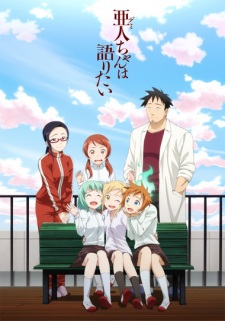
Gabriel DropOut is a comedy series, and honestly, it’s like any other comedy anime you’ve seen before. Another demon appears, named Satania, and declares Gabriel to be her rival, despite being totally incompetent. Gabriel is an otaku slob, wanting to take the easiest way out of everything. The fact that the main characters are either demons or angels is the gimmick of this series. It’s not terrible, but it’s jokes aren’t that new when you get down to it, and I feel more bored watching it than entertained.

I’m not going to be continuing this one. It’s not something to avoid, but I don’t see it as anything special either.

I’ll admit the opening song and animation are pretty cool though.

Interviews With Monster Girls

interviews with monster girlsThis was actually not going to be a show I was going to pick up by myself, because I thought it was related to the Monster Musume anime series a few seasons ago; a friend told me I should check this out, though, and so, here we are.
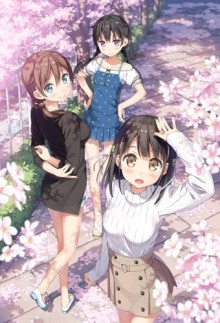
In an alternate world, where certain people can be born with some supernatural characteristics, such as those of vampires, dullahans, or succubi, we meet Mr. Takahashi. He’s a biology teacher in a high school, and he’s had an interest in these “demi-humans”, and has wanted to be able to sit down and talk with them. However, since he never met any, he never really got the chance.

Now, all of a sudden, after meeting a new teacher who turns out to be a succubus, he also runs into students who are a vampire, a dullahan, and a “snow woman”. The coincidences of this first episode are beyond the range of believability, but I’ll let it slide. Mr. Takahashi gets a chance to sit down with the vampire student, after a random run-in with her one night, and he proceeds to interview her about how her life as a vampire is.

This is a pretty cute show, honestly. Even after one episode, I felt myself really enjoying it and wanting to watch more. I really like the interactions these various characters have; the unique situations these “demi-humans” have lead to some interesting dialogue and funny moments; this show doesn’t squander the potential it has here. I honestly think it’s pretty well-written, and I’m looking forward to continuing this throughout the season.

If I have any concerns, it’s what will happen later on down the line – after Mr. Takahashi sits down with the four girls we’ve met so far, where will the anime go from here? I’m hoping that we don’t end up with lazy, contrived situations that are written in just for cheap jokes or development.

If you’re looking for another show to add to your watching list for this season, and you haven’t given this one a look, I suggest you try it. I bet the first episode will get you hooked.

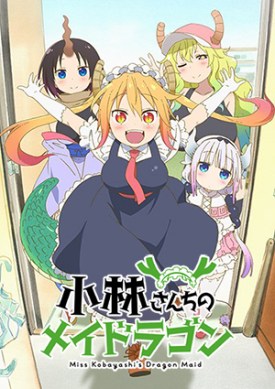
Miss Kobayashi’s Dragon Maid

Miss Kobayashi DragonMaid

The newest show to be animated to by Kyoto Animation, this series’s colors and designs are more flat and a bit simplified, rather than the shaded, super-realistic visuals of KyoAni’s past works.

A female dragon-turned-maid named Tohru falls in love with a programmer named Kobayashi, after the latter drunkenly stumbles into a forest and comes across Tohru, telling her that she can stay in the latter’s home. The next morning, she doesn’t remember a thing, but now she has a new roommate. Pretty quickly, they’re also joined by a younger dragon named Kanna, and Kobayashi now has to get adjusted to the new hectic life she finds herself in.

This show is a comedy series, and like Gabriel DropOut above, also works on a gimmick: the fact that most of the main cast are dragons. However, I feel this show really takes more advantage of the whole “dragons” thing, and its jokes get to me more and overall, this show feels more clever. That doesn’t mean it doesn’t strike it with every joke; I don’t think I like Kanna all that much, and Kobayashi and her coworker going into full otaku mode when they get drunk also has already gotten old to me, 3 episodes in.

Kyoto Animation’s visual quality is still on display here; Tohru as a dragon in the first episode looked really well animated and drawn. And, as a programmer myself, I find myself a bit impressed: the dialogue of Kobayashi and her coworker in the first few episodes sound like things in the same vein of what actual programmers would complain about.

In the end, even if it doesn’t hit it out of the park with every joke, this show’s probably one of the most entertaining things I’m watching this season. I won’t say everyone will fall in love with it, but if there’s one current show I would suggest people to check out, this one would be it.

OneRoom

one-roomMade by the team that created the “Makuro no Danshi” short-length series, they’re back with a similar premise. This time, the story revolves around the male protagonist being you, the viewer. The characters (well, character) talk to you, and pauses as if you were to actually respond to the conversation. It’s like a reader insert fan-fiction or something, except in a video form.
It’s a pretty okay show, and for being 4 minutes long, one can’t really expect something very deep or anything anyway. It’s rather simple, and it’s kind of cute.

I must say it does have some really pretty backgrounds at times (although the inside of the protagonist’s room in episode 2 looks very plain and subpar). I personally like realistic-looking backgrounds, so this show doing that is pretty nice.

If it’s something that seems interesting to you, give it a shot. I’ll probably keep at it simply because it’s 4 minutes per episode.

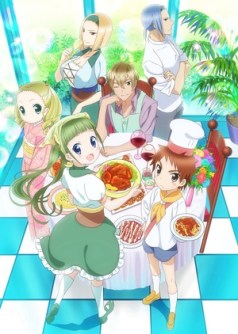
Piacevole

Another short-length anime series that I randomly stumbled across, this show revolves around Naruse, a girl who accepts a job at a nearby Italian restaurant, Trattoria Festa, because she needs some extra money. It’s here that she runs into a series of wacky characters and situations.

587670a1df64bIt’s what you should come to expect from a short-length comedy series: over-the-top wacky characters, everything going at a super-fast pace, animation and art that looks weird and inconsistent, and it’s all over in just a handful of minutes.
There really isn’t much to say about Piacevole, honestly; it’s a pretty alright show, and its jokes are also pretty alright. The animation and art is one thing, but it’s not really that glaring or out-of-place for a short-length show. All in all, it’s just pretty alright.

If you’re looking for something quick and funny, you can give this a shot. You may enjoy it, you may not. But with it only being a few minutes long, there’s no harm in trying. I enjoy it personally, so I’ll be continuing to watch it.

Seiren

Seiren got me with a PV that I watched about a month or two ago by this point; it positioned itself as a romance anime where people are truthful with each other and themselves. This is the one show I was excited about going into this season.

So, after 3 episodes, this show didn’t exactly meet my expectations.

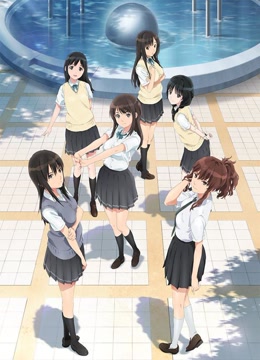
seirenSeiren puts you into the perspective of high school boy Shouichi, who finds himself to be the butt end of Hikari’s teasing. The first episode awkwardly flounders around a little bit, but eventually gets across the point that Shouichi goes to a summer retreat camp with his best friend Ikuo to study for the upcoming university entrance exams, where Hikari also shows up out of the blue. There, the beginnings of a friendship blossoms between the two.
At times, I see this show falling into clichéd romance anime trappings. The animation quality is only okay at best, and there are specific lines of dialogue that don’t really make much sense. That being said, the moments where the characters are honest and straightforward with each other really make this show for me. I really enjoy seeing Shouichi and Hikari together. Looking past its surface issues, I am finding myself enjoying this show a decent amount.

I’ll be continuing to watch this through the season; it probably won’t result in anything that amazing or great, but I’m interested enough to keep going. I wouldn’t not suggest others to give it a try either, but I’d say to give it at least 2 episodes before deciding what to do. Honestly, though, I won’t be surprised if you decide this show isn’t for you, it does have some glaring problems.

Wrap-Up

There are some seasons where there’s just a whole slew of shows I want to watch, and I don’t want to give up on any of them because they’re all so good. That isn’t the same situation here, unfortunately; most of the shows I’ve tried are pretty much “okay” to “pretty good”. Not every anime season is going to be absolutely spectacular though, and honestly, it works better for my busy schedule to not pay attention to too many shows at once.

Hopefully through this post or in other places, you’ve found a few shows this season that interests you. If there’s any that I haven’t tried, or if you have another opinion on the shows I’ve talked about here, let me know in the comments!

Mega Website Update Post Thing!

Oh, hello!

So I’ve been cooking up some things for this website, and I thought it’d be knife to talk about them! … Oh, I’m sorry, did I say “knife”? I meant “nice”. Honest mistake, truly.

Funimation February

First of all, by sheer coincidence, I will be able to do a Funimation February! In case it was not made aware before, I stockpiled a bunch of reviews that I’ve made before I even started this site, and it turns out a good majority of the reviews I’ve yet to publish are from Funimation-licensed titles. (It wouldn’t be a majority, but I ended up scrapping a number of reviews because they weren’t written well enough, so the majority left over are that.)

Thus, look forward to me doing that this February! Maybe I’ll try to find a fancy little way to spruce up the site or something during that, but don’t count on it.

Along with that, I will be writing two non-review pieces for the month of February. The first will talk about the history of Funimation as a company; although I won’t really be providing much anything that you can probably find yourself, I want to compile it as part of this whole big event.

The second post will be more of a piece on North American licensors/distributors at large, and talking about their role in the anime process. I want it to be the starting point of a growing number of posts talking about the anime industry and how it works, simply because I’ve always wanted to do that since I began writing here. So hopefully that will be a good kickstart that will lead to more industry-related posts in the future.

Somewhat Related Things… plus Twitter!

This being said, I might not be posting a review this Friday to prepare for that (and other things going on in my life). I don’t want to completely rule it out just yet, but if you don’t see one on Friday, you’ll know why. I will try to mention it on Twitter if it ends up not happening.

Speaking of which, I do have a Twitter! In fact, it’s been at the bottom of every page here on this website! I’ll be trying to be more active on it, so if you want more of a look into what I’m doing with this (or anime in general), please follow me there! My account is AnimeBirdTweet, since AnimeBird was already taken. :/

Also, shoutouts to Karandi at 100 Word Anime! They’re a pretty cool blog, and they just started a Patreon too! Karandi has a lot more followers and is more active than I am, so they’re succeeding in every way I’m failing, but hey, that’s part of what makes them cool!

March Troubles

Alright, now to switch gears.

Sometime in mid-to-late March, this website will be going down for up to a week while I figure out some back-end stuff.

Actually, more specifically, the website will still be around, but it will be at “animebirdreviews.wordpress.com”, rather than the URL you’re used to (“animebird.net”). So I’m not gonna be actually gone during that period of time, I just will be harder to find.

It is temporary, I assure you! When I first started this website last year, I ended up in a setup that was needlessly complicated (and expensive), mainly because I’m pretty new to this whole owning-a-website thing. I’ve learned since then, though, but to implement the changes to make things easier on me, it will require some downtime.

I’m just putting this here now, so whoever reads this in the near future will be notified. … If it’s already past March (2017), well… you don’t have to worry about anything then, do you? … Why are you even reading this anyway?

Other Website Update Stuff

So, now I’ll just give a quick rundown of some other things I’ve changed or that are in the works:

  1. I added a “Marathon Mode” option to the top navigation bar, which you can get to by putting your mouse over the “Reviews” button (if you’re on mobile, I’m not entirely certain how you’ll get there, sorry). If you’re looking for a way to read all of my reviews in one place (for whatever reason), here you go! … Honestly, I just added it there because I thought it’d be kind of cool (or at least silly).
  2. I’ll be doing further translations for the McDonald’s anime ad thing. I asked people if they wanted me to do so on YouTube, and (unsurprisingly), a decent number said yes. I won’t give a deadline for that, since I haven’t even thought about it much yet, but it’ll be happening eventually.
  3. My 1-year-anniversary (since my first review) will be coming up this summer! I do have plans for things I want to do for it, but I’m gonna keep quiet for now.
  4. I’ll be trying to unify the colors and fonts used on my site and in my branding here. I don’t know yet if I’ll change the website to match the branding, or change the branding to match the website. We’ll see in the future though!
  5. Should I make the font size bigger for my review posts? It’s an 11 pt font; it’s not unreadable, but it is noticeably smaller. I’ll be pondering it.

And that’s about it. I know this is kind of long for an update post (but still not as long as my shortest review). I wanted to say a bunch of stuff though! So here we are.

I’ll see you around again sometime soon!

Jayke (AnimeBird)

Review: Mushi-shi

I can sit here and say that Mushi-Shi is like a cross between X show and Y show, or two other shows, or something, but I feel that no matter how many comparisons I try to make, none of them will really explain or show what Mushi-Shi actually is. This show can really only be explained by explaining it itself; no comparisons will really help that much.

This show never really caught my interest when it was airing. It seemed okay, maybe a bit intriguing, but not something I wanted to sit down to really look at. However, a few friends of mine saw the show and loved it, and, with a certain amount of pushing, got me to sit down and try it too.

An Introduction

In 1800’s Japan, our main character, Ginko, travels around the country, offering to help people, families, and even entire villages, as they face problems with a certain kind of supernatural being.

These beings are “mushi”, small spirits that are life in its most basic essence. They come in varying shapes and sizes (although most are relatively small), and they tend to keep themselves separate from humanity, but not always. And when the mushi do get involved with humankind, it usually isn’t in the human’s favor. It’s not that mushi are intentionally harmful creatures (most of the time); they simply have supernatural abilities or properties that tend to interfere with a human’s ability to have a normal life when the two come into contact.

Each episode features Ginko traveling to a new location. Ginko is a white-haired, middle-aged man with an eye missing (not that you can usually notice, though) and a proclaimed “mushi master”. He generally tries to be helpful (he’s also relatively forward), but he tends to like his privacy and isolated-ness as well. Ginko doesn’t have a place to call home, and he just continues to travel, with every new place and every new person he meets providing him a chance to interact with a new type of mushi.

Some of the mushi he ends up meeting include mushi that consume sound (quite literally), a living and traveling swamp mushi, and mushi that live within the writings in paper. There’s even one that is basically a physical rainbow. In any case, every new episode features a new mushi to talk about, and a new adventure to be had.

The Plot and Characters

Mushi-shi is very episodic; the events in every individual episode never overlap, and in general, it tends to work in the show’s favor, allowing them to show you a wide variety of situations with a wide variety of mushi. This does mean that the characters we meet in one episode are never seen (or mentioned) ever again though. In some cases, it kind of stinks, because I’d like to see more of these characters, but at the same time, the episodic nature keeps things new and fresh.

However, the show’s episodic storytelling also leads to it being annoyingly inconsistent, from a worldbuilding perspective (which is something I really focus on). There is an archive of tales from mushi masters all over Japan, for example, that’s never mentioned prior or after that episode. And while this series writes off many of the mushi we see as “rare” or “only lives in a specific place”, there are some that you’d expect to be more present in multiple episodes. While the lack of a consistent world doesn’t hinder you from enjoying what Mushi-shi has to offer, it makes it hard to wrap your head around the lore that the show presents to us.

This show has only one recurring character (well, two, but we only see the other character, like, two or three times), and that is Ginko. Ginko tends to be pretty helpful and kind person, but he has a consistently stoic face. He never displays extreme emotion, in one way or another; I suppose his mellow and calm nature tends to make him more helpful in dire situations and keep others grounded, but it’d also be nice to see the guy get a bit agitated or something at times. His backstory is feebly explained in two different episodes, but it didn’t really do too much. All in all, he’s not a bad character, but there’s not really anything to him that really grabs me and attaches me to him. For him being the protagonist we follow around every episode, that is perhaps a tad disappointing.

When it comes to the show’s pacing, it’s pretty slow. And this isn’t really a bad thing. I feel a lot of today’s shows have grown too fast, so it’s nice to see a slower-going one become a bit more popular. The slow pacing is rather relaxing, and it gives you enough time to really ingest the atmosphere and feelings.

That being said, there are definitely episodes where Mushi-shi lost my attention for a short while because things grew too slow. It generally doesn’t fail in grabbing my interest later in the episode though. I could play this on my TV and have Minecraft running on my laptop and enjoy the both just fine.

The Atmosphere

If there’s one thing I really do have to praise Mushi-shi for, it’s its visuals. I watched this show in late 2015, and I thought it had pretty decent visuals. And then I learn that this show actually came out in 2006 (9 years prior!), and I was flabbergasted. This 2006 show’s art and animation directly competes with the art and animation of shows coming out a number of years later! If you had asked me, I would’ve said it came out in 2011 or 2012, not as far back as 2006. That’s just impressive. This show seriously has not aged.

However, despite how impressed I was with the quality of the visuals, I can’t really say the art is “beautiful” (which is a word I’ve heard a number of people use to describe it). I think, however, this more stems down to what I perceive as “beautiful”, which is usually expansive shots and bright, vibrant colors. In comparison, this show used nearly exclusively muted colors, a choice that does fit the more natural, spirit-y tone of this show. It does have some pretty great looking shots, though; It’s certainly pretty good looking, no matter how you put it.

The show’s background music works pretty well for the show. It generally has this more natural, traditional Japanese sound to it, really fitting the feel of the entire show, as well as blending in with the scenes itself. It is pretty good, but I wouldn’t listen to the soundtrack on its own. The opening song is not something you’d generally hear in anime nowadays, and its relaxed tone sounds good, but I don’t necessarily think the song is that memorable. The opening animation is rather short, and simplistic. It is pretty looking, and fits the show.

In fact, returning to the visuals again, I actually like Mushi-shi’s simplistic take on the common aspects of a TV episode: the opening credits/animation, the ending credits, and showing the episode title. The opening animation is nothing more than a bunch of images of nature, and the ending credits is just white text on a black screen while music from the episode continues through. The episode title is displayed in a colored rectangle that appears within the first few minutes of the episode, usually during an establishing shot. Again, I like the simplistic approach they took here, and I think it really helped with the atmosphere. Anything flashy would be unsettling for this series.

I watched this show in English, and here I present my gripes with Ginko again: I don’t necessarily like Funimation’s casting of Travis Willingham as Ginko. I’m not quite sure if it’s this casting that made me like Ginko less, or if there’s something about Ginko that just caused me to be upset about the casting (although I think it’s the former). It’s not like he did Ginko or this show injustice, but I just wish they had chosen someone else to be him. If I were to watch this show again, it’d be in Japanese.

Final Remarks / TL;DR

I think that throughout the writing of this review, I convinced myself to like this show. When I walked away after finishing the last episode, I thought to myself, “well, that was alright, I guess”, but as I write this now, I find myself saying, “Mushi-shi is pretty good”. The relaxed, simplistic tone and atmosphere of this show really helped keep focus on the various adventures and stories we get to experience in each episode. I still can’t help but be amazed by the fact that the show still looks like it’s barely aged since its airing in 2006. My biggest gripe would be the English casting of Ginko, but if that’s the biggest problem here, that’s saying something.

That being said, though, I have a bit of a hard time making a recommendation for Mushi-shi. I certainly wouldn’t say this show isn’t worth your time if you can give it. However, I wouldn’t imagine this show being the most enjoyable to watch by yourself. I’d suggest you get a group of friends together, pull the first episode up, and go from there. Of course, you and your friends will have to be interested in a show that tends to take things at a slow, more natural pace.

Rating: Good

Recommendation: Give It a Shot

+++ relaxed pace and atmosphere, visuals barely look aged, episodic stories keep things fresh

— something about Ginko irks me (perhaps casting), slow pacing may sometimes lose your attention, inconsistent (or complicatedly expansive?) lore

Review: New Game!

From 2014 to 2015, a drama anime aired called Shirobako, and it was pretty successful. I watched it episode-by-episode myself, and I rather enjoyed it. More specifically, this show was about an employee of an animation studio in Japan; it’s an anime all about making anime.

When New Game came onto the scene for the Summer 2016 series, people instantly began comparing the two, calling New Game “the Shirobako for the video game industry”. I was intrigued enough to sit down and start watching a few episodes. Unfortunately, just like Orange, I hadn’t had the chance to finish the show until much later.

An Introduction

Aoba is fresh out of high school, and excited to move on to the next big thing in her life. She just recently got hired on as a character artist for the game studio that impressed her as a little kid: Eagle Jump.

Walking into her new workplace on the first day, though, she realized that she’s entering into very unfamiliar territory here. She doesn’t know anyone else here, and everyone’s all holed up in their cubicles, staring at their screens, getting work done. Where does she go? Is she even in the right place? Who does she even talk to?

Soon enough, though, the nervousness goes away and we see her enter into the world of game development. She meets her coworkers: Hifumi, who’s super-cute but super-shy, and Yun and Hajime, two girls that seem like total opposites. Hajime is loud, bubbly, and laid back, while Yun is proper and quiet. Aoba also quickly meets her bosses: Rin Toyoma, the art director, and Ko Yagami, the lead character designer. Ko was Aoba’s inspiration when she was young, so working alongside her is like a dream come true! But that’s not all…

The next big game that Aoba is helping to work on: the third installment in her most favorite video game franchise.

The Plot and Characters

Although I’ve first heard this show described to me as Shirobako for game making, like I said above, I don’t really feel that’s true.

While a decent amount of time each episode does feature some sort of game design progress, a lot of time is spent more on the characters and random hijinks related to them. I feel it’s partway between K-On! and Shirobako; there’s even a pull-out tea cart that the characters sit around during the middle of work to just sit and chat.

Delving more into that last paragraph, the sections of New Game that are about the actual game design process are pretty cool, and will probably be at least kind of insightful for those who don’t know much about it. As Aoba is the main character, her perspective as a character designer is what gets mostly shown. Nearly any other context of video game development is quickly brushed over or not even mentioned. I really connected with Aoba and her coworkers in the earlier episodes, as New Game took her experience a few days at a time. The final episodes, though, simply showed the major milestones of the game development, meaning days or weeks could skip between episodes. My connection with the characters was certainly strained by this.

Starting around halfway into the show, there is also an additional focus on Ko Yagami as well, especially her relationship to her job and to Rin Toyoma. It’s relatively cute and nice to see; it was a bit unexpected because I wasn’t seeing Ko as being a lead character in the series. Another addition to the cast was Aoba’s high school friend, Nene, who comes in a bit over halfway to be a QA tester. She acts rather childish and silly, which the show does point out a number of times, but she overall seemed like an unnecessary addition.

The drama present in this show never really gets that deep or troublesome, despite what some episode titles may lead you to believe. There are also portions of many episodes that are simply focused around the characters sitting around and talking (including around the pullout tea cart). Episode 4, in particular, brings pretty much everything to a halt to have all the characters in the show sit around and talk about their experiences getting paychecks. Although these scenes are pretty nice for helping to add some depth to New Game’s characters, it does mean the show’s pacing tends to be a little bit all over.

All in all, though, it was a fun little series to sit and enjoy. It’s something I could see myself watching after a stressful day, the cheerfulness of the series is a tad contagious. The show also allows you to become attached to its characters as well, and even though its drama never gets all that deep, it’s still there to keep you interested in seeing the next episode.

The Atmosphere

To match the overall cheeriness of the series, a lot of bright colors are used for the art, along with simplistic, moe-esque (and also rather cute) designs used for the characters. It’s yet another thing to contrasts the series with Shirobako, which focused a bit more on being realistic and mature-looking. New Game’s art and designs, though, are fun and fit with the mood of the show, and all in all, they look pretty great.

I particularly like Aoba’s and Hifume’s designs, and think they both look pretty cute in variety of settings; Hajime also looks pretty good at some points. Honestly, though, there are no particularly bad character designs; I rather like all of them. If there’s any I could give any complaints to, it’d be Umiko (which is probably because her obsession with military weaponry is kind of odd in this light-hearted show) and Nene (whom I don’t really like that much in the first place).

The background art, despite being mostly within a game studio, can get rather detailed at points, and I appraise the show’s designers for creating relatively realistic-looking computer program designs (my day job is programming, so of course I get hooked up on computer programs that look weird or overly complicated for the sake of looking so). Nothing in the game studio ends up looking super realistic or anything, though, always staying within its brightly-colored style.

The show’s opening, Sakura Skip, is also kind of catchy, and appropriately upbeat. The song isn’t the best thing I’ve ever heard, but I’d say it’s pretty good, and fits pretty well. The opening animation is also pretty awesome, featuring some Studio Shaft-esque vector art alongside some nice-looking shots with Aoba in a sakura forest. It’s probably among my more favorite openings of 2016, but to be honest: I haven’t seen many openings, and there really hasn’t been any (in my recollection) that have really blown me away. This opening doesn’t blow me away either, but it’s well done.

The ending song is a bit more mellow in comparison, but doesn’t seem out of place either. It’s a pretty alright song too, but I feel I prefer the opening a decent amount more. The ending animation is rather simple, featuring a lot of the characters in various poses or images of various other game-y objects. It’s a mellow ending for each episode, and it works. It seems the ending song is a bit more popular on the Internet than the opening though, according to a quick cursory Google search for both songs.

Final Remarks / TL;DR

New Game! is a light-hearted show about video game development, featuring bright colors, cute characters, and a cheerfulness to it that ends up being infectious. The show provides you an insight into the life of a character designer, and gives you a chance to become connected to its characters as they progress as game designers. Altogether, this show is a lot of fun.

If you’re looking into this show hoping for a major insight into game development, you probably won’t find all the details you’re wishing for, as New Game is pretty focused on Aoba’s journey as a character designer and that’s mainly it. That’s said, it shows the character design parts fairly well. Other than that, this is a fun show for slice-of-life fans, and those just looking for something nice to take your mind off things for a while.

Rating: Great
Recommendation: Watch It
+++ great and cute character designs and bright colors, can connect with Aoba and Ko throughout the series, opening song/animation is pretty good
— Nene feels like an unnecessary addition to the cast, final episodes skip between days and weeks straining connection to characters, most aspects of game development barely mentioned

Review: Orange

To be honest, I haven’t paid much attention to the anime of Fall 2016, even though there were some really good shows that people are constantly going on about. October was a busy time in my life, and any shows I had put on my list to watch for the final season of 2016, I promptly forgot to even pay attention to, as I had other things to accomplish.

This anime, though, was one from the Summer 2016 season that I didn’t get around to finishing either. Now, finally, I had the chance.

An Introduction

In the city of Matsumoto, away from the urban life of the mega-cities of southeastern Japan, a quiet high school girl named Naho is about to start her second year of high school. Before the school’s entrance exam began, though, Naho received a peculiar letter in the mail. Inside were pages upon pages of writing.

Upon starting to read the letter, Naho realized this letter was actually from herself… 10 years in the future! “I need you to do me a big favor,” the letter says. As Naho begins her first day of school as a second-year, the letter matches exactly what happens to her, even down to the detail of her oversleeping. That day, her class got a new transfer student: a guy named Kakeru Naruse.

Kakeru moved into Matsumoto from Tokyo, and so he’s a bit less familiar with the non-hectic lifestyle here. Instantly, Naho and her friends – Suwa, Takako, Hagita, and Azusa – add Kakeru into their group, and they all get along really well.

“Now, ten years in the future, Kakeru is no longer with us. Please keep a close eye on Kakeru.”

The Plot and Characters

The idea behind the story is an interesting one. Naho does what she can to protect Kakeru and to make sure that he doesn’t die within 10 years, through the guidance of a letter from her future. This letter details the events around her on a day-to-day basis, usually in relation to Kakeru. Each day, the letter usually ends with something that future-Naho regrets, and asks the present-Naho to do or not do. The hope is, with each bit by bit of change, it’ll lead to a future where Kakeru still lives. It’s an interesting concept.

Orange doesn’t do a bad job of giving realistic reactions to this letter, too. Of course, we see Naho be skeptical of the letter, and surprised to see it match up to things around her, and going through a number of steps from there revolving this relationship between her and this letter. Her trouble with how closely and how blindly she should follow this letter, combined with the situation around her that continues to diverge from the path of this letter, feels human and relatable. I give Orange respect for that.

Despite that, the biggest source of my frustration with this show also came from Naho. Pretty early on, we see Naho realize that she’s starting to fall for Kakeru. I can understand her being a shy, timid girl, afraid to speak up when there’s something she wants to say. However, there are times where Kakeru, and others, ask her whether she wants something. Deep down, she does want it, and at times it would take her more effort to say she doesn’t, but yet she denies it anyway. I feel there’s a difference between being characteristically shy, and being shy and “I’m okay as we are” for the sake of padding out the story.

The big focus of Orange is definitely on Naho and Kakeru, their relationship to each other, and how to ensure a future together. Suwa also is pretty instrumental in this as well, and he gets a lot of screen time alongside the main two. However, Azusa, Takako, and Hagita all get sidelined a decent amount in the series. They appear more on screen towards the latter end of the series, but at that point… Naho, Kakeru, and Suwa have already gone through some emotional experiences without them, and it feels a bit like they’re the lesser friends to this smaller, closer group – friends that have been put out of the loop.

I know it’d be kind of hard for a 13-episode anime to make all six of its main cast get a comparably decent amount of time to develop (not impossible, but not the easiest), but I wish that more than just Suwa and the main couple got really developed. To be honest, it seems more like Azusa and Hagita were more meant to be comic reliefs in this series anyway, and they both get some pretty funny lines (usually playing off each other). Takako… I don’t really know much about her. I feel she really didn’t get any time at all to actually become interesting in her own right.

Kakeru is the final piece of the puzzle that is this list of characters. He’s the focus of everyone’s efforts, and the one that, unfortunately, deals with the most hardships. I really feel for the guy at times. The anime does a really good job of really showing him being emotional and showing a human reaction to the difficult things that gets thrown at him in his life. Where lesser shows would’ve handled these issues with disrespect or misinformation, Orange treats the issues as real, and presents them appropriately. He and Suwa are definitely the strongest characters in this series.

Overall, the story shown here was really interesting, and I liked it a lot. It’s character-driven, and I like how the characters (at least 90% of the time) acted and reacted as humans would in situations like these. My difficulties with Naho, though, and some unrealistic things in the latter half of the series keep me from feeling the writers (or original material) really hit this out of the park.

The Atmosphere

The first thing that stood out to me in this series, visuals-wise, was the unusual eye design. By the end of the second episode, I found myself thinking, “Now this is what almond-shaped eyes really look like!” I feel they were going for something more realistic-looking than your standard anime eye design, but it ended up just looking a bit… odd.

This show has proven to be inconsistent with its art and animation throughout its 13-episode run. Although the first number of episodes all looked pretty good, there were notable dips in quality during the latter half. Not even the distinctive eye design was immune, and more “standard” eyes made an appearance. Episode 9 was particularly bad, followed by episode 10, which looked pretty good in comparison (episodes 11 and 12 wavered between the two). It seems this show fell victim to the poor time management curse that besets many an anime production, which is disappointing; this show would’ve been more effective to me, emotions-wise, if it were able to keep its quality.

I liked Orange’s character designs overall, moving on past their eyes. There are many a time where Naho just looks absolutely adorable, and Suwa looks all-around great throughout almost the entire series. Azusa also tends to look quite good throughout as well. The background art definitely looks watercolor-painted, and it’s pretty alright looking. Again, I’ve been spoiled by the absolutely stunning work of Kyoto Animation, but this show’s backgrounds are still pretty nice. I honestly don’t have any complaints about that.

The background music for this show, as you’d expect, has a lot of piano-filled pieces that are meant to be tear-jerkers. If the tracks didn’t sound so generic, they may have been more successful in really getting tears to move. Overall, though, the background music is not necessarily bad, but it’s not going to stand out, beyond you noticing that it simply… exists. That being said, there is a particular track used a bit over halfway into the final episode that I actually rather liked. If more of the soundtrack implemented those instruments, the show would’ve really benefited from it.

One thing I also really liked about Orange is how it did its background characters. To most, this will probably be a rather minuscule detail, but I honestly really liked it. For a lot of the scenes, we can hear conversations of the background characters and they sound like actual genuine conversations between classmates or what-not, rather than something standard or plain. It’s little things like that which really gives this world some life. It’s possible that I really only notice this in Orange because Crunchyroll subtitled these conversations here.

The opening song felt rather appropriate for this anime. It isn’t exactly the type of song I go out looking for, but it felt nice here. The opening animation was only comprised of scenes of nature, and the characters standing around or running. It’s a more cliché-looking opening; it’s inoffensive and simple, and it isn’t the worst thing for a more drama-focused show like this, but I may have liked something a bit more interesting.

The ending song, simply called “Mirai” (Future), is more of a ballad song, which isn’t really a song style that’s up my alley, honestly. The song’s not bad though, but I didn’t really have much desire to listen to it. The ending animation usually involves images of the characters panning on screen, which isn’t the most visually engaging, but it’s okay. Overall, the ending was pretty dull for me, but part of it is certainly my personal preferences.

Final Remarks / TL;DR

Orange is a story about regrets, and going back to change them. Specifically, it’s about the regret over the death of a close friend. The hardships and feelings of the “friend” in this case, Kakeru, is really well done; the female lead, Naho, also proved to be human and relatable at some points… but at many points, she also provided some of my biggest frustrations for the series. This was not helped by the drop in visual quality for the latter episodes.

All in all, though, if I sent a letter back to myself, I wouldn’t tell myself to avoid this show. I did have fun with this show, and although there are certainly some negatives to its characters and presentation, the positives outweighed them in the end. This is a serious, character-driven drama; if that’s your type of thing, you won’t want to have regrets about missing this show. I recommend it.

Rating: Good
Recommendation: Watch It
+++ handling of serious issues is well done, Suwa is awesome, Naho’s reaction to the letter from her future
— visual quality is inconsistent especially towards end, Naho’s shyness causes frustrations, some characters in this friend group get short end of the stick development-wise