Review: Death Parade (Funimation February!)

Death Billiards was a short film created by Madhouse. It was part of a project for young and upcoming animators to learn under major anime studios. This same project is where Little Witch Academia first started as well, and now both  have had sequel TV series come out. (In fact, both Death Billiards and LWA were both made for the project’s 2013 results.)

Thus, Madhouse (along with NTV and Vap, a Japanese TV station and a DVD producing company) came out with Death Parade in early 2015. I, however, didn’t take the chance to watch it until a year later, in January 2016, and I wish I had earlier…

An Introduction

Knowing where you go after you die has always been one of humanity’s biggest mysteries.

This anime puts forth the idea that when a person dies, their soul is sent down to this special supernatural realm, where beings called arbiters judge them, and decide where they go from there. Any human soul has two possible destinations: reincarnation (being brought back up to the living world – with no memory of your past life), and “the void” (a bottomless pit where souls marked irredeemable are doomed to be constantly falling in forever).

Arbiters decide a soul’s destination by a rather interesting manner: by having them play a game. Souls come down in pairs of two, most commonly, with only some memory of who they were, but absolutely no memory that they themselves had died. These soul pairs find themselves, confused and lost, in a mysterious bar, where the arbiter acts as bartender. The arbiter strong-hands the two into playing a game; as they play the game, their memories begin to return to them, and they begin to show their true nature – who they really are as a person. Things tend to turn really emotional as the visiting souls realize they are dead and what is really going on here. Once the arbiter sees enough of the souls’ true selves, he (or she) can make the judgement, and decide where each of these souls will go.

The anime mainly focuses on one particular bar with one particular arbiter: Decim, of the bar Quindecim (and his name is pronounced like “De-keem”). He’s a relatively quiet and polite person, standing up straight and sticking to his role and his rules, and never beating around the bush. His boss, a girl named Nona, assigns to him an assistant, who we’ll call “the black-haired woman”. Strong, fierce, and full of emotion and ideas, the black-haired woman has no memories of who she is, nor even what her name is.

All in all, this starts off the ride of an interesting and unexpected adventure, and Decim, unknowingly, is at the center of the stage.

The Plot and Characters

As the black-haired woman becomes Decim’s assistant, she offers her critiques and thoughts on the situations in later episodes, sometimes even directly intervening with the other characters to keep them from going too far.

When it’s all boiled down, this anime is all about the question of “is this the right way to be doing these judgements?” All of the protagonist characters here, whether you see it on the surface or not, are trying to figure out their own answer to that question. For Decim and the black-haired woman, she helps him by exposing him to new, different trains of thoughts and expanding his views on how things can be done.

While Death Parade does provide some sort of answer to that central question, the final episode seemed a bit more focused on finishing the black-haired woman’s character arc, more than accomplishing anything else. It still felt dramatic though, and wasn’t unsatisfying, but I do wish they there was a bit more about the arbiter business side of things. The character who’s been built up to be the antagonist of the series, honestly, seemed like he was gibbed, not really getting much time to shine. Overall, the overarching plot could’ve used a bit more meat to it, but it was not underwhelming.

That all being said though, the storytelling isn’t bad here. For Death Parade, it’s great stories are in the individual episodes. Each episode has a start, middle, and end of its own, and a lot of them feature a game and judgement. We get to meet and react to a number of fascinating characters, and see them break down and show their true colors to Decim and the audience. It’s rather cool.

However, during the big climaxes of a lot of these episodes, the characters talked a bit too vaguely (using metaphors and vague words) for me to really understand what was being said. That is, unless I paused the video and thought through the words, which resulted in these scenes not coming across quite as impactful for me.

Each and every episode always seemed to be over before you’d ever expect it. When you sit down to watch an episode of this, the time just flies right by. It really sucks you in, and it’s hard to resist clicking that “Next Episode” button once you finish one. It’s said to be one of the best things one can say about a show: it leaves you wanting more. Say what you want about anything else in the show, but it’s certainly very entertaining to watch.

The Atmosphere

The visuals for this show are nothing short of impressive. It’s clear that Madhouse had put the most effort into the 1st episode, trying to sell people on the show, but even so, the animation and art quality throughout the entire show was overall outstanding. There was a lot of fluidity to the motion, and a lot of the special effects, coupled with some pretty cool audio effects at times too, really helped make it really stand out. One of my most favorite things was the billiards table where the billiard balls were actually the planets of the solar system (and the moon), and the sun was the cue ball.

I rather liked the character designs for the visitors because of their clothing; it just really hits home that these people came from the world of the living to me. I don’t know if that makes any sense, but I really liked them.

For the characters of this actual realm, they were also good, but not anything really outstanding. That being said, I liked the hair on the black-haired woman, and the cross shape that is in each of the arbiters’ eyes was pretty cool (I do wish they looked a bit more glossy though, but it’s frankly more of a nitpick by this point). I also liked the design for the smiley elevator guy (who’s apparently named Clavis, according to Wikipedia). He doesn’t receive too much attention throughout the show, but he recurs a lot, and I like him.

The show utilized various color schemes for its various settings. Quindecim has a lot of dark purples and blues, which looks cool, but also tends to make it seem a bit more mysterious and creepy, where I may have expected something a tad bit warmer. In stark contrast, the bar of another arbiter, Ginti, who gets shown a few times, tend to rely on bright reds and tans, and it looks cool in a different way, and also seems more inviting. Other places in this realm tend to go with a greenish-blueish thing and occasionally a yellow or orange. Overall, the whole place has this cold, damp, eerie look; I can’t say it’s not befitting, because it kind of is, but there’s still… just something to it I’m not enamored with.

I watched Death Parade in Japanese, and I generally liked everyone’s performance except the voice chosen for the eventual antagonist; he either sounded bland or creepy (in a pervy old man type of way) which I don’t think fit. If he sounded more quirky or something, I would’ve liked that better. My other issue is with Ginti, but really an issue with the character himself. The show’s mythos states that arbiters can’t feel emotion, but yet, Ginti tends to sound (and look) angered or annoyed a lot; that just seems contradictory. This character going against the show’s stated rules stuck in my mind a lot throughout the series.

The other great thing about this anime is its music. The opening song is great, and infectiously easy to get stuck in your head, with a rather cool opening animation to match. The background music for the series was also really great, and rather unique. It fit this series really well and just sounds awesome. I’d love to listen to that music on its own.

I’d gripe over the fact that they play the same 5 or 6 cool tracks over and over again, but frankly, the series is over before the music loses its feeling and edge. The ending song was alright, in comparison; for some episodes, they showed scenes from the visiting souls’ time among the living or other points while the credits played, and I liked that a lot more than the standard ending animation.

Final Remarks / TL;DR

Death Parade does a lot right. It provides an interesting premise, has great animation and music, and provides really cool drama and storytelling. That being said, I’d say the thing that suffered was the overarching plot, sadly. The individual episodes on their own are absolutely wonderful, and you just wanted more after you finished each one. However, the relatively small issues I have with this show keep me from calling it a “masterpiece”.

Honestly, if you haven’t seen this show, do so as soon as you get the chance. I highly doubt anyone will walk away disappointed. This will especially work well with people who really like character-based stories. No matter who you are and what you like though, I think you’ll find something to be entertained with down in Quindecim.

Rating: Great
Recommendation: Put This On Immediately
+++ great animation and music, individual episodes are awesome, black-haired girl
— eventual antagonist doesn’t get his time to shine in overarching plot, Ginti as a character seemed to mess with the show’s own mythos, dramatic scenes sometimes a bit vague

My Look at the Winter 2017 Season

So 2016 was a busy year for me, especially the latter third of it. This means that, unfortunately, I didn’t have much time to actually focus on watching anime and staying up to date with the new and current shows. This is probably pretty apparent since a number of my first reviews of this year were from shows two seasons ago, having finally gotten a chance to finish them.

This season, though, is different. I finally have the time to actually watch more anime shows again, so that’s what I’m gonna do! The Winter 2017 season started at the beginning of this month, so now that we’re a few episodes in and have a better idea of how these shows are kind of going, now’s a good time to talk about them and see which ones are worth our time!

Special note: I will only be talking about shows that began airing this season. I didn’t watch a single show from last season, and there’s enough I’ve seen that started this season that I don’t feel a need to go back and give them a try.

So, let’s begin!

Akiba’s Trip The Animation

akibaThis show, I found because Funimation announced they were simuldubbing it. Although that alone shouldn’t be reason enough to start watching a show, I still decided “ehh, what the heck, I’ll give it a try”.
The story is about Tamotsu, an otaku who suddenly finds himself a superpowered semi-human being, who is tasked to protect the Akihabara strip, along with a small team of new friends, from evil creatures called Bugged Ones who want to take over the city. This team consists of him, a girl named Matome (who turned him into this superpowered state), and another girl named Arisu (who’s human, but seems to be along for the ride).

Akiba’s Trip honestly don’t sit completely right with me. I think it is mainly because I don’t exactly like Tamotsu, the main character. I don’t totally hate him either, but still, he’s selfish and doesn’t seem to know how to be serious. Arisu is probably one of my most favorite things in this show for me. Her bubbliness and that weird spinning thing she does to exit a scene is really fun.

Beyond that, the action is interesting enough, although the action scenes could perhaps go on for a bit longer. Everyone on the team is competent, but Tamotsu seems to get a bit more attention than everyone else. It also knows how to do non-action scenes fairly well, too, though. Bubbly Arisu tends to be the comic relief. In the non-action scenes, though, is where Tamotsu’s selfishness and other flaws really show themselves, and irk me.

It isn’t on the top of my “must see shows of this season”, but I’ll keep watching it for now. If you’d like to check it out, I suggest watching 2 episodes before rendering your opinion.

Fuuka

Fuuka animeThis is probably one of the shows I’ve been hearing the most about this season.

Looking at it myself, it seems obvious pretty quickly that this is a drama/romance show, revolving around male lead Yuu, and two girls: random new friend Fuuka, and childhood friend-turned-superstar idol Koyuki.

Of the two, the anime formally introduces Fuuka first. However, she really rubbed me the wrong way in the first episode; although Fuuka hasn’t been quite as abrasive since then, she still annoys me. Based upon first impressions, I like Koyuki a lot more, but she still comes off as a bit odd to me too.

I’ve gotten used to fanservice existing in shows, for the most part. When it gets really up there in your face, it’s a bit annoying, but all in all, I tolerate it. However, the whole “girl getting mad at the guy when she ends up in a questionable situation” is a joke in anime that I’ve really never gotten any enjoyment out of; the fact that this anime pulls this 3 times in two episodes… ehh…

All in all, though, this doesn’t seem to be that bad of a show. Bad introductions aside, Fuuka has made me curious to see what will happen with the main characters in the future; I can see myself getting swept up in whatever ends up happening next. However, I think I’ll put off watching this until after it finishes, to see if other people say it goes downhill or anything.

Gabriel DropOut

gabriel-dropoutThe angel Gabriel, after graduating school in heaven, moves on to the next step in her education: learning how humans act at an actual human high school. After arriving in the human world, though, Gabriel finds herself sucked into an MMORPG, believing that healing other characters is the right thing to do as an angel. Years pass, and Gabriel has become so irresponsible, she risks becoming a “fallen angel”. Her friend Vignette, actually a demon, convinces her to return to school though and try to get back on the right path.
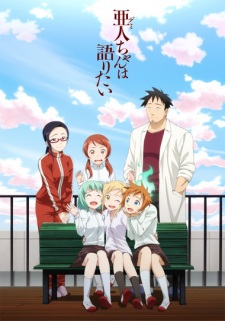
Gabriel DropOut is a comedy series, and honestly, it’s like any other comedy anime you’ve seen before. Another demon appears, named Satania, and declares Gabriel to be her rival, despite being totally incompetent. Gabriel is an otaku slob, wanting to take the easiest way out of everything. The fact that the main characters are either demons or angels is the gimmick of this series. It’s not terrible, but it’s jokes aren’t that new when you get down to it, and I feel more bored watching it than entertained.

I’m not going to be continuing this one. It’s not something to avoid, but I don’t see it as anything special either.

I’ll admit the opening song and animation are pretty cool though.

Interviews With Monster Girls

interviews with monster girlsThis was actually not going to be a show I was going to pick up by myself, because I thought it was related to the Monster Musume anime series a few seasons ago; a friend told me I should check this out, though, and so, here we are.
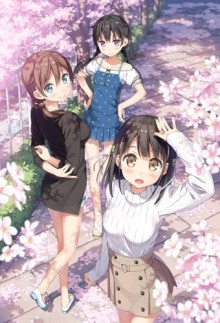
In an alternate world, where certain people can be born with some supernatural characteristics, such as those of vampires, dullahans, or succubi, we meet Mr. Takahashi. He’s a biology teacher in a high school, and he’s had an interest in these “demi-humans”, and has wanted to be able to sit down and talk with them. However, since he never met any, he never really got the chance.

Now, all of a sudden, after meeting a new teacher who turns out to be a succubus, he also runs into students who are a vampire, a dullahan, and a “snow woman”. The coincidences of this first episode are beyond the range of believability, but I’ll let it slide. Mr. Takahashi gets a chance to sit down with the vampire student, after a random run-in with her one night, and he proceeds to interview her about how her life as a vampire is.

This is a pretty cute show, honestly. Even after one episode, I felt myself really enjoying it and wanting to watch more. I really like the interactions these various characters have; the unique situations these “demi-humans” have lead to some interesting dialogue and funny moments; this show doesn’t squander the potential it has here. I honestly think it’s pretty well-written, and I’m looking forward to continuing this throughout the season.

If I have any concerns, it’s what will happen later on down the line – after Mr. Takahashi sits down with the four girls we’ve met so far, where will the anime go from here? I’m hoping that we don’t end up with lazy, contrived situations that are written in just for cheap jokes or development.

If you’re looking for another show to add to your watching list for this season, and you haven’t given this one a look, I suggest you try it. I bet the first episode will get you hooked.

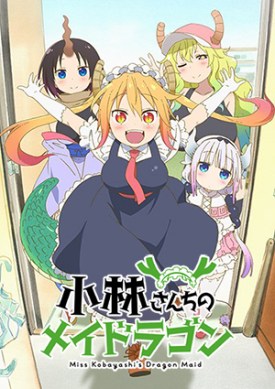
Miss Kobayashi’s Dragon Maid

Miss Kobayashi DragonMaid

The newest show to be animated to by Kyoto Animation, this series’s colors and designs are more flat and a bit simplified, rather than the shaded, super-realistic visuals of KyoAni’s past works.

A female dragon-turned-maid named Tohru falls in love with a programmer named Kobayashi, after the latter drunkenly stumbles into a forest and comes across Tohru, telling her that she can stay in the latter’s home. The next morning, she doesn’t remember a thing, but now she has a new roommate. Pretty quickly, they’re also joined by a younger dragon named Kanna, and Kobayashi now has to get adjusted to the new hectic life she finds herself in.

This show is a comedy series, and like Gabriel DropOut above, also works on a gimmick: the fact that most of the main cast are dragons. However, I feel this show really takes more advantage of the whole “dragons” thing, and its jokes get to me more and overall, this show feels more clever. That doesn’t mean it doesn’t strike it with every joke; I don’t think I like Kanna all that much, and Kobayashi and her coworker going into full otaku mode when they get drunk also has already gotten old to me, 3 episodes in.

Kyoto Animation’s visual quality is still on display here; Tohru as a dragon in the first episode looked really well animated and drawn. And, as a programmer myself, I find myself a bit impressed: the dialogue of Kobayashi and her coworker in the first few episodes sound like things in the same vein of what actual programmers would complain about.

In the end, even if it doesn’t hit it out of the park with every joke, this show’s probably one of the most entertaining things I’m watching this season. I won’t say everyone will fall in love with it, but if there’s one current show I would suggest people to check out, this one would be it.

OneRoom

one-roomMade by the team that created the “Makuro no Danshi” short-length series, they’re back with a similar premise. This time, the story revolves around the male protagonist being you, the viewer. The characters (well, character) talk to you, and pauses as if you were to actually respond to the conversation. It’s like a reader insert fan-fiction or something, except in a video form.
It’s a pretty okay show, and for being 4 minutes long, one can’t really expect something very deep or anything anyway. It’s rather simple, and it’s kind of cute.

I must say it does have some really pretty backgrounds at times (although the inside of the protagonist’s room in episode 2 looks very plain and subpar). I personally like realistic-looking backgrounds, so this show doing that is pretty nice.

If it’s something that seems interesting to you, give it a shot. I’ll probably keep at it simply because it’s 4 minutes per episode.

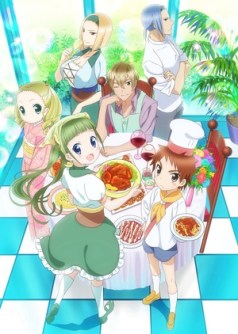
Piacevole

Another short-length anime series that I randomly stumbled across, this show revolves around Naruse, a girl who accepts a job at a nearby Italian restaurant, Trattoria Festa, because she needs some extra money. It’s here that she runs into a series of wacky characters and situations.

587670a1df64bIt’s what you should come to expect from a short-length comedy series: over-the-top wacky characters, everything going at a super-fast pace, animation and art that looks weird and inconsistent, and it’s all over in just a handful of minutes.
There really isn’t much to say about Piacevole, honestly; it’s a pretty alright show, and its jokes are also pretty alright. The animation and art is one thing, but it’s not really that glaring or out-of-place for a short-length show. All in all, it’s just pretty alright.

If you’re looking for something quick and funny, you can give this a shot. You may enjoy it, you may not. But with it only being a few minutes long, there’s no harm in trying. I enjoy it personally, so I’ll be continuing to watch it.

Seiren

Seiren got me with a PV that I watched about a month or two ago by this point; it positioned itself as a romance anime where people are truthful with each other and themselves. This is the one show I was excited about going into this season.

So, after 3 episodes, this show didn’t exactly meet my expectations.

seirenSeiren puts you into the perspective of high school boy Shouichi, who finds himself to be the butt end of Hikari’s teasing. The first episode awkwardly flounders around a little bit, but eventually gets across the point that Shouichi goes to a summer retreat camp with his best friend Ikuo to study for the upcoming university entrance exams, where Hikari also shows up out of the blue. There, the beginnings of a friendship blossoms between the two.

At times, I see this show falling into clichéd romance anime trappings. The animation quality is only okay at best, and there are specific lines of dialogue that don’t really make much sense. That being said, the moments where the characters are honest and straightforward with each other really make this show for me. I really enjoy seeing Shouichi and Hikari together. Looking past its surface issues, I am finding myself enjoying this show a decent amount.

I’ll be continuing to watch this through the season; it probably won’t result in anything that amazing or great, but I’m interested enough to keep going. I wouldn’t not suggest others to give it a try either, but I’d say to give it at least 2 episodes before deciding what to do. Honestly, though, I won’t be surprised if you decide this show isn’t for you, it does have some glaring problems.

Wrap-Up

There are some seasons where there’s just a whole slew of shows I want to watch, and I don’t want to give up on any of them because they’re all so good. That isn’t the same situation here, unfortunately; most of the shows I’ve tried are pretty much “okay” to “pretty good”. Not every anime season is going to be absolutely spectacular though, and honestly, it works better for my busy schedule to not pay attention to too many shows at once.

Hopefully through this post or in other places, you’ve found a few shows this season that interests you. If there’s any that I haven’t tried, or if you have another opinion on the shows I’ve talked about here, let me know in the comments!

Review: Mushi-shi

I can sit here and say that Mushi-Shi is like a cross between X show and Y show, or two other shows, or something, but I feel that no matter how many comparisons I try to make, none of them will really explain or show what Mushi-Shi actually is. This show can really only be explained by explaining it itself; no comparisons will really help that much.

This show never really caught my interest when it was airing. It seemed okay, maybe a bit intriguing, but not something I wanted to sit down to really look at. However, a few friends of mine saw the show and loved it, and, with a certain amount of pushing, got me to sit down and try it too.

An Introduction

In 1800’s Japan, our main character, Ginko, travels around the country, offering to help people, families, and even entire villages, as they face problems with a certain kind of supernatural being.

These beings are “mushi”, small spirits that are life in its most basic essence. They come in varying shapes and sizes (although most are relatively small), and they tend to keep themselves separate from humanity, but not always. And when the mushi do get involved with humankind, it usually isn’t in the human’s favor. It’s not that mushi are intentionally harmful creatures (most of the time); they simply have supernatural abilities or properties that tend to interfere with a human’s ability to have a normal life when the two come into contact.

Each episode features Ginko traveling to a new location. Ginko is a white-haired, middle-aged man with an eye missing (not that you can usually notice, though) and a proclaimed “mushi master”. He generally tries to be helpful (he’s also relatively forward), but he tends to like his privacy and isolated-ness as well. Ginko doesn’t have a place to call home, and he just continues to travel, with every new place and every new person he meets providing him a chance to interact with a new type of mushi.

Some of the mushi he ends up meeting include mushi that consume sound (quite literally), a living and traveling swamp mushi, and mushi that live within the writings in paper. There’s even one that is basically a physical rainbow. In any case, every new episode features a new mushi to talk about, and a new adventure to be had.

The Plot and Characters

Mushi-shi is very episodic; the events in every individual episode never overlap, and in general, it tends to work in the show’s favor, allowing them to show you a wide variety of situations with a wide variety of mushi. This does mean that the characters we meet in one episode are never seen (or mentioned) ever again though. In some cases, it kind of stinks, because I’d like to see more of these characters, but at the same time, the episodic nature keeps things new and fresh.

However, the show’s episodic storytelling also leads to it being annoyingly inconsistent, from a worldbuilding perspective (which is something I really focus on). There is an archive of tales from mushi masters all over Japan, for example, that’s never mentioned prior or after that episode. And while this series writes off many of the mushi we see as “rare” or “only lives in a specific place”, there are some that you’d expect to be more present in multiple episodes. While the lack of a consistent world doesn’t hinder you from enjoying what Mushi-shi has to offer, it makes it hard to wrap your head around the lore that the show presents to us.

This show has only one recurring character (well, two, but we only see the other character, like, two or three times), and that is Ginko. Ginko tends to be pretty helpful and kind person, but he has a consistently stoic face. He never displays extreme emotion, in one way or another; I suppose his mellow and calm nature tends to make him more helpful in dire situations and keep others grounded, but it’d also be nice to see the guy get a bit agitated or something at times. His backstory is feebly explained in two different episodes, but it didn’t really do too much. All in all, he’s not a bad character, but there’s not really anything to him that really grabs me and attaches me to him. For him being the protagonist we follow around every episode, that is perhaps a tad disappointing.

When it comes to the show’s pacing, it’s pretty slow. And this isn’t really a bad thing. I feel a lot of today’s shows have grown too fast, so it’s nice to see a slower-going one become a bit more popular. The slow pacing is rather relaxing, and it gives you enough time to really ingest the atmosphere and feelings.

That being said, there are definitely episodes where Mushi-shi lost my attention for a short while because things grew too slow. It generally doesn’t fail in grabbing my interest later in the episode though. I could play this on my TV and have Minecraft running on my laptop and enjoy the both just fine.

The Atmosphere

If there’s one thing I really do have to praise Mushi-shi for, it’s its visuals. I watched this show in late 2015, and I thought it had pretty decent visuals. And then I learn that this show actually came out in 2006 (9 years prior!), and I was flabbergasted. This 2006 show’s art and animation directly competes with the art and animation of shows coming out a number of years later! If you had asked me, I would’ve said it came out in 2011 or 2012, not as far back as 2006. That’s just impressive. This show seriously has not aged.

However, despite how impressed I was with the quality of the visuals, I can’t really say the art is “beautiful” (which is a word I’ve heard a number of people use to describe it). I think, however, this more stems down to what I perceive as “beautiful”, which is usually expansive shots and bright, vibrant colors. In comparison, this show used nearly exclusively muted colors, a choice that does fit the more natural, spirit-y tone of this show. It does have some pretty great looking shots, though; It’s certainly pretty good looking, no matter how you put it.

The show’s background music works pretty well for the show. It generally has this more natural, traditional Japanese sound to it, really fitting the feel of the entire show, as well as blending in with the scenes itself. It is pretty good, but I wouldn’t listen to the soundtrack on its own. The opening song is not something you’d generally hear in anime nowadays, and its relaxed tone sounds good, but I don’t necessarily think the song is that memorable. The opening animation is rather short, and simplistic. It is pretty looking, and fits the show.

In fact, returning to the visuals again, I actually like Mushi-shi’s simplistic take on the common aspects of a TV episode: the opening credits/animation, the ending credits, and showing the episode title. The opening animation is nothing more than a bunch of images of nature, and the ending credits is just white text on a black screen while music from the episode continues through. The episode title is displayed in a colored rectangle that appears within the first few minutes of the episode, usually during an establishing shot. Again, I like the simplistic approach they took here, and I think it really helped with the atmosphere. Anything flashy would be unsettling for this series.

I watched this show in English, and here I present my gripes with Ginko again: I don’t necessarily like Funimation’s casting of Travis Willingham as Ginko. I’m not quite sure if it’s this casting that made me like Ginko less, or if there’s something about Ginko that just caused me to be upset about the casting (although I think it’s the former). It’s not like he did Ginko or this show injustice, but I just wish they had chosen someone else to be him. If I were to watch this show again, it’d be in Japanese.

Final Remarks / TL;DR

I think that throughout the writing of this review, I convinced myself to like this show. When I walked away after finishing the last episode, I thought to myself, “well, that was alright, I guess”, but as I write this now, I find myself saying, “Mushi-shi is pretty good”. The relaxed, simplistic tone and atmosphere of this show really helped keep focus on the various adventures and stories we get to experience in each episode. I still can’t help but be amazed by the fact that the show still looks like it’s barely aged since its airing in 2006. My biggest gripe would be the English casting of Ginko, but if that’s the biggest problem here, that’s saying something.

That being said, though, I have a bit of a hard time making a recommendation for Mushi-shi. I certainly wouldn’t say this show isn’t worth your time if you can give it. However, I wouldn’t imagine this show being the most enjoyable to watch by yourself. I’d suggest you get a group of friends together, pull the first episode up, and go from there. Of course, you and your friends will have to be interested in a show that tends to take things at a slow, more natural pace.

Rating: Good

Recommendation: Give It a Shot

+++ relaxed pace and atmosphere, visuals barely look aged, episodic stories keep things fresh

— something about Ginko irks me (perhaps casting), slow pacing may sometimes lose your attention, inconsistent (or complicatedly expansive?) lore

Review: New Game!

From 2014 to 2015, a drama anime aired called Shirobako, and it was pretty successful. I watched it episode-by-episode myself, and I rather enjoyed it. More specifically, this show was about an employee of an animation studio in Japan; it’s an anime all about making anime.

When New Game came onto the scene for the Summer 2016 series, people instantly began comparing the two, calling New Game “the Shirobako for the video game industry”. I was intrigued enough to sit down and start watching a few episodes. Unfortunately, just like Orange, I hadn’t had the chance to finish the show until much later.

An Introduction

Aoba is fresh out of high school, and excited to move on to the next big thing in her life. She just recently got hired on as a character artist for the game studio that impressed her as a little kid: Eagle Jump.

Walking into her new workplace on the first day, though, she realized that she’s entering into very unfamiliar territory here. She doesn’t know anyone else here, and everyone’s all holed up in their cubicles, staring at their screens, getting work done. Where does she go? Is she even in the right place? Who does she even talk to?

Soon enough, though, the nervousness goes away and we see her enter into the world of game development. She meets her coworkers: Hifumi, who’s super-cute but super-shy, and Yun and Hajime, two girls that seem like total opposites. Hajime is loud, bubbly, and laid back, while Yun is proper and quiet. Aoba also quickly meets her bosses: Rin Toyoma, the art director, and Ko Yagami, the lead character designer. Ko was Aoba’s inspiration when she was young, so working alongside her is like a dream come true! But that’s not all…

The next big game that Aoba is helping to work on: the third installment in her most favorite video game franchise.

The Plot and Characters

Although I’ve first heard this show described to me as Shirobako for game making, like I said above, I don’t really feel that’s true.

While a decent amount of time each episode does feature some sort of game design progress, a lot of time is spent more on the characters and random hijinks related to them. I feel it’s partway between K-On! and Shirobako; there’s even a pull-out tea cart that the characters sit around during the middle of work to just sit and chat.

Delving more into that last paragraph, the sections of New Game that are about the actual game design process are pretty cool, and will probably be at least kind of insightful for those who don’t know much about it. As Aoba is the main character, her perspective as a character designer is what gets mostly shown. Nearly any other context of video game development is quickly brushed over or not even mentioned. I really connected with Aoba and her coworkers in the earlier episodes, as New Game took her experience a few days at a time. The final episodes, though, simply showed the major milestones of the game development, meaning days or weeks could skip between episodes. My connection with the characters was certainly strained by this.

Starting around halfway into the show, there is also an additional focus on Ko Yagami as well, especially her relationship to her job and to Rin Toyoma. It’s relatively cute and nice to see; it was a bit unexpected because I wasn’t seeing Ko as being a lead character in the series. Another addition to the cast was Aoba’s high school friend, Nene, who comes in a bit over halfway to be a QA tester. She acts rather childish and silly, which the show does point out a number of times, but she overall seemed like an unnecessary addition.

The drama present in this show never really gets that deep or troublesome, despite what some episode titles may lead you to believe. There are also portions of many episodes that are simply focused around the characters sitting around and talking (including around the pullout tea cart). Episode 4, in particular, brings pretty much everything to a halt to have all the characters in the show sit around and talk about their experiences getting paychecks. Although these scenes are pretty nice for helping to add some depth to New Game’s characters, it does mean the show’s pacing tends to be a little bit all over.

All in all, though, it was a fun little series to sit and enjoy. It’s something I could see myself watching after a stressful day, the cheerfulness of the series is a tad contagious. The show also allows you to become attached to its characters as well, and even though its drama never gets all that deep, it’s still there to keep you interested in seeing the next episode.

The Atmosphere

To match the overall cheeriness of the series, a lot of bright colors are used for the art, along with simplistic, moe-esque (and also rather cute) designs used for the characters. It’s yet another thing to contrasts the series with Shirobako, which focused a bit more on being realistic and mature-looking. New Game’s art and designs, though, are fun and fit with the mood of the show, and all in all, they look pretty great.

I particularly like Aoba’s and Hifume’s designs, and think they both look pretty cute in variety of settings; Hajime also looks pretty good at some points. Honestly, though, there are no particularly bad character designs; I rather like all of them. If there’s any I could give any complaints to, it’d be Umiko (which is probably because her obsession with military weaponry is kind of odd in this light-hearted show) and Nene (whom I don’t really like that much in the first place).

The background art, despite being mostly within a game studio, can get rather detailed at points, and I appraise the show’s designers for creating relatively realistic-looking computer program designs (my day job is programming, so of course I get hooked up on computer programs that look weird or overly complicated for the sake of looking so). Nothing in the game studio ends up looking super realistic or anything, though, always staying within its brightly-colored style.

The show’s opening, Sakura Skip, is also kind of catchy, and appropriately upbeat. The song isn’t the best thing I’ve ever heard, but I’d say it’s pretty good, and fits pretty well. The opening animation is also pretty awesome, featuring some Studio Shaft-esque vector art alongside some nice-looking shots with Aoba in a sakura forest. It’s probably among my more favorite openings of 2016, but to be honest: I haven’t seen many openings, and there really hasn’t been any (in my recollection) that have really blown me away. This opening doesn’t blow me away either, but it’s well done.

The ending song is a bit more mellow in comparison, but doesn’t seem out of place either. It’s a pretty alright song too, but I feel I prefer the opening a decent amount more. The ending animation is rather simple, featuring a lot of the characters in various poses or images of various other game-y objects. It’s a mellow ending for each episode, and it works. It seems the ending song is a bit more popular on the Internet than the opening though, according to a quick cursory Google search for both songs.

Final Remarks / TL;DR

New Game! is a light-hearted show about video game development, featuring bright colors, cute characters, and a cheerfulness to it that ends up being infectious. The show provides you an insight into the life of a character designer, and gives you a chance to become connected to its characters as they progress as game designers. Altogether, this show is a lot of fun.

If you’re looking into this show hoping for a major insight into game development, you probably won’t find all the details you’re wishing for, as New Game is pretty focused on Aoba’s journey as a character designer and that’s mainly it. That’s said, it shows the character design parts fairly well. Other than that, this is a fun show for slice-of-life fans, and those just looking for something nice to take your mind off things for a while.

Rating: Great
Recommendation: Watch It
+++ great and cute character designs and bright colors, can connect with Aoba and Ko throughout the series, opening song/animation is pretty good
— Nene feels like an unnecessary addition to the cast, final episodes skip between days and weeks straining connection to characters, most aspects of game development barely mentioned

Review: Orange

To be honest, I haven’t paid much attention to the anime of Fall 2016, even though there were some really good shows that people are constantly going on about. October was a busy time in my life, and any shows I had put on my list to watch for the final season of 2016, I promptly forgot to even pay attention to, as I had other things to accomplish.

This anime, though, was one from the Summer 2016 season that I didn’t get around to finishing either. Now, finally, I had the chance.

An Introduction

In the city of Matsumoto, away from the urban life of the mega-cities of southeastern Japan, a quiet high school girl named Naho is about to start her second year of high school. Before the school’s entrance exam began, though, Naho received a peculiar letter in the mail. Inside were pages upon pages of writing.

Upon starting to read the letter, Naho realized this letter was actually from herself… 10 years in the future! “I need you to do me a big favor,” the letter says. As Naho begins her first day of school as a second-year, the letter matches exactly what happens to her, even down to the detail of her oversleeping. That day, her class got a new transfer student: a guy named Kakeru Naruse.

Kakeru moved into Matsumoto from Tokyo, and so he’s a bit less familiar with the non-hectic lifestyle here. Instantly, Naho and her friends – Suwa, Takako, Hagita, and Azusa – add Kakeru into their group, and they all get along really well.

“Now, ten years in the future, Kakeru is no longer with us. Please keep a close eye on Kakeru.”

The Plot and Characters

The idea behind the story is an interesting one. Naho does what she can to protect Kakeru and to make sure that he doesn’t die within 10 years, through the guidance of a letter from her future. This letter details the events around her on a day-to-day basis, usually in relation to Kakeru. Each day, the letter usually ends with something that future-Naho regrets, and asks the present-Naho to do or not do. The hope is, with each bit by bit of change, it’ll lead to a future where Kakeru still lives. It’s an interesting concept.

Orange doesn’t do a bad job of giving realistic reactions to this letter, too. Of course, we see Naho be skeptical of the letter, and surprised to see it match up to things around her, and going through a number of steps from there revolving this relationship between her and this letter. Her trouble with how closely and how blindly she should follow this letter, combined with the situation around her that continues to diverge from the path of this letter, feels human and relatable. I give Orange respect for that.

Despite that, the biggest source of my frustration with this show also came from Naho. Pretty early on, we see Naho realize that she’s starting to fall for Kakeru. I can understand her being a shy, timid girl, afraid to speak up when there’s something she wants to say. However, there are times where Kakeru, and others, ask her whether she wants something. Deep down, she does want it, and at times it would take her more effort to say she doesn’t, but yet she denies it anyway. I feel there’s a difference between being characteristically shy, and being shy and “I’m okay as we are” for the sake of padding out the story.

The big focus of Orange is definitely on Naho and Kakeru, their relationship to each other, and how to ensure a future together. Suwa also is pretty instrumental in this as well, and he gets a lot of screen time alongside the main two. However, Azusa, Takako, and Hagita all get sidelined a decent amount in the series. They appear more on screen towards the latter end of the series, but at that point… Naho, Kakeru, and Suwa have already gone through some emotional experiences without them, and it feels a bit like they’re the lesser friends to this smaller, closer group – friends that have been put out of the loop.

I know it’d be kind of hard for a 13-episode anime to make all six of its main cast get a comparably decent amount of time to develop (not impossible, but not the easiest), but I wish that more than just Suwa and the main couple got really developed. To be honest, it seems more like Azusa and Hagita were more meant to be comic reliefs in this series anyway, and they both get some pretty funny lines (usually playing off each other). Takako… I don’t really know much about her. I feel she really didn’t get any time at all to actually become interesting in her own right.

Kakeru is the final piece of the puzzle that is this list of characters. He’s the focus of everyone’s efforts, and the one that, unfortunately, deals with the most hardships. I really feel for the guy at times. The anime does a really good job of really showing him being emotional and showing a human reaction to the difficult things that gets thrown at him in his life. Where lesser shows would’ve handled these issues with disrespect or misinformation, Orange treats the issues as real, and presents them appropriately. He and Suwa are definitely the strongest characters in this series.

Overall, the story shown here was really interesting, and I liked it a lot. It’s character-driven, and I like how the characters (at least 90% of the time) acted and reacted as humans would in situations like these. My difficulties with Naho, though, and some unrealistic things in the latter half of the series keep me from feeling the writers (or original material) really hit this out of the park.

The Atmosphere

The first thing that stood out to me in this series, visuals-wise, was the unusual eye design. By the end of the second episode, I found myself thinking, “Now this is what almond-shaped eyes really look like!” I feel they were going for something more realistic-looking than your standard anime eye design, but it ended up just looking a bit… odd.

This show has proven to be inconsistent with its art and animation throughout its 13-episode run. Although the first number of episodes all looked pretty good, there were notable dips in quality during the latter half. Not even the distinctive eye design was immune, and more “standard” eyes made an appearance. Episode 9 was particularly bad, followed by episode 10, which looked pretty good in comparison (episodes 11 and 12 wavered between the two). It seems this show fell victim to the poor time management curse that besets many an anime production, which is disappointing; this show would’ve been more effective to me, emotions-wise, if it were able to keep its quality.

I liked Orange’s character designs overall, moving on past their eyes. There are many a time where Naho just looks absolutely adorable, and Suwa looks all-around great throughout almost the entire series. Azusa also tends to look quite good throughout as well. The background art definitely looks watercolor-painted, and it’s pretty alright looking. Again, I’ve been spoiled by the absolutely stunning work of Kyoto Animation, but this show’s backgrounds are still pretty nice. I honestly don’t have any complaints about that.

The background music for this show, as you’d expect, has a lot of piano-filled pieces that are meant to be tear-jerkers. If the tracks didn’t sound so generic, they may have been more successful in really getting tears to move. Overall, though, the background music is not necessarily bad, but it’s not going to stand out, beyond you noticing that it simply… exists. That being said, there is a particular track used a bit over halfway into the final episode that I actually rather liked. If more of the soundtrack implemented those instruments, the show would’ve really benefited from it.

One thing I also really liked about Orange is how it did its background characters. To most, this will probably be a rather minuscule detail, but I honestly really liked it. For a lot of the scenes, we can hear conversations of the background characters and they sound like actual genuine conversations between classmates or what-not, rather than something standard or plain. It’s little things like that which really gives this world some life. It’s possible that I really only notice this in Orange because Crunchyroll subtitled these conversations here.

The opening song felt rather appropriate for this anime. It isn’t exactly the type of song I go out looking for, but it felt nice here. The opening animation was only comprised of scenes of nature, and the characters standing around or running. It’s a more cliché-looking opening; it’s inoffensive and simple, and it isn’t the worst thing for a more drama-focused show like this, but I may have liked something a bit more interesting.

The ending song, simply called “Mirai” (Future), is more of a ballad song, which isn’t really a song style that’s up my alley, honestly. The song’s not bad though, but I didn’t really have much desire to listen to it. The ending animation usually involves images of the characters panning on screen, which isn’t the most visually engaging, but it’s okay. Overall, the ending was pretty dull for me, but part of it is certainly my personal preferences.

Final Remarks / TL;DR

Orange is a story about regrets, and going back to change them. Specifically, it’s about the regret over the death of a close friend. The hardships and feelings of the “friend” in this case, Kakeru, is really well done; the female lead, Naho, also proved to be human and relatable at some points… but at many points, she also provided some of my biggest frustrations for the series. This was not helped by the drop in visual quality for the latter episodes.

All in all, though, if I sent a letter back to myself, I wouldn’t tell myself to avoid this show. I did have fun with this show, and although there are certainly some negatives to its characters and presentation, the positives outweighed them in the end. This is a serious, character-driven drama; if that’s your type of thing, you won’t want to have regrets about missing this show. I recommend it.

Rating: Good
Recommendation: Watch It
+++ handling of serious issues is well done, Suwa is awesome, Naho’s reaction to the letter from her future
— visual quality is inconsistent especially towards end, Naho’s shyness causes frustrations, some characters in this friend group get short end of the stick development-wise

Review: Attack on Titan

Oh, come on, you’ve heard of this show, right? Even some friends who’ve never touched anime before at least knew about this show, if not even watched a few episodes themselves.

That being said… I was late to the party. I actually didn’t watch Attack on Titan in full until the January after the show came out (Jan. 2014). The biggest reason: I was actually going to watch it with a former college roommate, but… that ended up not happening. That’s part of a bigger story that’s too long to put here.

Second biggest reason: I’m lazy.

An Introduction

In an alternate-universe-type dealio, the history of humanity goes in a very different direction. Although at one point they lived around the entire world the same way we do here today, the human race in this universe found themselves being trapped by a bigger menace: the larger, humanoid-looking creatures called Titans. Titans have one purpose, and that only purpose alone, in life: to eat humans. And they’re pretty darn good at it.

Thus, all of humanity… well, what’s left of it, find themselves holed up within a giant, 150-foot-tall circular wall (with two more also-giant walls within it) to separate themselves from the monstrous Titans outside. It is in one of the cities on the outer edge of this wall where we meet our young main character, Eren… and, well, today’s not a good day for him.

After an argument with his parents, an even-more-giant Titan appears, looks over the wall, and then destroys it, letting Titans into the previously-protected city. Mass panic ensues! Caught up in the turmoil, Eren finds his mom under his now-collapsed house, but the small kid is too weak to lift the wreckage. Thus, he can do nothing but watch helplessly as a Titan comes by and eats his own mother.

On this day, humanity has learned a lesson. And on this day, Eren made a decision: all Titans must be killed!

The Plot and Characters

A decent amount of the first few episodes are focused on Eren and his two friends, Mikasa and Armin (I’ll describe them in a bit), joining the military and their training experiences. These episodes, although important for character development and introductions and such, feel a bit like a bore, and drag the show a little bit until we see them become late teenagers and begin to move beyond the training camp location at the end of episode 4. After this, the pace picks up and it becomes genuinely exciting… at least for a little while.

You see, Attack on Titan really is at its best when it’s doing its action sequences, or at least on the verge of action happening. You can almost feel the show relish in creating these large (and varying) battles between humans and Titans, and a lot of the plot twists and turns happen during these action-heavy episodes. Humans fly around with their super-cool omni-directional maneuver gear, and even though you see Titan after Titan be killed (or do the killing), every battle still does well to keep you enthralled.

On the few episodes that aren’t focused on that (such as episodes 1 through 4, and also episodes 14 through 16), that’s where Attack on Titan feels like it slogs down a bit. It’s not that these episodes are actually bad, and they’re still fairly important to the story. It just feels like the show itself is out of its element in these episodes though, and the pacing drags just a tad bit. (To be honest, though, once episode 14 rolls around, you’re already hooked.)

Speaking of plot twists, there’s some pretty big ones. For those of you going through Attack on Titan its first time, the twists and revelations that you’ll learn will really catch you off-guard throughout the whole show.

However, for those of you who are going through your second or so time around, I wouldn’t be surprised if you feel a little bit bored. You already know what the big twists are, and there’s little to no foreshadowing for them (although the show does foreshadow other things)… Not to say Attack on Titan isn’t worth multiple viewings, but it may not be quite as engrossing the second time around.

People like to say that Attack on Titan has a tendency to kill off characters, and so “you shouldn’t get attached to any of them”. To be honest, I don’t personally find that to be true. Most of the characters you meet by episode 4, you still see around on episode 25. That being said, you do see a lot of side characters dying (and sometimes the main characters, or the show, will get really caught up in them dying), but they’re more expendable, from a story-writing perspective.

When it comes to the show’s characters, I wouldn’t say they’re the most rounded. Although there are moments where they talk about things other than Titan killing, those scenes feel a bit more like an obligation to put in there, rather than the show actually trying to flesh out its cast. Like I said, Attack on Titan is best when it’s doing action, and with the cast we’re the most involved with, the Titans are definitely the biggest, if not only, thing on their minds. This doesn’t necessarily ruin the show for me, though, especially since I can’t say there isn’t any character development here, but more on their lives outside of being Titan-killing military soldiers would’ve been nice.

The cast members you’ll see the most include: headstrong Eren, who’s nothing if not a big bundle of passion; Mikasa, the “quiet but deadly” type who focuses almost all of her time on making sure Eren is okay; blonde-kid Armin, who actually grows a bit in his own right; and gruff Jean, who always looks angry and doesn’t hold back, but he is a man of respect.

All in all, Attack on Titan really is a fun show, and although I feel kind of bad for not jumping on the bandwagon and watching the show while it was airing, I am glad I was able to still experience it. Even if the other parts don’t shine quite as well, the amazing action makes this show worth the watch… but given its popularity, I feel it’s likely you’ve already seen it.

The Atmosphere

The look of the characters really stood out to me the first time I watched this series. With a second watch, I realized what it was that made them stick out: they used thick lines for the outlines. I really liked this move, actually; it’s a small change that makes this visual design distinct, and it just… feels right for this show. I don’t know why or how, but it does. Other than that, the character designs are really clean and nice, and relatively not-complex. I honestly really like how the characters are drawn and animated in this show.

Separate from the characters, there are also the Titans. The Titans look properly creepy, fleshy, and weird, but their appearance is most effective only when looking at them from a low camera (from about human eye level). Otherwise, they can sometimes come off as weirdly-shaped babies teetering around. That being said, I only find the design of the Colossal Titan okay; just a personal preference. The Titans with the weird face designs, like the oft-ridiculed “Moe Titan”, can really push you back out of the show, though; it’s funny, I guess, but I more think it feels out of place in this world.

The background designs are pretty good. The giant walls and the designs of the towns immediately give this anime a distinct look in its backgrounds as well. If we move away from those, though, the anime becomes a bit more standard in its look. This show is at its weakest when displaying large grass fields, as the fields just look so uninteresting. Obviously, the focus is on the Titans and characters moving around, but I feel that well-done backgrounds really helps with the visuals overall.

The music for this show, composed by Hiroyuki Sawano, is pretty darn awesome, I must say. There’s the standard orchestral instruments you’ll tend to hear, like the strings and the occasional brass, but the soundtrack also brings out the vocal choir quite a bit for those really dramatic moments. There’s also the more-than-occasional touch of electronic sounds too, which somehow just fits right for the scenes where they’re used. Although this was far from the first show Sawano composed for, I feel this show is what put him on the map for many Western fans.

You simply couldn’t not hear the first opening song for the show, even if you aren’t an action fan, while this show was airing; it was a pretty dang good song though. In comparison, the second opening sounded more like a national anthem, and while I was able to get used to it after a decent while, I still never liked it nearly as much as the first opening. Both ending songs, though, are fantastic in their own right, in my opinion.

I watched the show in Japanese, as there wasn’t even any news as to which company was doing the English dub at the time I watched the show. I would’ve half-expected Funimation to have picked up this show before it aired, but I suppose its popularity took them by surprise too. I feel the Japanese voice cast serviced the show pretty well, as well as Funimation’s English dub (or at least, what I’ve seen of it). You’ll be able to enjoy the show, regardless of the option you choose. However, one more note: in Funimation’s DVDs, the text during the cut-to-commercial frames weren’t translated, unfortunately, although Crunchyroll translated them for its streaming service. It’s disappointing, as there is some rather cool worldbuilding info in that text.

Final Remarks / TL;DR

Attack on Titan was the uber-popular action anime of 2013. There really was no escaping at least hearing about this show. Honestly, though, it’s pretty good; it has some rather interesting plot twists that you wouldn’t see coming (unless this isn’t your first time seeing it), and the action scenes really are super cool. It’s good that the action was as plentiful as it was in this series, too, because this show felt a tad out of its element in the episodes where that wasn’t the focus.

Watching this show is a no-brainer for anyone who like action, and frankly, if you’re an action anime fan, you’ve already seen this show. In fact, most everyone reading this review around the time its published probably already decided if this show was worth their time… I just wanna talk about it a bit though, okay? D: It’ll be interesting, though, to see the landscape 10 years from now, when new anime fans jump on and have never seen this show, and how they will perceive this show. (Honestly, it’ll probably be a similar situation to today’s anime fans’ relationship to Cowboy Bebop, the uber-popular sci-fi/action anime of 1998).

Rating: Great
Recommendation: Watch It
+++ action (this show lives and breathes it), distinct visuals in character designs and background art, soundtrack and ending themes
— show doesn’t perform as well on non-action episodes, characters are all focused on Titans and that’s it, may be a bit more boring during second viewing

Review: Love, Chunibyo, and Other Delusions

Known as “Chuunibyou demo Koi ga Shitai” in Japan, this show marks a turning point for Kyoto Animation. Prior to this, KyoAni was like most other anime studios, vying for contracts to animate a show from a publisher. This led them to creating shows like “The Melancholy of Haruhi Suzumiya” for Kadokawa, “K-On!” for TBS, and “Clannad” for Visual Arts. However, when it decided to publish its own light novel, and then turn it into this very anime adaptation, we knew something different was happening. Kyoto Animation was now going to start making its own shows, about the stories the company itself wanted to animate.

So Chu2koi (as this show is often abbreviated to) had a lot to live up to. If this show did well, it meant KyoAni could continue making its own light novels and anime, not having to deal with publishers and some of the other pains of anime production. If this show tanked, though, it would’ve been a big waste of Kyoto Animation’s time and money, and the company itself would have to pay for it.

All the better that this show did fairly well in Japan, then.

An Introduction

Do you remember when you were a little kid, and you thought you were the coolest kid out there? Maybe you thought you had superpowers, and you were destined to save the world. Maybe you were a magician, your abilities leaving everyone else around you in awe. No matter what you thought as a kid, you thought it was all real, and that you were involved in some pretty cool things.

Or at least, I had memories like these. And, if you were like me, you look back on these moments with embarrassment. Thinking I really had superpowers that could defeat the strongest of foes? Yeah, no. No way I really possessed such things. Or anyone did, for that matter. Having delusions of such grandeur is called “chuunibyou” in Japanese (“middle schooler disease”). These are some of the same experiences the main character of this show, Yuuta, has to deal with.

Yuuta moves into a new high school, wanting to get away from all the middle school kids he previously knew (and told that he was some gothic swordsmaster named Dark Flame Master). Ready to put his embarrassing past behind him, he wanted to start off a normal high school life, hanging out with normal high school friends, and having crushes on normal high school girls.

Of course, that doesn’t start to go well when he gets himself intertwined with a girl in his class named Rikka. Like Yuuta, Rikka has believed herself to be some gothic superpowered being who must wear an eyepatch at all time (lest the power of her Wicked Eye Shingan be fully unleashed, should the eyepatch be removed!). Unlike Yuuta though, she still is head-over-heels deep into this chuunibyou delusion of hers, and she decided to get Yuuta roped into her random activities.

From there, we follow the start of a cute but awkward friendship, leading into a romantic story, as Yuuta and Rikka explore more about each other, about high school, and about chuunibyou.

The Plot and Characters

One of the biggest things that sets this show apart from others in its genre is the whole dealing with “chuunibyou” and the weird words and explanations Rikka gives to what’s going on around her. The stuff she says can be a bit confusing (going on about her powerful eye, and looking for invisible boundary lines), but once you think about it a bit, you can tell she’s just seeing the world through an imaginative mind. It ranges from annoying to endearing, depending upon the context, but never to the point that it made me dislike her character; if anything, it made me feel for her.

We see Yuuta go from trying to push her away, as she reminds him of his embarrassing middle school experiences, to slowly beginning to accept her. A lot happens to get these characters to the end of the last episode though, and it’s a bit of a ride. Rikka and Yuuta, of course, are right in the middle of it, and there are twists and topics in the latter half that you wouldn’t have expected going in. I won’t say this anime has the most dramatic twists or reveals out there, though, but it does have some teeth to it.

The show’s supporting cast includes Shinka Nibutani, a girl who’s popular, pretty, and smart; Sanae Dekomori, Rikka’s faithful and energetic assistant; Kumin Tsuyuri, an airhead upperclassmen who loves to sleep; Makoto Isshiki, a guy trying to do all he can to get a date; and Toka Takanashi, Rikka’s older sister that just wants Rikka to be rational about what’s going on around her.

The characters in this show are relatively well developed, with Rikka being the most rounded. However, that being said, Yuuta seems mostly defined by just his embarrassing middle school days, and little else. He ended up being the character I liked the least in this series, and I do wish he got a bit more time to come into his own. It’s obvious the show wanted to put more attention on Rikka and her chuunibyou. Even saying that, though, I didn’t dislike Yuuta at all, and he had his fun times too; I just wish there was a bit more complexity to him.

The supporting cast doesn’t receive much development until near the end of the series, when we see them respond to all the drama going on. However, the supporting cast was what really made this show for me. The interactions with all of them, especially Dekomori, Shinka, and Makoto, are what really help to keep this show entertaining and fun, even when we’re waist-deep in emotional scenes in the latter half of the series. The various anime references that Dekomori and Rikka make are fun to pick up on too, when you can pick up on them.

In regards to the pacing, it starts off relatively slow, and continues at a rather relaxed pace for the majority of the series, only picking up speed during dramatic moments and scenes.

The Atmosphere

Chu2koi, being animated by Kyoto Animation, of course already meets a certain level of quality, so you can be sure you’ll be watching a good-looking show. I wouldn’t call this Kyoto Animation’s finest work in recent times, but it still looks great regardless.

The character designs are akin to the Kyoto Animation standard that’s been used since K-On! (if not earlier), and I like them. I particularly like the designs of Rikka, Toka, and Dekomori. Oppositely, Yuuta’s design comes off as a bit too bland to me, which probably helped make him the one I liked the least. The backgrounds in general look pretty great, but there’s certain scenes, including one in episode 8 with Rikka and Yuuta sitting near a river admiring the city lights, where the backgrounds are particularly gorgeous.

Watching the show as it aired, I of course could only see it in Japanese. I think there was a lot of great vocal performances in this show on the Japanese side. I’ve not seen it in English.

When it comes to the music, it stays relatively subtle, really only peaking up during the dramatic battle scenes (because, yes, there are dramatic chuunibyou battle scenes the characters take place in) and during the really emotional parts of the series. The music tends to be pretty good, but there’s not really any tracks that are that defining or memorable; even the themes during the battles aren’t all that noteworthy. The music is just… there, and that’s about it.

The opening theme, though, I think is really great. The first few seconds of the song gets stuck in my head a lot, and I think the whole song is powerful and just sounds good. It’s put alongside a simplistic but mesmerizing opening animation, with it flashing between each of the main characters doing various activities. It’s not something easily described, and when you see it, it’s somewhat entrancing. The ending theme is also pretty good, but I don’t enjoy it quite as much. The ending animation is also pretty awesome, though, and I especially enjoyed the scene featuring Rikka standing outside with the factory in the distance, for some odd reason.

Final Remarks / TL;DR

This show isn’t exceptionally emotional and deep, but it’s not all light-hearted and sunshine either. It’s somewhere in the middle, incorporating a fair amount of both, and I think it does a good job. On top of that, it develops a sweet romantic story, all while being told by a talented and quality animation studio. However, looking back on this show, the funny jokes and scenes stick out more to me than the plot.

I wouldn’t say this is a show for you to go out of your way to watch, but it’s certainly not a waste of time either. I suggest giving it a shot if you were even somewhat interested in it, because it isn’t a bad choice, but don’t feel too ashamed about skipping it either.

Rating: Good
Recommendation: Give It a Shot
+++ emotional latter half with Rikka and Yuuta, funny comedic moments, quality animation
— jokes more memorable than the plot, okay ending song, Yuuta needed more time to develop

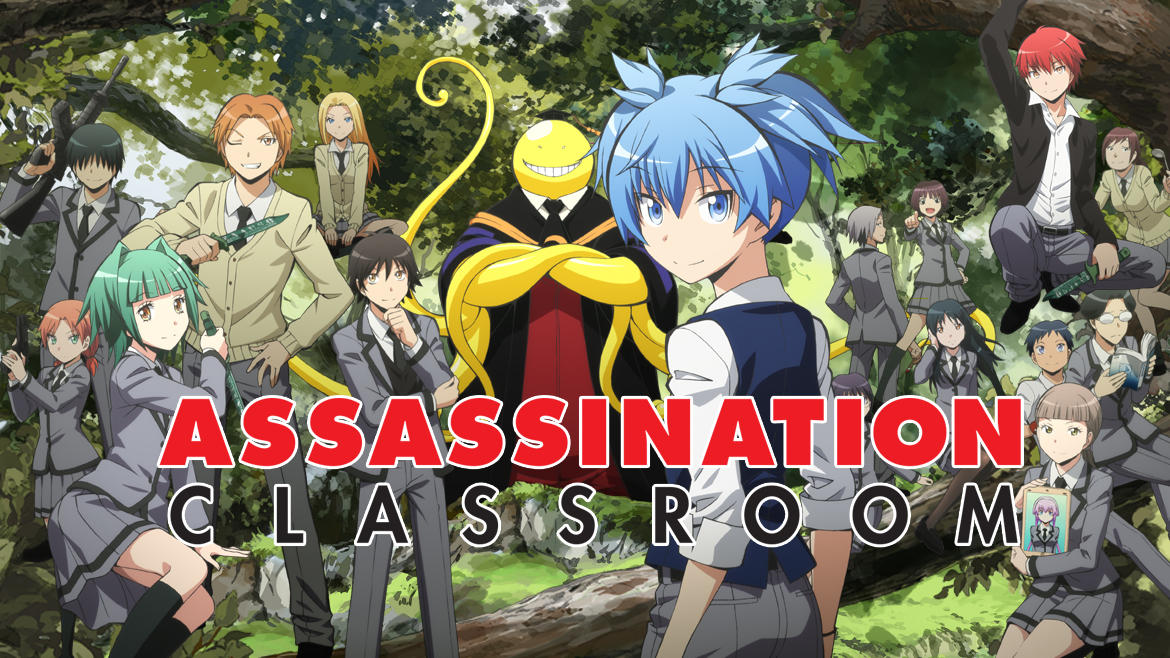
Review: Assassination Classroom

I’ll admit, I’m not usually much of an action-show-type person. Like, I don’t dislike action shows; my first ever anime was Fullmetal Alchemist, and I’d say that’s pretty action-heavy. … But I’ve always been more keen towards drama shows or those that just were more about characters and relationships. Probably doesn’t end up surprising why you see me talking about shows like Nagi no Asukara, Tanaka-kun, or Tatami Galaxy.

So when I first heard of this show, I thought it was just going to be another just plain-Jane action show, and didn’t look more into it from that. As the season went on, and I saw friends (and Funimation’s social media) start talking about it, I turned more towards a “maybe I will give this a try someday, it could be something”. That “someday” ended up coming…

An Introduction

Kunugigaoka Junior High School boasts some of the best students in the entire country of Japan. The four classes of their third level, classes 3-A, B, C, and D, have the best grades and enjoy a top-of-the-line education experience. Their motivation: study the best they can to stay out of the dreaded class 3-E. There is nothing worse than ending up in Class E, the End Class. The E class gets stuck in an old, worn down school building, separated from the rest of the school, with bad, if any, school supplies and no resources to help them. They’re the laughing stocks of the rest of the school, and once you end up in the End Class, there’s no getting out for you.

This year is different though. Because the 3-E class of Kunugigaoka has been given a monumental task: to assassinate their teacher. Just days prior, their teacher had successfully blown a giant hole into the moon, and now he threatens to do the exact same to the Earth. … That is, unless this year’s classmates can kill him.

Thus begins the one school year that could mean the end of the world… or the end of Kunugigaoka’s segregated End Class policy.

The Plot and Characters

The difficulty with a show like this – that focuses on an entire class – is that the show tries to make each student (or, at least most of them) a main character, making it hard to become connected to even any of them, especially since it’s hard to keep a track of who’s who. It’s fairly obvious who the actual main character is here, though: Nagisa Shiota. This blue-haired girl… oh wait, I mean, boy, takes up a decent amount of the screen time and conversation, and even gets to go through the major dramatic ending all by himself (which kind of stinks for the remaining characters, honestly).

The only other kids that I can remember off the top of my head are Karma (Nagisa’s old friend, a delinquent who appears to be care-free), Sugino (a baseball whiz who was kicked out of the sport once he ended up in class E), and Terasaka (some tough guy that only made an impact in the latter half of the series). A lot of the names spouted by the various characters become familiar to me (like Isogai, Takebayashi, and Okajima), but I never really end up being able to match a face to a name. It doesn’t particularly keep me from enjoying the show or the hijinks within, but I’ll really only ever be able to know this show as a hijinks show, as I have no bond with any of the characters.

Beyond them, there are the three teachers: Koro Sensei, the alien(-but-yet-born-on-Earth) main teacher that they are set to kill, although every single attempt to assassinate him never seems to work. Karasama is a higher-up of Japan’s Ministry of Defense, who’s tasked to keep a close eye on Koro Sensei and teach the kids to hone their deadly skills. Finally, Irina is a professional assassin that wound up being the class’s English teacher (with a nickname that probably shouldn’t be repeated here).

The show, being a combination of assassins and middle school, switches between the two topics, depending upon the episode. Some episodes, the two get integrated fairly nicely, and part of me would’ve wished this seamless blending was present throughout the entire series. I don’t exactly see “assassination” and “middle school” as two topics that really blend together well, though, so how this show did it is probably one of the best ways it could’ve been done.

Overall, the weird antics and varied situations make this show stand out as relatively unique, and make it a rather enjoyable and fun experience… although I feel that can be said about most good shows. Even so, there are some aspects that make it more noticeable. The weird design and qualities of Koro Sensei (along with the other eccentric characters that appear later on), the various plans the classmates try to execute to assassinate Koro Sensei – with increasing complexity with each one – it makes for a rather entertaining experience. The entire series went with a pretty consistently good pacing too, not too fast nor too slow.

I’m not at a point where I would say “I wish I saw this when it aired”, but I’m happy with this show and what I got out of it. Although I have my issues with its ridiculously large cast and thus the lack of focus on any one particular character, there was a decent amount to enjoy without needing a connection to any of them. I may get to the second season once I have a chance, but I definitely would like to see more of a focus on less characters.

The Atmosphere

The animation and character art of this show is above average for a modern show. To be honest, when it comes to shows made in the past few years, the highly improved visual quality of them have really set the bar high as to what I can really consider exemplary. For this show, the movement and action was really fluid, which is definitely important for this show. It also just felt like there was a certain amount of polish or something behind this show too. To be honest, I don’t think I remember a single episode that actually looked bad. All of them were of a pretty good and consistent quality, which can, in some ways, be considered a feat all into itself.

This all being said, the backgrounds seemed to be about the standard quality for anime nowadays. I’m a huge sucker for beautiful background imagery, and this show unfortunately doesn’t provide that… not that every show has to, though. The backgrounds here are certainly good, especially for what this show needs. The bright colors fit for a good majority of this show, although there was a notable switch to darker colors for the more dramatic ending to the series. The final episode, taking place on a helipad, with all the bright lights though… that felt a bit weird. I feel it probably didn’t have to be so over-the-top.

I really liked the background music for this show though. The electronic-style-filled soundtrack sounded really cool, and a part of me always filled with joy once a background music piece started. There is also the usage of more standard instruments for other portions of the show as well, but the electronic music is what stood out the most for me.

I don’t really have an issue with any of the voices used for this show; all of them sounded fitting enough. Of course, it doesn’t exactly help that I haven’t really been able to distinguish the various characters though. I really liked the voice of Koro Sensei though; big applause to Jun Fukuyuma for his performance. I watched the show in Japanese, so I really have no idea how the English dub is. Knowing Funimation though, it’s probably at least passable.

Final Remarks / TL;DR

Assassination Classroom was an entertaining experience, that rather nicely straddled the line of “assassination” and “classroom”, although the ending certainly leaned more on the former. Having the entire class act as major characters, though, was somewhat detrimental, as not many of them ended out standing out to me, due to the fact that they tried to put all of them under the limelight. Everything about Koro Sensei, his design, his handling by Jun Fukuyuma, everything, was rather enjoyable though.

I’d say this show is probably pretty agreeable to most crowds, whether you’re more of an action type or a drama type. There is obviously more of a lean towards action, as even the big school tests have them fighting monsters that represent math questions in their mind. I’d say there’s enough in this show to keep most anyone entertained, but you can always see how you feel about it after trying a few episodes. A connection with characters may be hard to accomplish though.

Rating: Good
Recommendation: Watch It
+++ Koro Sensei, entertaining antics with the entire class, electronic background music
— too many characters to really focus on one, Nagisa gets the big dramatic ending all to himself, okay background art

Review: The Boy and the Beast

With Studio Ghibli’s Hayao Miyazaki at a nice retiring age (although he may still be at it!), the anime world is keen to see which up-and-coming director will take his place as the creator of legendary anime films… perhaps a bit too keen. In particular, two directors seem to be the most favored: Makoto Shinkai, and Mamoru Hosoda. Both have created some popular films (I’ve reviewed one of my most favorite Shinkai works already), and they’re still going at it.

Shinkai’s latest work, “your name.”, is doing outstandingly well in Japan (although that may be an understatement). Funimation has submitted it to the Oscars here in the US to be considered. Funimation, as well, has the rights to Hosoda’s latest work here, “The Boy and the Beast”. This film also did pretty well in Japan; when it came out, it knocked Disney’s “Avengers: Age of Ultron” out of the top spot, and was the second-highest grossing 2015 film in Japan.

I was lucky to be able to watch this film on the big screen at a convention in November, 2016, which is also the first anime film I’ve seen in a theater. It was a really cool experience, honestly, and I’m excited to talk about it!

An Introduction

After his mother’s death, nine-year-old Ren lashed out at his mother’s extended family, not wanting to adjust to a new life in a new town. Angry at the world, he ran out and began to fend for himself on the streets of Tokyo’s Shibuya district. There, he crossed paths with a tall, bear-like man under a hood, who half-jokingly offered to take him under his wing. Still angry, but now curious, he discreetly followed the man through a confusing series of alleyways to… somewhere else: the city of Jūtengai, in the world of beasts. A world of anthropomorphic, walking, talking animal-y beasts.

Here, in this city, a major problem has taken the public attention. The current lord of the beasts has decided it’s time for himself to reincarnate and become a god. So it comes down to Jūtengai’s best warriors to determine who among them will be the next lord of the beasts. There are two big contenders: the people’s-favorite Iōzen, who’s kind, thoughtful, and wise… and Kumatetsu, who’s just as strong and powerful as Iōzen, but he’s not much of a people person… uhh… people beast… beasts beast?

Kumatetsu just happens to be the guy Ren follows into the beast world, and after a random spat between Iōzen and Kumatetsu breaks out (over whether he should’ve even talked to Ren or not), Ren gets inspired, and decides to become Kumatetsu’s apprentice!

The Plot and Characters

A lot of the first half of the film is focused on young Ren (renamed to Kyūta) and Kumatetsu, as the two of them start out this whole apprenticeship thing. Kyūta being Kumatetsu’s apprentice is as new a thing to the teacher as it is to the student. There’s a lot of highly entertaining bickering and misunderstanding, and it was a good way to show their different personalities and establish these characters. It really sets the tone of the relationship between these main characters for the rest of the film.

After a training montage where Kyūta grows older by 8 years, the mood of the film begins to change. One of the countless arguments between Kyūta and Kumatetsu leads to Kyūta storming out of the small house they lived in, and stumbling back into the human world. It’s here that he begins to reconnect with his human self, meets an important side character named Kaede who is determined to teach him how to read, and also, makes me bring up the first questions of logic in this film.

Firstly, how does he even make his way back to the beast world after this? He only traveled between worlds by accident or coincidence before. Assuming he didn’t enter the human world at all before this point (and why would he?), he shouldn’t have any idea of how to get back to the beast world on his own. But yet, he does, and begins traveling between the two regularly, to focus both on being an apprentice to Kumatetsu and a student of modern human teachings.

Secondly: as he jumps between the human and beast worlds after this first encounter with Kaede, I sense him beginning to long for becoming more “human” and leaving Kumatetsu and the beast world behind. He spent most of his teenage years, a rather formative period for a human, in the beast world; if something would cause him to really leave that world behind, I don’t really get shown what it is. I can speculate and infer, sure, but it still just doesn’t sit entirely right with me.

Truthfully, these are more nitpicks, but they sat in the back of my mind as I was continuing with the film, with additional nitpicks being added on as the film reached its climax (for example, a lot of the spoilerific decisions Ichirōhiko made, and also: why didn’t the fact that “events in the human world affect the beast world here” come up before the climax?). Despite these tiny holes that I seemed to find, the story was still compelling, and they won’t cause me to dislike the film.

The supporting characters in this film often become developed enough to feel fleshed out, but yet not truly deep. Tatara is Kumatetsu’s laid-back, path-of-least-resistance friend. Hyakushūbō is a more neutral, calm, and collected monk that sticks around to help Kyūta. They many times act as voices of reasons, plot devices, or catalysts, and also serve the comic relief role as well, making them a really enjoyable and worthy side cast. The two other characters worth mentioning are Iōzen’s two sons: Ichirōhiko and Jirōmaru. Both start off hating Kyūta, but come into their own and play their own roles as the movie zooms towards its climax.

All in all, the movie is about Kyūta / Ren, and him simply learning how to take charge, be responsible, and, overall, be mature. The movie succeeds in this with dramatic flair, and a final battle that had a deserved amount of buildup. I really had a lot of fun with this movie, and it makes for a good addition to the collection of coming-of-age stories. That being said, it doesn’t exactly do much to make it stand out as the coming-of-age movie to see, but that shouldn’t discredit its value.

The pacing starts pretty slow towards the beginning – as we’re being introduced to Ren, the beast world, and training starts between him and Kumatetsu – but gradually gets faster and faster, with more and more important/serious bits packed in, as the movie continues. At the climax, it feels hectic and super-dramatic; you’re now going 100 miles-per-hour on this ride and you’re waiting with baited breath for what happens next. Overall, this pacing really serves the characters well.

The Atmosphere

One thing I really enjoy about anime movies is the fact that it allows animation studios to create really high-quality art and animation. This movie does not fail to deliver here, and there are some scenes in this film that were shot in a particular way that I really enjoyed, such as when Kyūta fought the bullies bothering Kaede on the night they met. All in all, the animation in this movie was pretty amazing, including even with extra characters.

That being said, I felt a tad underwhelmed with the quality of the art here. It’s not that the art is bad, it’s certainly of a very good quality, but I would’ve hoped for something with even more detail than what we got. I get particularly drawn to realistic-looking backgrounds in anime, which is what draws me to a lot of Kyoto Animation works. So, KyoAni’s background work in its movies set an extremely high bar for me that not many other productions really reach, and certainly not as consistently. As well, all the characters in this film had some to no shading throughout the entire film. I suspect it’s an artistic decision, but it’s one that I personally don’t really like all too much. It felt like it stood out weirdly to the well-shaded, painted backgrounds.

This being said, a decent amount of the 3-D CGI background pieces actually looked really good in this movie. There is a montage in the first part of the film where Kumatetsu, Kyūta, Tatara, and Hyakushūbō all travel to meet the various lords of the beast world, and the backgrounds used for each scene with each lord looked truly magnificent to me. That also being said, a giant CGI animal is used for the climax of the film, which was fine enough to do what needs to be done, but it does look weird at certain points, and increasingly so the more it was on screen.

The character designs in this movie are pretty great too, honestly. I really love Kumatetsu’s design, actually, and he probably has the most exaggerated expressions throughout the entire film. Overall, how he was animated and drawn really fit him well, and really made him an enjoyable character. The other character designs are, again, great. I also have a particular like for Ichirōhiko and Jirōmaru’s designs, which continued to be good even as the two of them aged alongside Kyūta.

The sound design in this film was also pretty good. As you’d expect, the background music seemed orchestral, with strings being used quite frequently throughout the film, although brass and woodwinds also play their part. A particular song that featured the sound of tap-dancing was used in a fight between Kumtetsu and Iōzen early into the movie and it was really cool. The music is given its time to really strut its stuff in the film, especially during the 3-D animated exposition scene at the beginning of the film and the montages used throughout the movie. Sound effect usage was also quite on point. When Kyūta made his first return to the human world, the sounds of the city really helped drive home the differences between the two worlds.

When I watched the movie, it was shown with the English dub (probably not surprisingly). Funimation usually does okay to really good with its dubs though, and in my experience, North American companies usually put extra effort into the dub for an anime movie. So, it really comes as no surprise that I rather enjoyed the dub for this movie.

John Swasey does an awesome job as Kumatetsu, and I also have to give major props to Luci Christian as young Kyūta and Ian Sinclair as Tatara. The English dub seems to mirror the Japanese voices pretty closely as well, from what I can tell with the few clips I could find after a quick Google search. I feel you’ll have a really comparable experience no matter what language you watch it in, and it could even be relatively easy to switch between Japanese or English without one or the other sounding weird.

Final Remarks / TL;DR

The Boy and the Beast is a movie about Kyūta, about growing up, and about learning. It’s different, and entertaining, due to both the characters in this film and the travel between the two worlds of humans and beasts. Although, despite that, this film doesn’t become an outstanding example of a coming-of-age story, it still is a really enjoyable and dramatic experience, and it will sweep you up in it as the pace quickens and plot thickens.

This film is a two-hour experience. Although this certainly isn’t the longest anime film I’ve seen (thank you, Disappearance of Haruhi Suzumiya (although I love you to bits)), it’s still a tiny bit on the long side. That doesn’t detract me from saying it’s more than worth the watch if you’re able to do so. This is definitely a story about characters though, and although there is certainly a decent amount of action, it’s more about seeing our main character grow and develop over anything else.

Rating: Great
Recommendation: Watch It
+++ great relationship between Kumatetsu and Kyūta, everything about Kumatetsu is done perfectly, really good animation overall
— a few plot holes continue to sit in my mind, some to no shading on all characters, 3-D CGI animal in climax looks odd at times

Review: Nagi no Asukara (A Lull in the Sea)

I’m sure we’ve all had this happen: you experience something (i.e. a movie, a TV show, an anime, a video game) and whenever you think back to it after finishing it, you just think about how great it was or how much fun you had during it. When you decide to come back to it for the second time, especially when showing it to a friend, the thought comes into your mind “This isn’t as great as I remember it being”. Maybe the art wasn’t as amazing. Or the writing wasn’t as stellar. Or, worse, it wasn’t as fun this time around. You had it built up in your mind as something better, more awesome, or even just smarter than it really was.

Nagi no Asukara is a show I watched week by week, episode by episode, as it aired (hence, I know it better by its Japanese name, rather than the English name it ended up getting). I was hooked from the moment I saw the PV on Crunchyroll. It was pretty fun, being a part of the forums, the comments, seeing people react with you as you’re watching this show. It left a really positive impression in my mind. I rewatched it, in two bulk sessions, recently, and, well… I can’t really say the same again.

An Introduction

In this alternate-universe, we see two villages tucked away in some area of Japan. The first is Shioshishio (say that five times fast), a sizeable village of people who live underwater. Yes, like fish people; they look exactly like humans though, except they have a special layer over their skin called Ena (which allows them to breathe underwater and swim super-well). The other is Shioshishio’s sister town, Ooshioshi, which is above the land and is filled with people, many of whom have never seen the underside of the water surface.

The story centers around five (well, seven) kids. Manaka, Hikari, Chisaki, and Kaname are four best friends who have known each other since childhood, and together find themselves having to go above the water to attend middle school there (as Shioshishio’s middle school closed). At Ooshioshi’s middle school, they meet Tsumugu, a boy who lives on the land but loves the sea and everything below the surface. They also cross paths with two younger girls, Sayu and Miuna, who seem to hate anything related to the sea people.

A rift exists between the sea village and the land village. Each year, they together perform a festival called the Ofunehiki, where they offer sacrifices (usually just wood carvings nowadays) to the Sea God. However, this year, neither village wants to do it, blaming the other village as the reason why. While there’s yelling and name calling on either side, our protagonists get caught in the middle, for better and for worse. As well, though, there’s underlying emotions with these seven too, as they try to navigate through their own feelings, and figuring out how to confess their love…

The Plot and Characters

One of the first issues of mine with this show was something that popped up early on in the series. Hikari, the character that the show likes to follow the most, is, well, kind of a jerk. He’s angry, aggressive, sometimes arrogant, mercurial, and likes to be in charge; he’s closest to Manaka, who’s more of an airhead, and he likes to boss her around, yelling at her if she does the slightest thing wrong. His jerk-ish-ness put me off for the first few episodes of the show, although the plot picked up later on and kind of swept the issue under the rug.

And yeah, the show starts off a bit on the slow side. When showing it to friends, they seemed bored by the first few episodes, not really seeing what the point of any of it was, but slowly, but they got more interested by the time episode 9 finished. A lot of the show’s more dramatic points were in the latter half of the series, from episode 14 and onward. It’s not to say that the first 8 episodes aren’t dramatic, as there are some big moments, but even the show’s biggest moments won’t necessarily get people sucked in, as they sometimes do feel melodramatic.

The writing for this series, as much as I love it, is less than stellar. After the first episode, all conversations exist only in service to the main plot, or the ensuing love-hexagon (as triangle is not nearly enough to describe it). In episode 23, for example, we see Miuna and an angry Sayu, walking down the street having a discussion. After Hikari comes by to say something, Sayu suddenly goes “oh, I have homework to do, see you!” and leaves the other two to continue on the plot. It felt like Sayu artificially said that line simply because the writers didn’t want her present in the next scene. I wish the characters spent more time talking about anything not tying directly into these key things, as it would help to give them the depth and roundness that they really seem to lack at times. I do wish the story took even more of an advantage of the setting too, with the two different worlds (the sea village and the land village) coming together in this way.

Although the issues with the Ofunehiki drive the plot forward a lot of the time in the first half of the series, the second half sees more time focused on the love-hexagon, as people try to figure out their feelings and decide (or not decide) to confess their feelings to one another. All of the main cast, frankly, feel and sound immature at times, resorting to hiding from each other and talking around people rather than confronting issues directly. All of a sudden in the last two episodes, though, they all act like they’ve learned something important, when really all that’s happened is their issues finally came to light after so long.

The character that saw the most growth, though, is Chisaki (and in more ways than one). All she ever wanted was to see her group of friends stay together and be happy; she doesn’t want anything to change. She does come to realize that she has to allow change by the end of the series, but one would’ve thought she’d realize that earlier, given a key thing that happens to her in the middle of the series (although, really, a whole bunch of stuff happens to her). Tsumugu does seem to grow and become more mature when you’d expect him to, though, although he did feel really mature from the very start. Out of all the characters, Chisaki was my favorite.

So what do I love about this series? The premise is pretty cool. And it does pose some pretty interesting ideas, especially some stuff shown in the last three episodes of the series. And all in all, it still has some entertainment value. Once you get past the slow beginning, the show has a decent amount to throw at you. I can’t guarantee it’ll keep you hooked, but those who stay will witness some pretty enjoyable moments. Unfortunately, I just can’t guarantee super deep, quality writing.

The Atmosphere

If this were made by any animation studio other than PA Works, the results wouldn’t turn out nearly as well as it does here. The colors blue and white, unsurprisingly, dominate the art here, with a lot of the buildings and architecture using that blue accent. There’s also some brown wood colors too, which helps bring some well-needed warmth into the right scenes and places. All in all, the background art is astonishingly pretty, even on PA Works’ off days. One does wonder if maybe they were a bit too heavy with making everything seem old and worn, though.

For the character designs, they were generally pretty good, but not “oh my goodness look at this!” great. I really liked the uniform designs that Manaka and Chisaki wore; the white dresses just looked good (if not a bit short). In fact, I’d say those two characters, overall, looked the best. The designs of Hikari and Kaname were not bad either, although I kind of disliked Kaname’s hair color. I could care less about the uniform designs that we see most of the other characters wear, as the orange, brown, and white just felt weird. Having all the sea people have blue eyes seemed a bit odd to me, but it’s nothing something I really thought about until I noticed it later on. I liked the subtle change of drawing the characters with blue lines when they were underwater, though.

The character animation seems clean, standard, just fine. If more exaggeration or expressiveness was used in some spots, I think the show would be better for it. On top of that, it’s obvious that action scenes are not a strong suit of this show’s animators. A key example is a scene in the latter half where Hikari knocks Sayu over. It shows a flash of images, going too quickly for us to even think about, and then Hikari running off into the distance. We would’ve never known that he knocked her over if it weren’t for the sound effect used, and the fact that Sayu was shown knocked onto the sidewalk afterwards, yelling at him. This series doesn’t really have much in the way of action anyway, but the moments where it tries to do action and fails definitely leaves a bit of a stain on its otherwise quality appearance.

I liked the voice work for this show in Japanese, although, admittedly, I’m used to the Japanese side a bit more (having watched it as it was airing). Ai Kayano and Hana Kanazawa have some shining moments of their own as Chisaki and Manaka respectively, but I wish Tsumugu, voiced by Kaito Ishikawa, sounded less monotone to begin with. The English side isn’t bad either; I particularly like Michelle Ruff as Manaka, but dislike Max Mittelman as Hikari (and Chris Niosi as Uroko-sama). I wish they used a more boy-ish voice for Hikari. Honestly, though, I don’t think you’ll be disappointed with either language you go with. Luckily, this is one of those shows where Crunchyroll does have both the dubbed and subbed version (although the Dub uses the English name, and the Sub uses the Japanese name).

The background music sounded pretty good; it won’t be the most memorable music you’ve ever listened to in an anime, but I can recall a few songs as I sit here and write this. It was perhaps a bit generic when the dramatic strings showed up, during more tense music, but I loved the piano pieces when they were present. I also love both of the opening and ending songs a lot, and I wish NIS America brought the full versions of the songs over when they brought the soundtrack.

Final Remarks / TL;DR

Nagi no Asukara, also known as A Lull in the Sea, unfortunately suffers from some less-than-stellar writing, only showing its characters being caught up in the issues of the plot or their own crushes. While seeing this play out as a big love story between a bunch of characters was fine, I wish they took more advantage of the setting and premise they set up here. It’s a nice start though, and still provides some entertainment. The art looks wonderful, and the music was pretty nice as well. I can tell you that I don’t regret buying the premium edition box set of this anime.

At its core, this is a drama show. Those who like drama will feel right at home here; seriously, I don’t need to add another word to that thought. The drama and romance has a decent amount of twists and turns, and the sea people versus land people thing is an added bonus. Those wanting more of a show that handle more mature situations or with well-rounded characters will probably not find what you’re looking for here. Trying it out for a few episodes should tell you more than enough as to whether you want to continue it or not, but do keep in mind that it does pick up later on.

Rating: Good
Recommendation: Give It a Shot
+++ great art, interesting premise, Chisaki (and Manaka to a lesser extent)
— subpar writing is focused only on main plot and romances, doesn’t really take full advantage of setting, action scenes done pretty terribly